Drainage for Driveways: Handling Surface Water
To drain water from a driveway, you need either permeable paving that lets water soak through to the ground, or a drainage system (linear drains, gullies, or channels) that collects surface water and directs it to a soakaway or surface-water drain. Since 2008, paving over a front garden with impermeable material (concrete, tarmac, block paving with sealed joints) requires planning permission in England unless adequate drainage is provided. The simplest compliant approach is permeable paving, which counts as permitted development and avoids the need for a planning application entirely.
Surface-water management on driveways is no longer optional. Climate change is increasing the intensity and frequency of heavy rainfall events across the UK, and impermeable driveways that shed water onto the street contribute to urban flooding. Building Regulations, planning rules, and increasingly, highway authorities, expect new and replaced driveways to manage their own surface water. Getting the drainage right protects your property, keeps you legal, and prevents problems for your neighbours.
Planning Rules: What You Must Know
England (Since October 2008)
Paving your front garden with impermeable material (standard tarmac, concrete, non-permeable block paving) requires planning permission unless adequate drainage is provided to handle the surface water within your property boundary.
Permitted development (no planning needed):
- Permeable paving (water soaks through)
- Impermeable paving with drainage to a soakaway, rain garden, or lawn area within the boundary
- Impermeable paving covering less than 5 m²
Planning permission required:
- Impermeable paving over 5 m² with no adequate drainage
The penalty for non-compliance is not theoretical — local authorities can issue enforcement notices requiring you to retrofit drainage or remove the paving. Some property sales have also been complicated by non-compliant driveways flagged during conveyancing.
Scotland, Wales, Northern Ireland
Rules vary — check with your local planning authority. The principle of managing surface water on-site is increasingly common across all regions. Scotland’s planning policy is broadly similar to England’s approach.
Drainage Options
Option 1: Permeable Paving (Best Practice)
Permeable paving allows water to drain through the surface into a sub-base reservoir and then into the ground. It is the gold standard for driveway drainage because it deals with water at source — no channels, pipes, or soakaways needed (provided the subsoil can absorb the water).
Types:
| Type | Description | Cost (per m²) |
|---|---|---|
| Permeable block paving | Standard-looking blocks with wider joints filled with grit | £50–90 |
| Gravel / resin-bound gravel | Natural stone bound with resin on a porous sub-base | £40–80 |
| Grass-reinforcement grids | Plastic grids filled with grass or gravel | £15–30 |
| Porous tarmac | Tarmac with an open aggregate structure | £40–70 |
| Porous concrete | Concrete with air voids that allow water through | £50–80 |
Advantages:
- No planning permission required (front garden)
- No additional drainage infrastructure needed (if ground percolates)
- Environmentally friendly — mimics natural ground conditions
- Reduces flood risk downstream
- Filters pollutants (oil, brake dust) through the sub-base
Limitations:
- Requires a permeable sub-base (not just the surface)
- Heavy clay soils may still need a drainage layer beneath
- Slightly more expensive than standard block paving
- Maintenance required to prevent joints silting up (annual brushing/cleaning)
- Performance degrades if joints are allowed to clog with fine sediment
Option 2: Linear Channel Drains
A narrow channel across the driveway (typically at the bottom of the slope or at the garage threshold) that collects surface water and directs it to a drain or soakaway.
Components:
- Pre-cast concrete or plastic channel sections
- Galvanised or stainless steel grating
- Connection to 110 mm underground pipe
- Discharge to soakaway, surface-water sewer, or lawn
Advantages:
- Intercepts all surface water at one line
- Available in domestic and commercial duty ratings
- Can be retrofitted to existing driveways
- Various grating styles to suit aesthetics
Cost: £30–80 per linear metre (supply and install)
Option 3: Driveway Gullies
Point drains (gullies) at the low points of the driveway, connected to underground pipes leading to a soakaway.
Best for:
- Driveways with a natural fall to one or two low points
- Retrofit where a full channel drain is not practical
- Combining with existing gutter drainage
Gullies connect to the underground drainage system via standard 110 mm pipe and fittings. See our drainage accessories guide for a full breakdown of gully types and their applications.
Option 4: Slope to Garden/Lawn
If the driveway slopes towards a garden border, the simplest approach is to finish the paving edge so water runs off onto the permeable garden soil. This requires:
- The garden area to be large enough to absorb the runoff
- A gravel or planting strip between the paving and lawn to prevent erosion
- The garden to be lower than the paving edge
This approach is free but only works where the garden area is at least 30–40% of the paved area and the soil drains reasonably well.
Connecting Driveway Drainage to Underground Systems
Whatever collection method you use, the water must go somewhere:
To a Soakaway
The preferred method under Building Regulations. An underground soakaway receives the water and allows it to percolate into the ground. Requires a percolation test to confirm the ground can absorb the water. For full design guidance, see our soakaway installation guide.
To a Surface-Water Sewer
If no soakaway is feasible (failed percolation test), connect to the surface-water sewer (not the foul sewer). Requires agreement from the water company.
To a Combined Sewer
Only as a last resort, with water company consent. May require attenuation to limit the flow rate entering the sewer.
Never to the Foul Sewer
Connecting driveway drainage to the foul sewer is illegal on new installations. It overloads the foul sewer during heavy rain, contributing to sewage flooding and pollution.
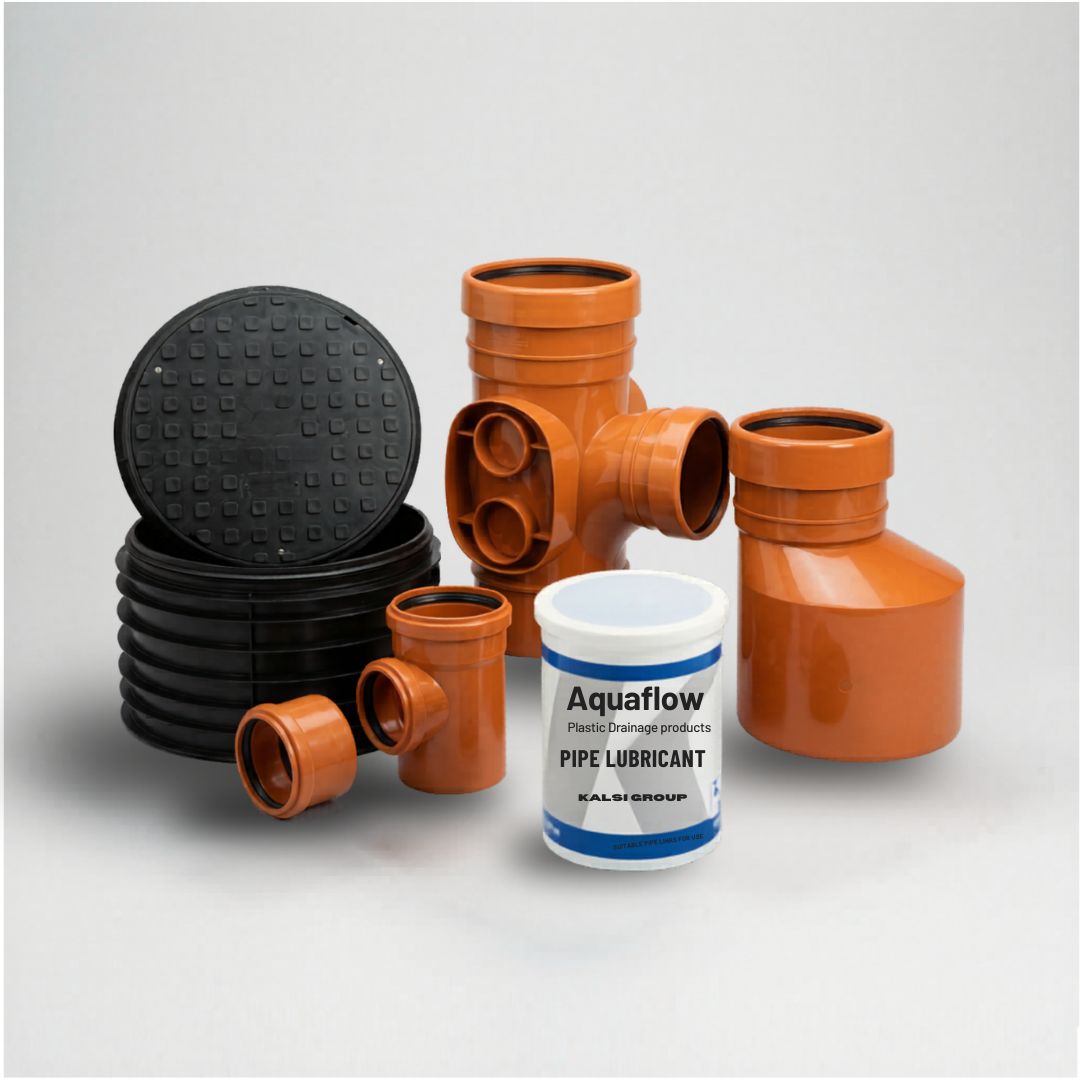
Kalsi’s underground drainage systems provide all the pipe, fittings, and accessories needed for driveway drainage connections.
SuDS (Sustainable Drainage Systems)
SuDS is the overarching approach to managing surface water sustainably. Driveway drainage is a common SuDS application. SuDS hierarchy:
- Source control — deal with water where it falls (permeable paving, rain gardens)
- Site control — collect and manage within the property (soakaways, attenuation)
- Regional control — discharge to watercourses or sewers as a last resort
For domestic driveways, SuDS typically means permeable paving or a soakaway. The principle is simple: do not send rainwater off your property any faster than nature would.
SuDS is becoming increasingly important in planning policy. Several local authorities now require SuDS compliance for all new hard-standing above a threshold area. Check your local planning authority’s SuDS policy before starting work.
Installation Tips for Channel Drains
If you are installing a linear channel drain across a driveway:
- Position at the threshold — install the channel at the lowest point, typically where the driveway meets the garage, path, or road
- Ensure adequate fall — the driveway surface must slope toward the channel at a minimum of 1:60 (approximately 17 mm per metre)
- Choose the right load class — domestic driveways need a minimum of Class B125 (can support 12.5 tonnes). If heavy vehicles (delivery lorries, skip wagons) will cross, specify Class C250 or D400
- Slope the channel to the outlet — the channel itself should fall toward the outlet connection at approximately 1:100
- Connect properly — the channel outlet connects to 110 mm underground pipe via a standard adaptor, running to the soakaway or drain
Cost Comparison
| Solution | Typical Cost (60 m² driveway) | Planning Permission? | Maintenance |
|---|---|---|---|
| Permeable block paving | £3,000–5,400 | No (permitted development) | Annual joint cleaning |
| Standard block paving + channel drain + soakaway | £3,000–5,000 + £500–1,200 | May need permission | Occasional channel cleaning |
| Standard tarmac + linear drain + soakaway | £2,000–3,600 + £500–1,200 | May need permission | Occasional drain cleaning |
| Gravel with grid reinforcement | £900–1,800 | No (permeable) | Occasional raking/topping up |
| Resin-bound gravel | £2,400–4,800 | No (permeable) | Annual cleaning |
The cost of drainage infrastructure (channel drains + soakaway) adds £500–1,200 to a standard driveway installation. Over the life of the driveway, this is modest — and it ensures compliance with planning rules and protects against surface-water flooding.
Frequently Asked Questions
How do I drain water from my driveway?
Use permeable paving (lets water soak through), install a linear channel drain across the low point, or slope the driveway to drain onto garden/lawn areas. Collected water should go to a soakaway or surface-water drain. Since 2008 in England, impermeable driveways over 5 m² require planning permission unless drainage is provided.
Do I need planning permission to pave my drive?
In England, if you are paving over 5 m² of front garden with impermeable material (standard tarmac, concrete, sealed block paving), you need planning permission unless you provide adequate drainage. Permeable paving is classified as permitted development and does not require a planning application.
What is permeable paving?
Paving that allows rainwater to pass through the surface and into the ground beneath. This can be achieved through porous materials (porous tarmac, porous concrete), or through standard-looking block paving with wider joints filled with gravel rather than mortar. The sub-base must also be permeable for the system to work.
Can I drain my driveway to the foul sewer?
No. Driveway water is surface water (rainwater) and must not be connected to the foul sewer. It should go to a soakaway, watercourse, or surface-water sewer. Connecting surface water to the foul sewer is illegal on new installations and contributes to sewer flooding.
How much does driveway drainage cost?
A linear channel drain with connection to a soakaway typically costs £500–1,200 for a standard domestic driveway. A full soakaway (crate type) is £200–500. Total drainage costs for a new impermeable driveway are typically £700–1,700, which can be avoided entirely by using permeable paving.
Can I retrofit drainage to an existing driveway?
Yes. A linear channel drain can be cut into an existing driveway surface and connected to a new soakaway. This is common when homeowners receive enforcement notices or want to resolve persistent surface-water problems. The cost is typically £800–2,000 depending on the driveway size and the distance to the soakaway location.