Rodding Points, Bottle Gullies & Drainage Accessories
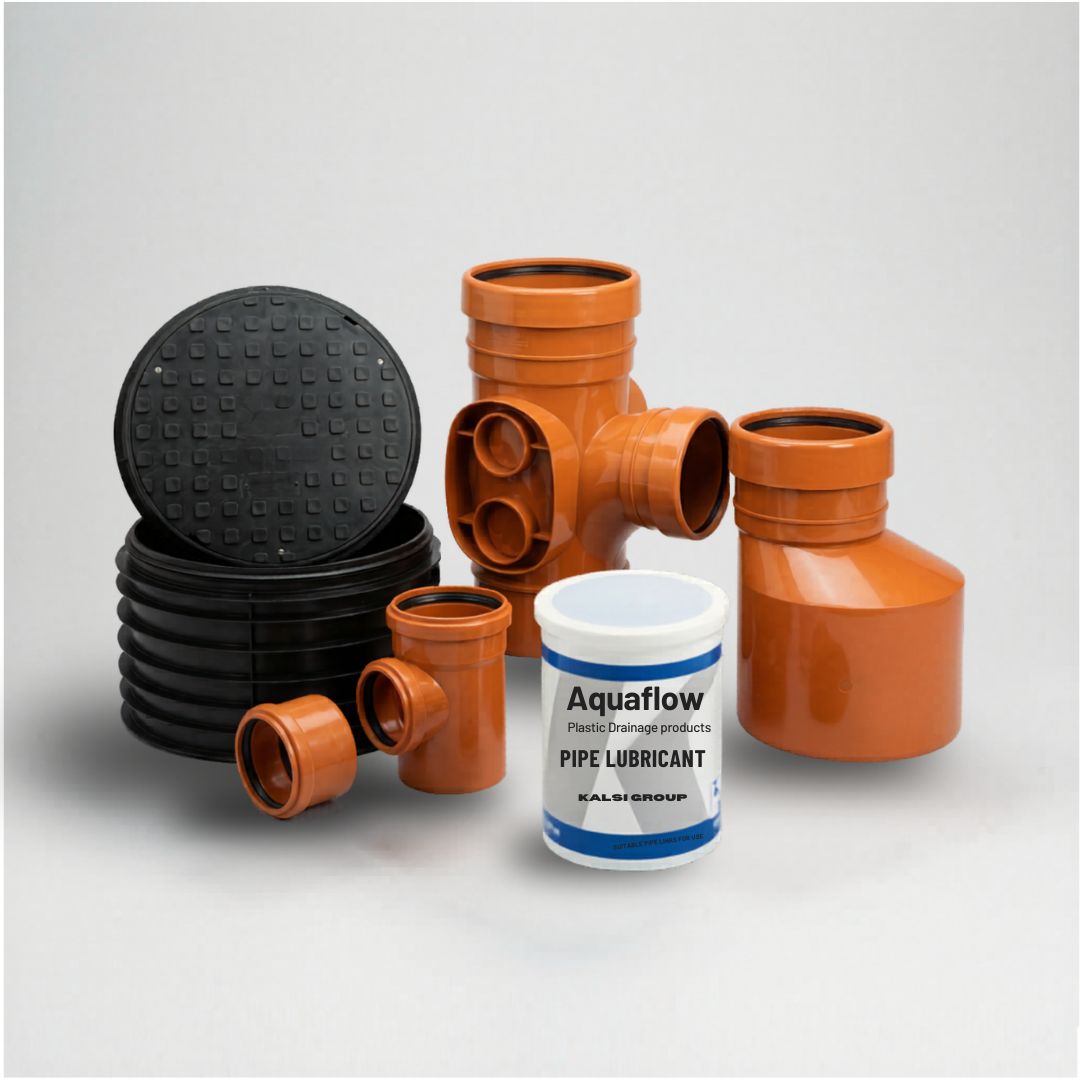
The drainage accessories you need depend on your system layout, but most domestic installations require a combination of gullies (for surface connections), bends (for direction changes), rodding points (for maintenance access), and adaptors (for connecting to existing systems). Beyond the main pipes and inspection chambers, these accessories complete the drainage system and ensure it can be maintained, inspected, and adapted over its 50+ year lifespan. Skipping accessories to save money creates a system that works initially but becomes a nightmare when the first blockage occurs.
Underground drainage is a system of interconnected components. The pipes carry the flow, but the accessories make it functional. Every change of direction needs a bend. Every surface connection needs a gully. Every maintenance point needs a rodding eye or chamber. Getting the accessories right is as important as getting the pipes right — and knowing what each component does helps you plan and cost a drainage project accurately.
Essential Drainage Accessories
Gullies
A gully is the connection point between surface-level waste (rainwater downpipes, waste pipes, surface water) and the underground drainage system. Gullies are one of the most visible drainage components — they sit at ground level and are the point where above-ground water enters the below-ground system.
| Gully Type | Description | Use |
|---|---|---|
| Bottle gully | Compact trapped gully with a round body and removable grid | Kitchen waste, utility room waste, ground-level drainage |
| Back-inlet gully | Trapped gully with a rear inlet for downpipe connection | Connecting rainwater downpipes to underground drainage |
| Yard gully | Open-top trapped gully with a large square grid | Surface water collection from patios, driveways, yards |
| Hopper-head gully | Gully with a raised hopper for multiple pipe connections | Where several waste pipes discharge at one point |
Trapped gullies contain a water seal (U-bend) that prevents sewer gases from escaping through the open grid. All gullies on foul drainage must be trapped. Surface-water gullies serving separate surface-water systems do not technically need a trap, but it is good practice to include one to prevent odours from stagnant water.
Choosing between bottle and back-inlet gullies: If a rainwater downpipe discharges directly downward into a ground-level gully, a bottle gully works. If the downpipe enters through the wall at the back of the gully (common when the downpipe is tight against the house wall), use a back-inlet gully. The choice is driven by the physical arrangement at the property, not by preference.
Bends
| Bend Type | Angle | Use |
|---|---|---|
| Single socket bend | 15°, 30°, 45°, 90° | Changing direction in the pipe run |
| Double socket bend | 15°, 30°, 45°, 90° | Mid-run direction change (slip-in fitting) |
| Rest bend | 87.5° (near-vertical to horizontal) | Base of soil stack — transitions vertical pipe to horizontal drain |
| Long-radius bend | 45°, 90° | Gentler direction changes with lower flow resistance |
Important: Each bend over 45° requires an access point (inspection chamber or rodding point) for drain maintenance. Two 45° bends with a straight section between them are preferable to a single 90° bend because they create less turbulence and are easier to rod.
Choosing the right angle: Always use the shallowest bend that achieves the required direction change. A 45° bend followed by another 45° bend (with a short straight between) is far better than a single 90° for both flow performance and future maintenance.
Junctions
| Junction Type | Description | Use |
|---|---|---|
| Single junction (Y or 45°) | Single branch at 45° | Connecting a branch drain to the main run |
| Double junction | Two branches at 45° | Two branches connecting at the same point |
| Reducer junction | Transitions from 160 mm to 110 mm (or vice versa) | Connecting different pipe sizes |
Junctions must always be oriented so that the branch flow enters in the direction of the main flow — never against it. A branch entering at 90° to the flow creates turbulence, potential blockages, and fails Building Regulations.
Rodding Points
A rodding point provides access for drain rods without the expense of a full inspection chamber. Types:
| Type | Description | Best For |
|---|---|---|
| Rodding eye | Capped vertical pipe at the head of a drain run, accessible from ground level | Start of every drain run (nearest the building) |
| Access fitting | In-line fitting with a removable cover for mid-run access | Long straight runs needing intermediate access |
| Access pipe | Short section of pipe with a bolted cover for clearing blockages | Mid-run access where a chamber is impractical |
Rodding points are required at the head of every drain run (nearest the building) and at intervals along straight runs. Building Regulations (Approved Document H) specify maximum distances between access points — typically 45 m on straight 110 mm runs and 22 m on 150 mm runs.
Pipe Couplings
| Coupling Type | Use |
|---|---|
| Standard coupling | Joining two pipe lengths with matching ring seals |
| Repair coupling (slip coupling) | Inserting a new fitting mid-run without disassembling the pipe; slides over from one end |
| Adaptor coupling | Connecting PVC to clay, cast iron, or other materials (flexible rubber sleeve) |
| Reducer | Connecting 160 mm to 110 mm pipe |
Slip couplings are invaluable for repairs and modifications — they allow you to cut out a damaged section and insert a replacement without needing to lift the rest of the pipe run. Keep one or two in stock on any drainage project.
Other Accessories
| Accessory | Purpose |
|---|---|
| Pipe clips/straps | Securing pipe in the trench during backfill |
| Blanking plug | Sealing unused inlets on chambers and junctions |
| Anti-flood valve | Prevents backflow from the sewer into the property |
| Non-return valve | One-way valve — water flows out but cannot flow back |
| Silt trap | Settles sediment before it enters the main drain |
| Pipe marker tape | Warning tape laid above the pipe to prevent accidental excavation damage |
Browse Kalsi’s complete underground drainage accessories range for all standard fittings, and the full fittings range for bends, junctions, and couplings.
What You Need for a Typical Domestic Installation
New Extension with WC and Basin
| Accessory | Quantity | Purpose |
|---|---|---|
| Rest bend (87.5°) | 1 | Base of soil stack |
| 45° bend | 1–2 | Direction changes in pipe run |
| Inspection chamber (450 mm) | 1 | At junction with existing drain |
| Gully (back-inlet) | 1 | Rainwater downpipe connection |
| Rodding eye | 1 | Head of new foul drain |
| Couplings | 2–4 | Pipe joints and repairs |
| Blanking plugs | 2 | Spare inlets on chamber base |
For a detailed walkthrough of extension drainage requirements, see our guide on drainage for house extensions.
New Driveway with Surface Water Drainage
| Accessory | Quantity | Purpose |
|---|---|---|
| Yard gully | 1–2 | Surface water collection |
| 45° bends | 2–4 | Pipe routing |
| Inspection chamber | 1 | At junction with surface water system |
| Silt trap | 1 | Before soakaway or main drain |
Connecting to an Existing Clay Drain
| Accessory | Quantity | Purpose |
|---|---|---|
| Adaptor coupling (PVC to clay) | 1–2 | Connecting new PVC pipe to old clay |
| Inspection chamber | 1 | At junction point for access |
| Rodding eye | 1 | Head of new run |
| 45° bends | As needed | Direction changes |
How to Count Accessories: Planning Your Order
The most efficient way to count the accessories for a drainage project:
- Draw the drainage plan on paper — show every pipe run, direction change, junction, and connection point
- Mark every bend — note the angle required
- Mark every junction — where branch drains meet the main run
- Mark every access point — rodding eyes, chambers, access fittings
- Mark every surface connection — gullies for downpipes, waste pipes, and surface water
- Count couplings — one per joint (pipe-to-pipe and pipe-to-fitting)
- Add 10–15% spare — for cutting errors, damage, and on-site changes
Kalsi’s drainage calculator can help estimate material quantities for standard layouts.
Frequently Asked Questions
What drainage accessories do I need?
At minimum: gullies for surface connections, bends for direction changes, an inspection chamber at every junction, a rodding eye at the head of each drain run, and couplings for pipe joints. The exact list depends on your layout — draw the system on paper and count each component.
What is the difference between a bottle gully and a back-inlet gully?
A bottle gully has a round inlet at the top, designed for waste pipes to discharge into it from above. A back-inlet gully has an inlet at the rear, designed for a downpipe or waste pipe to enter horizontally through the wall of the gully. Both are trapped to prevent sewer-gas escape.
Do I need a rodding point?
Yes. Building Regulations require access at the head of every drain run and at all junctions, bends over 45°, and gradient changes. A rodding eye is the simplest form of access — a capped vertical pipe that accepts drain rods. Where an inspection chamber exists, a separate rodding point may not be needed.
What is a rest bend?
A rest bend (also called a heel rest bend) is an 87.5° bend used at the base of a soil stack. It transitions the vertical soil pipe to the horizontal underground drain. The “rest” refers to the flat base that sits on the trench bed, supporting the weight of the vertical pipe above.
Can I use any brand of fittings with any pipe?
PVC-U underground drainage fittings are manufactured to BS EN 1401, which standardises dimensions. Fittings from different manufacturers are generally compatible within the same size range (110 mm or 160 mm). However, for the best seal reliability, it is good practice to use fittings from the same manufacturer as the pipe — the ring seals are optimised for exact tolerances.
How many bends can I have on a drain run?
There is no specific limit on the number of bends, but every bend over 45° must have an access point (rodding eye or inspection chamber) nearby. Excessive bends increase the risk of blockages and make rodding more difficult. Where possible, keep runs straight and minimise direction changes.