CCTV Drain Survey: What It Shows & When You Need One
A CCTV drain survey involves inserting a waterproof camera on a flexible rod or crawler into your underground drainage pipes to visually inspect their condition from inside. The camera sends live video to a monitor, allowing the operator to identify blockages, cracks, root intrusion, joint displacement, pipe collapse, and other defects without digging. The survey produces a video recording and a written report detailing every defect found, its location, and a recommended course of action. A standard domestic CCTV drain survey costs £150–350 and takes 1–3 hours.
A drain survey is the diagnostic equivalent of an X-ray for your drainage. It eliminates guesswork, pinpoints problems, and provides documented evidence of the drain condition — invaluable when buying a property, investigating persistent drainage issues, or planning building work near existing drains.
What a CCTV Survey Shows
| Defect | What the Camera Reveals |
|---|---|
| Blockage | Debris, fat build-up, or foreign objects visible in the pipe |
| Root intrusion | Tree roots growing through joints or cracks into the pipe bore |
| Cracking | Longitudinal or circumferential cracks in the pipe wall |
| Joint displacement | Pipe sections shifted at the joint, creating a step or gap |
| Collapse | Pipe wall has caved in, partially or fully blocking the bore |
| Deformation | Pipe has changed shape (common in old pitch fibre pipes) |
| Corrosion | Deterioration of the pipe material (cast iron, concrete) |
| Connections | Location and condition of branch connections, gullies, and chambers |
| Gradient | Whether the pipe has adequate fall or areas of standing water |
| Missing sections | Gaps where pipe is missing or has been removed |
The survey also reveals the pipe material (clay, PVC-U, pitch fibre, cast iron, concrete), which is critical information when planning repairs or extensions. For instance, if the survey shows clay pipe in reasonable condition, you know you will need adaptor couplings to connect any new PVC-U pipe to the existing system.
When You Need a CCTV Drain Survey
1. Buying a Property
A homebuyer drain survey is one of the most valuable pre-purchase investments. It reveals problems that are invisible during a standard house survey:
- Root intrusion from mature garden trees
- Cracked or collapsed Victorian clay drains
- Pitch fibre deformation (common on 1950s–1970s houses)
- Previous bodge repairs
- Illegal connections (surface water connected to foul, or vice versa)
A drain problem found after purchase can cost £2,000–10,000+ to fix. A £250 survey before exchange is excellent insurance. Solicitors increasingly recommend drain surveys as standard during conveyancing, alongside structural surveys and searches.
2. Recurring Drainage Problems
If a drain blocks more than twice in a year despite professional clearing, there is an underlying cause — roots, damage, flat gradient, or partial collapse. A CCTV survey identifies the root cause (literally, in many cases). Without a survey, you are treating the symptom each time while the underlying problem worsens.
3. Before Building Work
Extensions, conservatories, driveways, and landscaping near existing drains require knowledge of the drain route, depth, and condition. A CCTV survey provides this, preventing accidental damage during construction. For detailed guidance on extension drainage planning, see our guide on drainage for house extensions.
4. Insurance Claims
If your home insurer covers drainage damage, they will require a CCTV survey as evidence of the defect, its cause, and the proposed repair. The survey report becomes the basis for the claim.
5. Building Control Requirements
On some projects, Building Control may request a CCTV survey to confirm the condition of existing drainage before approving connections to it. This is increasingly common on older properties where the drain material and condition are unknown.
6. Selling a Property
Some sellers commission a drain survey to demonstrate the system is in good condition, removing a potential obstacle during conveyancing. A clean survey report gives buyers confidence and can speed up the sale process.
What Happens During the Survey
1. Access the Drainage
The operator removes inspection chamber covers and identifies the drain runs to be surveyed. They may also access the drain via a rodding point or soil stack. Most domestic properties have 2–4 inspection chambers — lifting the covers and looking inside gives the operator a quick assessment of the system layout before the camera goes in.
2. Insert the Camera
For domestic drains, a push-rod camera is used — a flexible rod with a small camera head and LED lights at the tip. The operator feeds it into the drain from an inspection chamber. The camera sends live footage to a monitor.
For larger or deeper drains, a crawler camera (a self-propelled remote-controlled vehicle) is used. Crawlers can travel hundreds of metres and are standard for commercial and municipal drainage surveys.
3. Record the Video
The camera sends live footage to a monitor and recording device. The operator notes the location (distance from the entry point), direction, and nature of every defect. Modern cameras include a distance counter that records exactly how far along the pipe each defect is located — essential for targeted repairs.
4. Produce the Report
After the survey, you receive:
- Video recording — the full footage on USB, DVD, or digital download
- Written report — each defect listed with its location, severity, and recommended action
- Plan drawing — showing the drain layout and defect locations (on more comprehensive surveys)
Understanding the Report
Survey reports use standard defect classifications (based on WRc methodology):
| Classification | Severity | Action |
|---|---|---|
| Grade 1 | Minor defect — no immediate action | Monitor at next survey |
| Grade 2 | Moderate defect — repair recommended within 12 months | Plan and budget for repair |
| Grade 3 | Significant defect — repair needed soon | Arrange repair promptly |
| Grade 4 | Severe defect — urgent repair required | Fix immediately to prevent failure |
| Grade 5 | Collapsed or fully blocked — not functional | Emergency repair |
For homebuyers, a report full of Grade 1–2 findings is typical for any property over 20 years old and is not usually cause for concern. Grade 3–5 findings should be discussed with the seller and may justify a price reduction or repair before completion.
What Each Grade Means in Practice
- Grade 1–2: Normal wear for the pipe’s age. Might include minor joint displacement, small cracks that are not leaking, or minor root wisps at joints. No action required now, but worth monitoring.
- Grade 3: Needs attention within the next year or two. Could include moderate root intrusion, a partially displaced joint, or a crack that is starting to let in groundwater. Budget for repair.
- Grade 4–5: Immediate concern. A collapsed pipe, severe root intrusion blocking the bore, or a complete joint failure. These issues are affecting (or about to affect) drainage function.
Cost
| Survey Type | Typical Cost | What’s Included |
|---|---|---|
| Basic domestic | £150–250 | Survey of main drain runs, video, brief report |
| Full homebuyer survey | £250–400 | All drains surveyed, detailed report, plan drawing |
| Pre-build survey | £200–350 | Drain mapping, depth measurement, condition assessment |
| Commercial survey | £400–1,000+ | Large systems, crawler cameras, WRc-standard reporting |
Most domestic surveys are completed in 1–3 hours. The cost is modest compared to the potential repair costs for undetected problems.
Choosing a Drain Survey Company
| Factor | What to Check |
|---|---|
| Equipment | Modern colour camera with recording capability and distance counter |
| Qualification | WRc (Water Research Centre) training for the operative |
| Insurance | Public liability insurance (minimum £1 million) |
| Report format | Written report + video. Ideally WRc-standard classification |
| Independence | If buying a property, use an independent company — not one recommended by the seller or agent |
| Inclusions | Clarify what is surveyed (all runs? or only accessible runs?) |
| Reviews | Check independent reviews — drain survey quality varies significantly |
Red Flags
- Companies that insist on drain repairs immediately after the survey (potential conflict of interest)
- Very cheap quotes that do not include a written report
- No video recording provided (the video is your evidence — insist on it)
- Operators who do not record defect distances (makes targeted repairs impossible)
After the Survey: Common Repair Options
If the survey identifies problems, common repair methods include:
| Repair Method | Used For | Cost Range |
|---|---|---|
| Drain jetting | Clearing blockages, removing root intrusion | £100–300 |
| Patch repair | Localised crack or joint damage | £200–500 |
| Drain relining | Multiple defects along a run (no-dig repair) | £500–2,000 |
| Excavation and replacement | Collapsed or severely damaged pipe | £1,000–5,000+ |
| Root cutting | Removing root intrusion from joints | £150–400 |
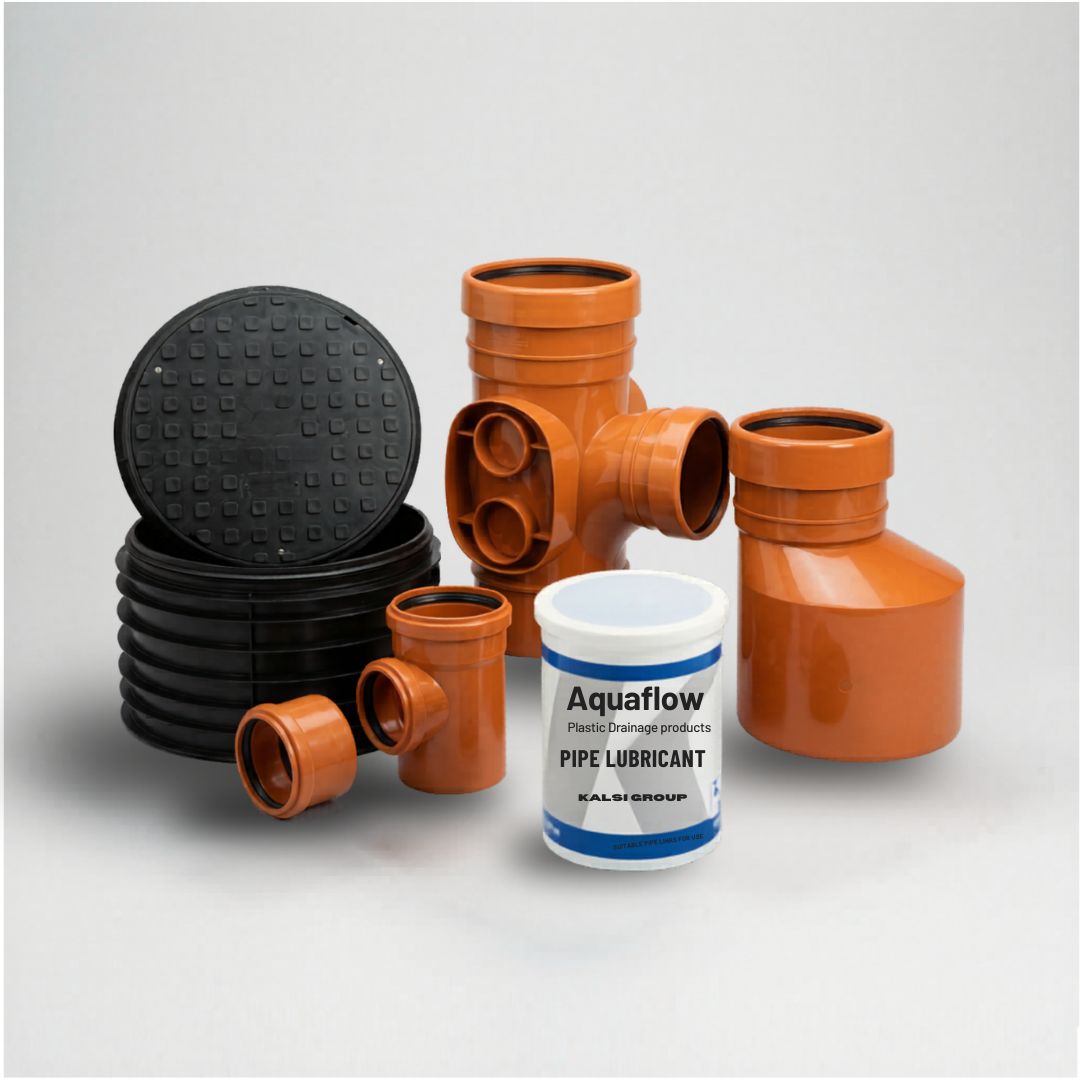
For replacement pipe and fittings, Kalsi Plastics’ underground drainage range provides the complete PVC-U system including 110mm pipe, fittings, and inspection chambers.
Frequently Asked Questions
What does a drain survey involve?
A CCTV camera on a flexible rod is inserted into the underground drain via an inspection chamber. The camera sends live video to a monitor, showing the inside of the pipe. The operator records the footage and produces a report detailing any blockages, cracks, root intrusion, displacement, or other defects, with their locations and recommended actions.
How much does a CCTV drain survey cost?
A basic domestic survey costs £150–250. A full homebuyer drain survey with detailed report costs £250–400. Commercial surveys for larger properties are £400–1,000+. The cost is modest compared to the potential repair costs for undetected drainage problems.
Should I get a drain survey before buying a house?
Strongly recommended, especially for properties built before 1990 (likely clay or pitch fibre drains), properties with mature trees near the building, or any property where the standard survey has noted drainage concerns. A £250 drain survey can save £5,000+ in repair costs post-purchase.
How long does a drain survey take?
1–3 hours for a standard domestic property. Larger properties or those with extensive drainage may take half a day. The report is usually available within 24–48 hours.
Can a CCTV survey clear a blockage?
No — the camera is diagnostic only. If the survey identifies a blockage, the drain company can usually clear it with jetting or rodding at the same visit (additional charge). The survey identifies what caused the blockage so preventative measures can be taken.
How often should drains be surveyed?
There is no regulatory requirement for periodic surveys on domestic properties. However, surveying every 5–10 years is good practice on older properties (pre-1990), properties with large trees near drains, or any property with a history of drainage issues. A survey before and after major building work is also recommended.