Bargeboard Guide: What It Is, Why It Matters
A bargeboard is the angled board that runs along the gable end of a pitched roof, covering the exposed ends of the roof timbers (purlins and ridge board) where they project beyond the gable wall. It sits on the verge — the sloping edge of the roof at the gable — and serves both a protective and decorative function. Without a bargeboard, the cut ends of the roof timbers are exposed to rain, wind, frost, and birds, leading to rot, water ingress, and pest entry. In PVC-U, bargeboards are maintenance-free for 30+ years, replacing the traditional timber versions that need painting every 3–5 years.
Bargeboards are one of the less-discussed elements of the roofline, partly because not every property has a gable end (terraced houses and hip-roofed properties may not need them). But for the millions of UK homes with one or two gable ends — semis, detached houses, dormer bungalows — the bargeboard is a critical piece of weather protection that also defines the visual character of the roofline.
Where Is the Bargeboard?
The bargeboard sits on the verge — the sloping edge of the roof at the gable end. If you stand facing the gable of a house (the triangular end wall beneath the roof peak), you can see two bargeboards: one running from the eaves up to the ridge on the left, and one on the right.
Key Anatomy
| Term | Definition |
|---|---|
| Bargeboard | The angled board on the verge (sloping edge of the gable) |
| Fascia board | The horizontal board along the eaves (bottom edge of the roof) |
| Soffit | The horizontal board underneath the eaves overhang |
| Verge | The sloping edge of the roof at the gable end |
| Gable | The triangular wall section below the roof peak |
The bargeboard is sometimes called a vergeboard or gableboard — all refer to the same component.
What Does a Bargeboard Do?
1. Weather Protection
The primary function. Without a bargeboard, the ends of the roof purlins, ridge board, and tile battens are directly exposed to rain and wind. Water runs along the timber, soaks into the end grain, and causes rot that gradually works back into the roof structure.
2. Pest Prevention
Gaps between the roof timbers at the gable end are entry points for birds (starlings and sparrows love nesting in roof spaces), bats, wasps, and squirrels. A properly fitted bargeboard seals these gaps.
3. Visual Definition
The bargeboard defines the roofline at the gable end, giving the roof a clean, finished edge. On traditional properties, ornate bargeboards were a point of architectural pride — carved, scrolled, and decorated.
4. Support for Verge Undercloak
The bargeboard provides a surface for the mortar or dry verge system that seals the edge tiles at the gable. Without it, there is nothing for the verge detail to fix to.
Materials: Timber vs PVC-U
| Feature | Timber | PVC-U |
|---|---|---|
| Lifespan | 10–20 years (needs painting) | 30–40 years (maintenance-free) |
| Painting | Every 3–5 years | Never |
| Rot risk | High — especially the lower end near the eaves | None |
| Weight | Heavier | Lighter |
| Cost (material) | Similar | Similar |
| Cost (lifetime) | Higher (painting, repairs) | Lower (no maintenance) |
| Colour options | Any (painted) | Standard PVC colours |
| Appearance | Natural timber or painted | Smooth or woodgrain finish |
For most practical purposes, PVC-U bargeboards are the superior choice. They look identical to painted timber from the ground, cost the same or less over their lifetime, and eliminate the ongoing maintenance cycle that catches out many homeowners.
Kalsi’s bargeboard range is available in standard colours including white, anthracite grey, rosewood, and light oak.
Bargeboard Profiles and Sizes
Depth
Bargeboards are typically 150–225 mm deep, matching the fascia board depth on the same property. Consistency between the fascia and bargeboard depth gives a clean, proportionate appearance.
| Property Type | Typical Bargeboard Depth |
|---|---|
| Bungalow | 150 mm |
| Standard semi/detached | 175–200 mm |
| Large detached | 200–225 mm |
Profile
| Profile | Description |
|---|---|
| Flat | Plain flat board — modern, clean |
| Bullnose | Rounded bottom edge — softer appearance |
| Ogee | Moulded decorative edge — traditional |
| Decorative / scrolled | Ornate cut-outs — Victorian and Edwardian (typically timber, but PVC reproductions exist) |
Thickness
- 9 mm — capping board (covers existing timber)
- 16 mm — full replacement board (structural, fixes directly to roof timbers)
As with fascia, 16 mm replacement is recommended for a lasting result. Capping over rotten timber simply hides the problem.
Installation: PVC Bargeboard Replacement
Tools and Access
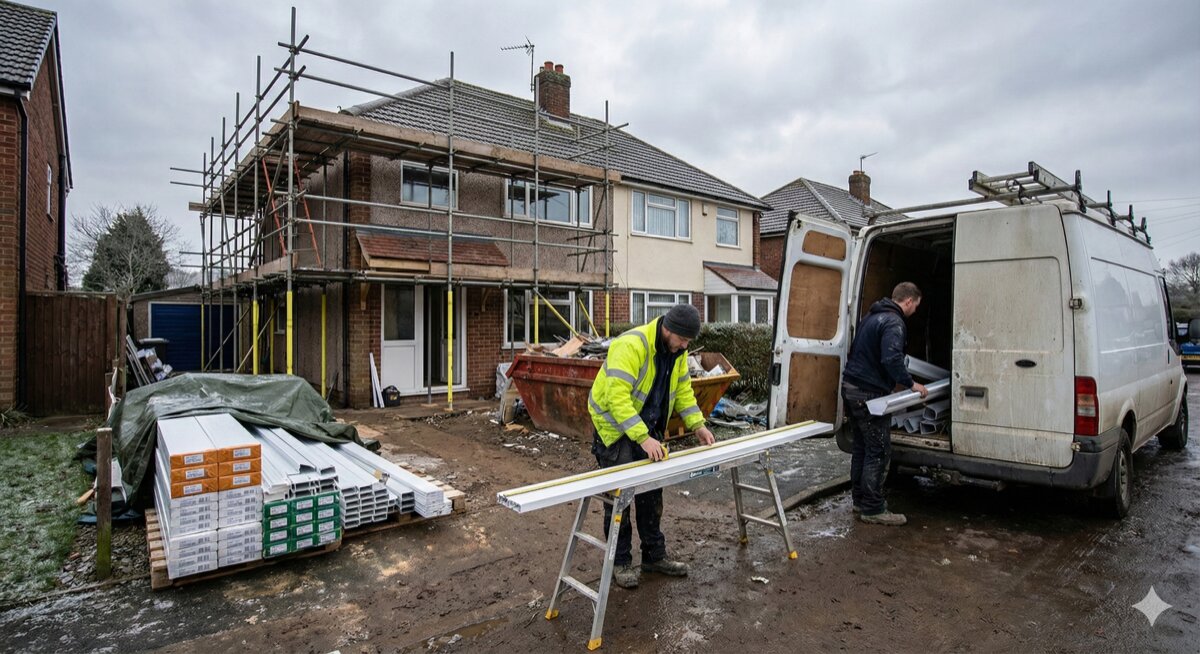
Working on bargeboards requires access to the gable end at height. The apex of the bargeboard is at the ridge — potentially 8–10 m above ground on a two-storey house. Options:
- Scaffold tower — practical for bungalows and lower gables
- Full scaffolding — necessary for two-storey+ gable ends
- Cherry picker (MEWP) — sometimes used by professionals for quick access
Step-by-Step
- Remove verge tiles or dry verge caps along the top edge of the bargeboard
- Remove the old timber bargeboard — prise away from the roof timbers with a pry bar
- Inspect the underlying timber — check purlins, ridge board, and barge rafter for rot
- Repair any damaged timber — replace rotten sections
- Cut the PVC bargeboard to length — measure the full verge length; the bottom end typically overlaps the fascia board by 20–30 mm
- Fix the bargeboard to the roof timbers with stainless steel screws (40–50 mm), spaced at 400–600 mm centres
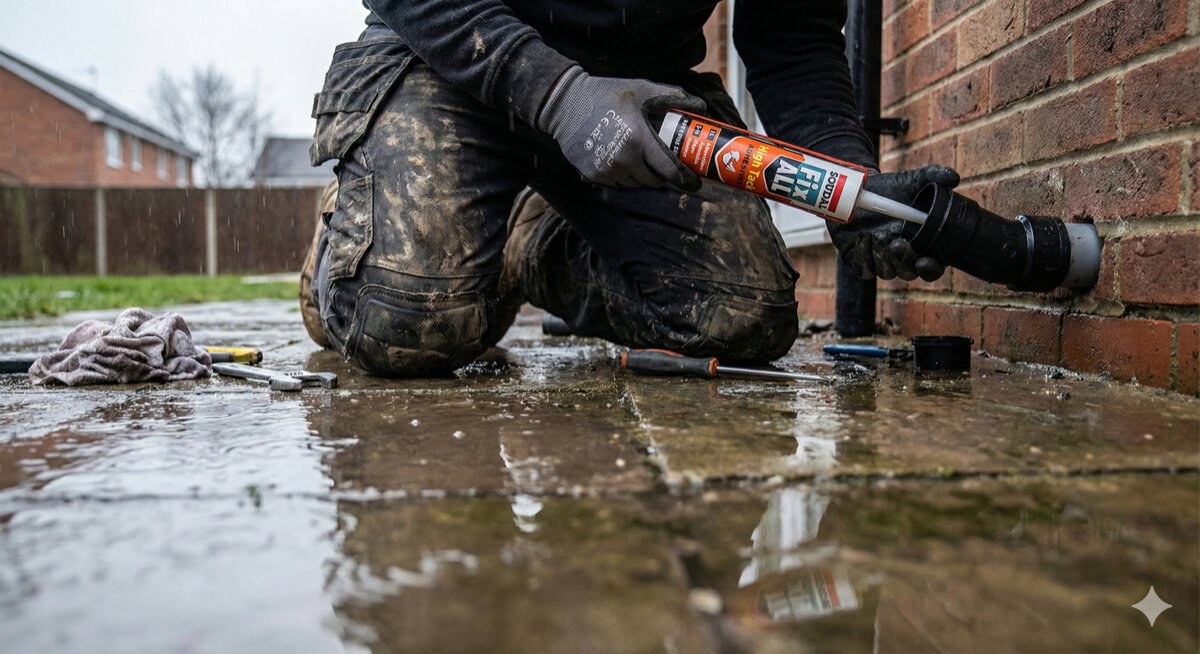
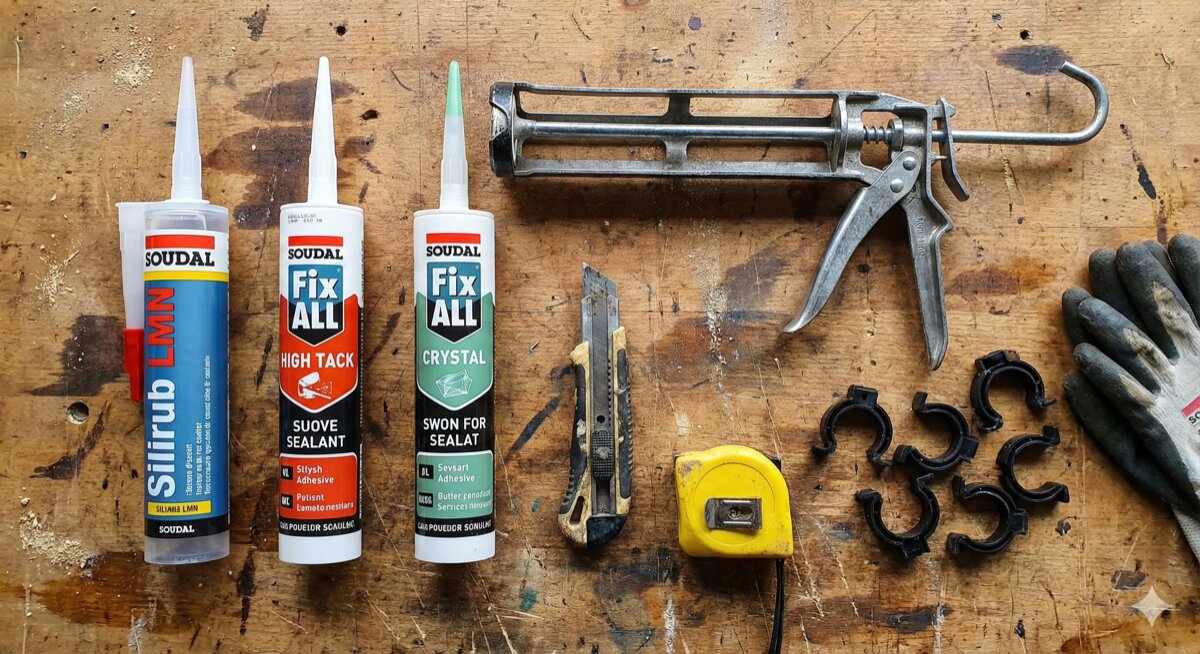
- Seal the junction between the bargeboard and the fascia with a corner piece or silicone sealant
- Refit verge tiles or dry verge system over the top edge of the new bargeboard
Joining Bargeboards
PVC bargeboards come in 2.5 m or 5 m lengths. For most domestic gables, one or two lengths per side suffice. Where joins are necessary, use a bargeboard joint trim and leave a 3 mm expansion gap.
Dry Verge Systems
Modern best practice is to use a dry verge system rather than mortar along the verge edge. Traditional mortar verges crack, crumble, and let in water over time. Dry verge systems use interlocking plastic caps that clip over the edge tiles and fix mechanically to the bargeboard.
Benefits of dry verge:
- No mortar to crack or blow out
- Quicker to install
- Maintenance-free
- Better wind resistance (mechanically fixed)
- Neater appearance
Dry verge systems are covered in more detail in our guide to dry verge systems.
Common Problems with Bargeboards
Rot at the Lower End
The bottom of the bargeboard (where it meets the fascia at the eaves) is the most vulnerable point. Water runs down the slope of the bargeboard and collects at this junction. Timber bargeboards almost always rot here first.
PVC solution: PVC does not rot. The junction should be sealed with a corner piece or silicone to prevent water getting behind the board, but the board itself is unaffected by moisture.
Wind Damage
Bargeboards on exposed gable ends take the full force of prevailing winds. Loose fixings, cracked boards, or failed mortar verges can allow wind to get underneath and lever the board off.
PVC solution: Fix at close centres (400–600 mm) with stainless steel screws into sound timber. Ensure the verge detail (dry verge or mortar) is intact.
Bird Entry
Gaps between the bargeboard and the roof timbers are favourite nesting spots for birds. Ensure the board is fitted tightly against the roof structure, and use bird comb or foam filler strip along the top edge where it meets the underside of the tiles.
Frequently Asked Questions
What is a bargeboard?
A bargeboard is the angled board running along the gable (verge) of a pitched roof. It covers the exposed ends of the roof timbers and protects them from weather damage. It also gives the gable end a clean, finished appearance and helps prevent birds and pests from entering the roof space.
Do all houses have bargeboards?
No. Only properties with gable ends need bargeboards. Fully hipped roofs (where the roof slopes on all four sides) have fascia boards all around but no bargeboards. Semi-detached houses typically have one gable end; detached houses may have two; terraced houses usually have none (gable ends are shared party walls).
Should I replace the bargeboard when I replace the fascia?
If the scaffolding is already in place for fascia and soffit replacement, replacing the bargeboard at the same time makes excellent sense. The additional materials cost is modest (£50–100 per gable end), and doing it separately later means paying for scaffolding again.
Can I fit PVC bargeboards over existing timber?
You can cap over timber with 9 mm PVC if the timber is structurally sound. However, if the timber is rotten — which is common at the lower end — capping hides the problem. Full replacement with 16 mm PVC board is the recommended approach.
What colour should bargeboards be?
Match the bargeboards to the fascia colour for a consistent roofline. If the fascia is anthracite grey, the bargeboards should be too. The bargeboard and fascia meet at the eaves corner — mismatched colours look odd from ground level.