Fascia Board Sizes: 150mm, 175mm, 200mm, 225mm — Which Do You Need?
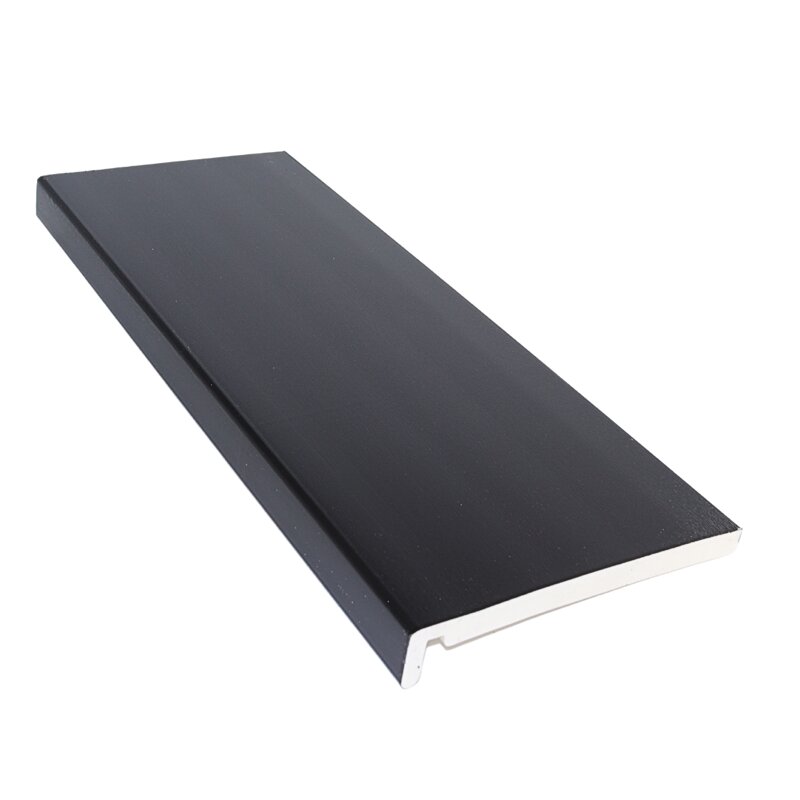
The fascia board size you need depends on the depth of your existing board and the size of the rafter feet it covers. The most common size on UK homes is 200 mm (8 inches), which fits the majority of two-storey properties built from the 1930s onwards. Bungalows and single-storey extensions typically use 150 mm (6 inches). Larger detached properties and those with deep rafter overhangs may need 225 mm (9 inches). The only reliable way to choose is to measure your existing fascia — or, if you are replacing rotten boards and the original has deteriorated, measure from the top of the rafter end to the underside of the soffit line.
Getting the size wrong means visible gaps at the top (too shallow) or boards that project below the soffit line (too deep). Neither looks professional and both can cause problems with gutter alignment and weather protection.
Standard PVC Fascia Board Sizes
| Depth | Width (Thickness) | Common Name | Typical Use |
|---|---|---|---|
| 150 mm (6”) | 9 mm or 16 mm | Six-inch | Bungalows, garages, single-storey extensions, sheds |
| 175 mm (7”) | 9 mm or 16 mm | Seven-inch | Smaller terraces, older bungalows, some 1960s–70s houses |
| 200 mm (8”) | 9 mm or 16 mm | Eight-inch | Most two-storey houses, the UK default |
| 225 mm (9”) | 9 mm or 16 mm | Nine-inch | Larger detached, properties with deep overhangs, deep flow gutter |
| 250 mm (10”) | 16 mm | Ten-inch | Large detached, some commercial, extended overhangs |
| 300 mm+ | 16–18 mm | Twelve-inch+ | Commercial, industrial, bespoke |
Board Thickness
Fascia boards come in two standard thicknesses:
- 9 mm (capping board) — thin board designed to fit over existing timber fascia. Only use when the timber underneath is structurally sound.
- 16 mm (replacement board) — full-thickness structural board. Used when removing the old timber fascia entirely and fixing directly to rafter ends. This is the standard for new installations.
Always use 16 mm boards unless you are specifically capping over good-condition timber. The 9 mm boards are not strong enough to carry gutter brackets and rainwater weight without the timber backing.
Kalsi’s fascia board range is available in all standard sizes, thicknesses, and colours.
How to Measure Your Existing Fascia
Method 1: Measure the Existing Board
If the current fascia is intact:
- Position a ladder safely (use a standoff, not the gutter)
- Measure the visible depth of the board from the top edge (under the roof tiles) to the bottom edge
- Add 5–10 mm for the portion hidden behind the soffit board at the bottom
This gives you the nominal board depth.
Method 2: Measure the Rafter End
If the old fascia has been removed or has deteriorated beyond measurement:
- Measure from the underside of the roof tile/felt line at the top of the rafter to the soffit level at the bottom
- Add 10–15 mm to ensure the board fully covers the rafter end and overlaps the soffit slightly
Common Pitfalls
- Don’t assume all sides are the same. Some properties have different rafter depths on different elevations (especially where extensions have been added).
- Check multiple points. Rafter depths can vary by 10–15 mm along a single elevation due to settling, repairs, or original construction tolerance.
- Account for the soffit. The fascia’s bottom edge typically overlaps the soffit board by 5–10 mm. Factor this into your measurement.
Choosing the Right Size for Your Property Type
| Property Type | Typical Fascia Depth | Notes |
|---|---|---|
| Bungalow | 150 mm | Lower roofline, shallower rafter depth |
| Terraced house (pre-1930) | 150–175 mm | Older properties with shallower eaves |
| 1930s semi | 175–200 mm | The classic suburban semi |
| Post-war semi/detached | 200 mm | Standard depth since the 1950s |
| Modern new build | 200 mm | The industry default |
| Large detached | 200–225 mm | Wider eaves overhangs |
| Barn conversion | 225–300 mm | Deep rafter overhangs, agricultural proportions |
| Garage / outbuilding | 150 mm | Smaller scale structure |
When to Go Bigger
There are legitimate reasons to choose a deeper fascia than the original:
Deeper Gutter Profiles
If you are upgrading from standard half-round to deep-flow or hi-cap guttering, the taller gutter profile needs a deeper fascia to avoid the gutter projecting above the tile line or below the soffit. A 200 mm fascia accommodates most domestic gutter profiles; 225 mm gives headroom for the largest systems.
Better Rafter Coverage
A slightly deeper board covers more of the rafter end, improving weather protection and reducing the visible timber at the top of the fascia. This is particularly useful on older properties where rafter ends are uneven.
Aesthetic Proportion
On larger properties, a deeper fascia gives a more substantial, proportionate appearance. A 150 mm board on a large detached home can look too slim.
Replacing Deteriorated Timber
If the original fascia and the timber behind it have deteriorated, the new board may need to be deeper to cover the repair area.
Fascia Profile Shapes
PVC fascia boards are available in several profile shapes:
| Profile | Description | Best For |
|---|---|---|
| Flat board | Plain, flat face with square edges | Modern, clean look; most popular |
| Bullnose | Flat face with a rounded bottom edge | Softer appearance; traditional |
| Ogee | Moulded decorative profile on the bottom edge | Period properties, premium appearance |
| Chamfered | Angled cut on the bottom edge | Contemporary, architectural |
| Tongue and groove | Interlocking boards (also used for soffit) | Wide applications, traditional feel |
The profile choice is aesthetic — all profiles are available in the standard depth range and perform identically. Choose based on the property’s style and your personal preference.
Fascia Board Colours
Standard PVC-U fascia colours available from Kalsi Plastics:
| Colour | Description | Popularity |
|---|---|---|
| White | Classic bright white | Still the most common across UK |
| Black | Smart, architectural | Growing — especially with black guttering |
| Anthracite grey | Dark charcoal grey | Fastest-growing, pairs with grey windows |
| Rosewood | Dark woodgrain effect | Popular on 1970s–80s properties |
| Light oak | Golden woodgrain effect | Warm, traditional |
| Mahogany | Rich dark woodgrain | Heritage properties |
| Cream/ivory | Off-white | Alternative to white for rendered properties |
Through-colour boards (where the colour penetrates the full thickness) are more durable than foil-wrapped or surface-coated alternatives. If scratched or damaged, through-colour boards show the same colour throughout.
Thickness Matters: 9mm vs 16mm
This is a critical specification that is often overlooked:
| Feature | 9 mm (Capping Board) | 16 mm (Replacement Board) |
|---|---|---|
| Primary use | Covering existing sound timber | Replacing timber entirely |
| Structural support | Relies on timber behind | Self-supporting against rafter ends |
| Gutter bracket support | Brackets screw through into timber | Brackets screw through into rafter ends |
| Weight supported | Limited — timber does the work | Full — can carry gutter + rainwater |
| Cost per metre | Lower | Higher |
| Longevity | Depends on condition of hidden timber | Full independent lifespan |
The Capping Debate
Capping (fitting a 9 mm PVC board over existing timber) is quicker and cheaper than full replacement. It avoids removing the old fascia and is less disruptive. However:
Capping is only appropriate when:
- The existing timber is structurally sound (no rot, no splitting)
- The rafter ends are firm and in good condition
- The existing board is reasonably straight (PVC will follow its shape)
Capping is NOT appropriate when:
- The timber is rotten (the rot continues behind the PVC, hidden from view)
- Rafter ends are deteriorating
- The existing board is warped, bowed, or uneven
- You want a maintenance-free roofline for the next 30 years
If in doubt, opt for full 16 mm replacement. It costs more upfront but gives a genuinely maintenance-free result with no hidden surprises.
Ordering Guide
When ordering fascia boards, you need:
- Total length (linear metres) — measure every elevation
- Depth — 150, 175, 200, or 225 mm
- Thickness — 9 mm (capping) or 16 mm (replacement)
- Profile — flat, bullnose, ogee, etc.
- Colour — white, anthracite grey, rosewood, etc.
- Accessories — joint trims, corner pieces, ventilation strips
How to Calculate Lengths
Measure each elevation separately:
- Front elevation: ___ m
- Rear elevation: ___ m
- Left return: ___ m
- Right return: ___ m
- Total: ___ linear metres
Add 10% for waste (cuts, mitres, off-cuts).
Standard board lengths are typically 2.5 m and 5 m. Work out how many boards you need to cover the total length with minimal joints.
Frequently Asked Questions
What size fascia board do I need?
Measure your existing fascia from top to bottom. The most common sizes in the UK are 150 mm (bungalows), 175 mm (smaller houses), 200 mm (most two-storey homes), and 225 mm (larger detached). If replacing rotten timber, measure the rafter end height and add 10–15 mm for overlap.
Can I use a bigger fascia board than the original?
Yes, within reason. Going one size up (e.g., 175 mm to 200 mm) is common and can improve the appearance and weather protection. Going much larger may require adjusting the soffit and can look disproportionate. The gutter must also sit in the correct position relative to the roof tiles.
What is the difference between 9mm and 16mm fascia boards?
9 mm boards are thin capping boards designed to cover existing timber fascia that is still structurally sound. 16 mm boards are full replacement boards that replace the timber entirely and fix directly to the rafter ends. For a long-lasting, maintenance-free result, 16 mm replacement boards are recommended.
What colour fascia is most popular in 2026?
White remains the most common overall, but anthracite grey is the fastest-growing choice — especially when paired with grey replacement windows, grey guttering, and a white soffit. Black is also popular on period and urban properties. Woodgrain finishes (rosewood, light oak) remain steady on rural and traditional homes.
Do fascia boards come in standard lengths?
Yes. PVC fascia boards are typically supplied in 2.5 m and 5 m lengths. Longer runs require joints covered by fascia joint trim pieces. Plan your cuts to minimise visible joints — ideally positioning them at natural break points like above downpipes or at changes in direction.