Vented vs Unvented Soffit: When You Need Airflow
You need vented soffit if your roof has a cold loft space with no other means of eaves ventilation. Building Regulations (Approved Document F and C) require a continuous ventilation gap equivalent to at least 10 mm along both eaves of a pitched roof to prevent condensation in the roof void. Vented soffit boards have perforations or slots moulded into them that provide this airflow without the need for separate vent strips. If your loft already has adequate ventilation through other means — such as tile vents, ridge vents, or a warm-roof construction — solid (unvented) soffit boards are appropriate.
Choosing between vented and solid soffit is not a style decision — it is a Building Regulations requirement that directly affects whether your roof stays dry inside. Get it wrong and you risk condensation, damp, timber rot, and mould growth in the loft space. Get it right and it quietly does its job for decades.
What Is a Soffit Board?
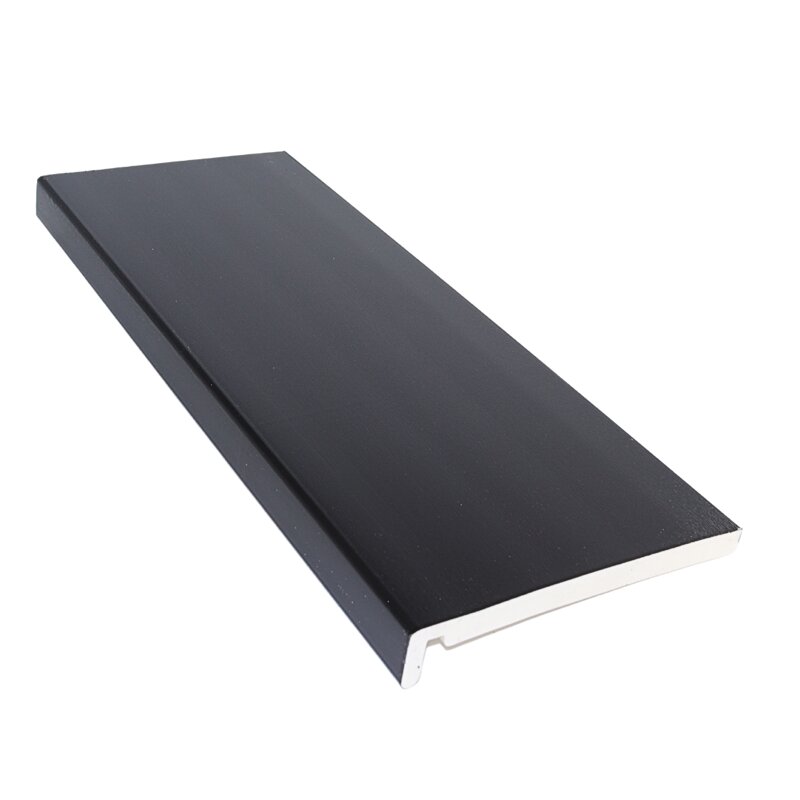
The soffit is the board that spans the gap between the bottom of the fascia board and the wall. When you stand directly below the eaves and look up, the soffit is the horizontal surface you see. It encloses the underside of the rafter overhang, protecting the roof structure from weather, birds, and insects.
Soffit boards are available in:
- Solid (unvented) — continuous board with no holes or slots
- Vented — board with integral perforations providing airflow
- Partially vented — alternating solid and vented strips
Why Roof Ventilation Matters
The Condensation Problem
In a typical cold-roof construction (the most common in UK houses), the loft space sits above the heated rooms below. Warm, moist air from the living spaces rises and enters the loft through gaps around loft hatches, downlights, pipes, and electrical fittings.
When this warm, moist air meets the cold underside of the roof tiles or felt, it condenses — just like breath on a cold window. Over time, this condensation:
- Wets the roof timbers — causing rot in rafters, purlins, and battens
- Saturates insulation — reducing its effectiveness dramatically
- Promotes mould growth — a health hazard and a sign of chronic damp
- Stains ceilings — as water drips down onto the plasterboard below
How Ventilation Solves It
Continuous airflow through the loft space carries the moist air out before it has a chance to condense. The ventilation path works by cross-ventilation:
- Cool, dry air enters at the eaves (through vented soffits)
- It flows across the loft space, picking up moisture
- It exits at the ridge, through tile vents, or at the opposite eaves
This constant air exchange prevents condensation build-up. It is passive — no fans, no power, no moving parts.
Building Regulations Requirements
England and Wales
Approved Document F (Ventilation) and Approved Document C (Resistance to Moisture) set the requirements:
| Roof Type | Eaves Ventilation Requirement | Ridge Ventilation |
|---|---|---|
| Cold roof (pitched, loft space) | 10 mm continuous gap at both eaves | 5 mm continuous at ridge (for pitches over 35°) |
| Cold roof (pitched, under 15° pitch) | 25 mm continuous gap at both eaves | 5 mm continuous at ridge |
| Warm roof (insulation at rafter level) | 50 mm clear airspace above insulation + eaves and ridge ventilation | Yes |
| Cold flat roof | Equivalent ventilation at opposing edges | — |
Key point: For the most common scenario — a cold pitched roof with a loft — you need 10 mm continuous ventilation at both eaves. This is most easily achieved with vented soffit boards.
Scotland
Section 3 of the Technical Handbooks specifies similar requirements, referencing BS 5250 for condensation control.
Vented Soffit: How It Works
Vented soffit boards have small perforations or slots moulded into the face of the board. These openings allow air to pass through while keeping out rain, birds, and large insects.
Types of Vented Soffit
| Type | Description | Ventilation Provided |
|---|---|---|
| Fully vented | Perforations across the full width of the board | Maximum airflow — equivalent to 10 mm+ continuous gap |
| Centre-vented | Perforations along the centre strip only | Moderate airflow — may need supplementing |
| Alternating vented strips | Every other board is vented | Moderate airflow — common retrofit approach |
For most installations, fully vented soffit on both eaves is the simplest way to meet Building Regulations.
How Much Ventilation Does Vented Soffit Provide?
A standard vented soffit board typically provides an equivalent ventilation area of 10–25 mm continuous gap per linear metre. This meets or exceeds the Building Regulations requirement for most cold pitched roofs.
Check the manufacturer’s data sheet for the specific ventilation equivalent. If the figure is less than 10 mm per metre, you may need to supplement with additional eaves vents or use a higher-ventilation soffit product.
When to Use Solid (Unvented) Soffit
Solid soffit boards are appropriate when the ventilation requirement is met by other means:
1. Ridge Vents + Tile Vents
If the roof has adequate tile vents and a vented ridge (common on modern new builds), eaves ventilation may not be needed or may be provided by separate over-fascia vents instead of vented soffit.
2. Warm-Roof Construction
Warm roofs (where insulation is at rafter level, not loft-floor level) have a different ventilation strategy. The 50 mm airspace above the insulation is ventilated at eaves and ridge, but this can be achieved with discrete vents rather than vented soffit — although vented soffit is often used as the eaves inlet.
3. Properties Where the Loft Has Been Converted
If the loft space has been converted to habitable rooms with insulation between and below the rafters, the roof construction has changed from cold to warm. The ventilation strategy changes accordingly — vented soffit may still be needed for the above-insulation airspace, or may not if a breathable membrane has been used.
4. Areas Where Ventilation Is Not Required
Some sections of the roofline (e.g., over bay windows, porches, or returns) may not need ventilation because they do not open into the main roof void.
Mixed Approach: Part Vented, Part Solid
Many installations use a combination:
- Vented soffit on the two main eaves (front and back) where cross-ventilation is most effective
- Solid soffit on gable returns and short sections where the soffit does not access the main roof void
- Solid soffit on ground-floor extensions that have their own flat or lean-to roof separate from the main loft
This is perfectly acceptable and often the most practical approach. The key is ensuring the total ventilation area across both eaves meets the Building Regulations minimum.
Installation
Vented and solid soffit boards install the same way:
- Fix a soffit carrier strip (also called a batten) along the wall at the underside of the rafter overhang. Use masonry fixings on brick/block walls.
- Fix the fascia board with the soffit groove or F-section at the appropriate height
- Slide the soffit board into the groove in the fascia and screw or pin the other edge to the wall-side batten
- Join boards with H-section trims where lengths meet
With Vented Soffit
- Ensure the perforations are not blocked by insulation in the loft. If loft insulation runs right to the eaves, it can cover the vent openings. Use eaves ventilation trays (plastic ramps) to hold the insulation back and maintain a clear airpath from the soffit vents into the loft space.
- Check from inside the loft after installation — you should be able to see daylight through the vented soffit (or feel air movement) from the eaves.
Kalsi’s soffit board range includes both solid and vented options in standard colours and widths.
Common Mistakes
1. Using Solid Soffit When Vented Is Needed
This is the most common and most serious mistake. If the original soffit had ventilation and you replace it with solid boards, you have removed the loft’s airflow. Condensation problems can appear within one winter.
2. Blocking Vents with Insulation
Even with vented soffit, insulation pushed into the eaves space can block the airflow. Always fit eaves ventilation trays to maintain a clear path.
3. Venting Only One Side
Cross-ventilation requires airflow at both eaves (or eaves and ridge). Venting only the front soffit provides half the required ventilation — the air has no exit path.
4. Not Checking the Existing Ventilation
Before ordering soffit, go into the loft and check the current ventilation arrangement. Are there existing soffit vents, tile vents, ridge vents? What condition are they in? This determines whether you need vented or solid replacement soffit.
Ventilation Alternatives
If vented soffit is not suitable or desirable (e.g., the soffit is very narrow or in an exposed location where perforations might allow rain ingress), alternatives include:
| Alternative | How It Works |
|---|---|
| Over-fascia ventilator strip | A continuous vent strip fixed above the fascia board, beneath the roof tiles. Air enters between the tiles and the fascia. |
| Tile vents | Individual ventilation tiles installed in the lower courses of the roof. Provide point-source ventilation. |
| Fascia vent strip | A perforated strip let into the top edge of the fascia board. |
| Ridge vent | Continuous ventilation along the ridge of the roof (works in conjunction with eaves ventilation). |
Frequently Asked Questions
Do I need vented or solid soffit?
If your house has a cold loft space (insulation on the loft floor) and no other means of eaves ventilation, you need vented soffit to meet Building Regulations. If the roof already has adequate tile vents, ridge ventilation, or is a warm-roof construction with a breathable membrane, solid soffit may be acceptable. Check the existing ventilation before ordering.
How much ventilation does vented soffit provide?
A standard vented soffit board provides an equivalent continuous ventilation gap of 10–25 mm per linear metre, which meets or exceeds the Building Regulations requirement of 10 mm continuous ventilation at the eaves for cold pitched roofs.
Can I mix vented and solid soffit?
Yes. It is common to use vented soffit on the main eaves (front and back elevations that access the loft) and solid soffit on gable returns, porches, and extensions with separate roofs. The key is ensuring total ventilation meets the regulatory minimum.
What happens if I don’t ventilate the soffit?
Without adequate eaves ventilation, moisture from the living spaces below condenses in the cold loft space. Over time this causes timber rot in rafters and purlins, reduced insulation effectiveness, mould growth, and staining or damp patches on ceilings. The damage can be extensive and expensive to repair.
Can I add ventilation to existing solid soffit?
Yes. Retrofit options include cutting circular holes and fitting disc vents, installing an over-fascia vent strip above the fascia board, or adding tile vents to the lower roof courses. The simplest long-term solution is to replace the solid soffit with vented boards when the roofline is next due for maintenance.