Dry Verge Systems: Modern Alternative to Mortar
A dry verge system is a mechanical method of fixing the edge tiles at the gable end of a pitched roof, replacing traditional mortar bedding. Interlocking plastic or metal caps clip over each verge tile and screw to the bargeboard or roof batten, holding the tiles firmly without mortar. Dry verge systems are more durable, wind-resistant, quicker to install, and completely maintenance-free compared to mortar verges, which crack, crumble, and blow out over time. Building Regulations (BS 8612:2018) now recommend mechanically fixed verge systems on all new-build roofs.
If you have ever seen a row of loose tiles at the gable edge of a roof, or mortar chunks scattered in the garden after a storm, you have seen the problem dry verge systems solve. Traditional mortar verges have been the standard for centuries, but they have a fundamental weakness — mortar is rigid while the roof is not. Thermal movement, wind loading, and building settlement all cause mortar to crack and detach. Dry verge fixes this permanently.
How Dry Verge Systems Work
A dry verge system consists of:
- A starter unit at the eaves (bottom of the verge)
- Interlocking verge caps — one per tile — that clip over the edge tile and mechanically fix to the roof structure
- A ridge end cap at the top
Each cap has:
- A top section that covers the edge tile from above
- A side section that wraps the verge face below the tile
- A clipping or screw-fixing mechanism that secures to the tile batten or bargeboard
- A drainage channel that sheds water away from the gable wall
The caps interlock from eaves to ridge, creating a continuous weather-tight seal along the entire verge without any mortar.
Dry Verge vs Mortar Verge
| Feature | Mortar Verge | Dry Verge System |
|---|---|---|
| Method | Mortar bedded under edge tiles | Mechanical clips/caps over edge tiles |
| Installation time | Slow (mix, bed, point, wait for cure) | Fast (clip and screw) |
| Wind resistance | Poor — mortar cracks, tiles lift | Excellent — mechanically fixed |
| Maintenance | Regular repointing every 5–15 years | None |
| Frost resistance | Poor — freeze-thaw cracks mortar | Excellent — plastic/metal unaffected |
| Appearance | Traditional cement line along verge | Clean, neat edge with colour-matched caps |
| Roof movement | Mortar cracks as roof moves | Caps flex with movement |
| Lifespan | 5–15 years between repairs | 30+ years |
| Bird/pest entry | Gaps form as mortar fails | Sealed by design |
| Compliance (new builds) | No longer recommended | Required by BS 8612:2018 |
Why Mortar Verges Fail
Mortar verges fail because of a fundamental incompatibility: mortar is rigid and brittle, but the roof structure moves.
Thermal Movement
Roof tiles expand and contract with temperature. Timber battens and rafters move with moisture content. The mortar cannot flex to accommodate this movement, so it cracks.
Wind Loading
During storms, wind creates uplift on the edge tiles. Mortar has limited tensile strength — a strong gust can lift a tile and its mortar bed clear off the verge.
Frost
Water penetrates hairline cracks in the mortar, freezes, expands, and widens the cracks. Repeated freeze-thaw cycles progressively destroy the mortar over a few winters.
Settling
New buildings settle slightly in the first few years. Older buildings can settle further due to foundation movement, subsidence, or structural alteration. Any differential movement between the gable wall and the roof cracks the mortar bed.
Types of Dry Verge System
Universal Dry Verge
Fits most standard interlocking concrete and clay tiles. The cap design accommodates a range of tile profiles and widths.
Tile-Specific Dry Verge
Designed for a particular tile type (e.g., Marley Modern, Redland 49). Provides a closer fit and cleaner appearance but limits future tile choice.
Dry Verge with Ventilation
Some dry verge caps include integral ventilation slots at the eaves to supplement roof ventilation — useful where soffit vents alone do not provide enough airflow.
Installation Overview
Dry verge installation is significantly faster than mortar bedding:
Step 1: Fit the Starter Unit
The starter unit sits at the bottom of the verge (at the eaves). It clips onto the first tile and screws to the bargeboard or fascia. It establishes the alignment for the rest of the verge.
Step 2: Fit Caps from Eaves to Ridge
Working upward, clip each cap over the edge tile and secure it:
- The cap’s top section sits over the tile
- The side section overlaps the face of the bargeboard
- The fixing (screw or clip) anchors to the tile batten or bargeboard
- Each cap interlocks with the one below, creating a continuous sealed line
Step 3: Fit the Ridge End Cap
The final cap at the ridge seals the junction between the dry verge and the ridge tile. Some systems integrate with dry ridge systems for a fully mechanical roof edge.
Time Comparison
- Mortar verge (one gable): 3–4 hours + curing time
- Dry verge (one gable): 1–2 hours, immediately finished
Building Regulations
BS 8612:2018
This British Standard for dry-fixed ridge, hip, and verge systems sets performance requirements for:
- Wind resistance (uplift testing)
- Water penetration resistance
- Durability (UV, frost, impact)
- Fire performance
Since 2015, NHBC (National House Building Council) standards have required mechanically fixed verge systems on new-build housing. BS 8612:2018 formalised this into a British Standard.
What This Means in Practice
- New builds: Dry verge is effectively mandatory
- Existing properties: Mortar verge can be replaced with dry verge at any time (no Building Control approval needed for like-for-like or improved verge fixing)
- Re-roofing: When a roof is stripped and re-tiled, dry verge should be specified
Cost
| Item | Mortar Verge (per gable) | Dry Verge (per gable) |
|---|---|---|
| Materials | £20–40 (sand, cement) | £60–120 (cap system) |
| Labour | £150–300 | £80–180 |
| Maintenance (10-year cost) | £100–200 (repointing) | £0 |
| 10-year total | £270–540 | £140–300 |
Dry verge costs more in materials but less in labour (faster installation) and nothing in ongoing maintenance. Over 10 years, it is typically the cheaper option.
Colour Options
Dry verge caps are available in colours to match common tile and roofline finishes:
- Grey (to match grey tiles and anthracite roofline)
- Brown (for brown and red tiles)
- Black (for dark slate-effect tiles)
- Terracotta (for traditional clay tiles)
Choose the colour closest to your tile edge for the least visible installation.
Pairing with Roofline Products
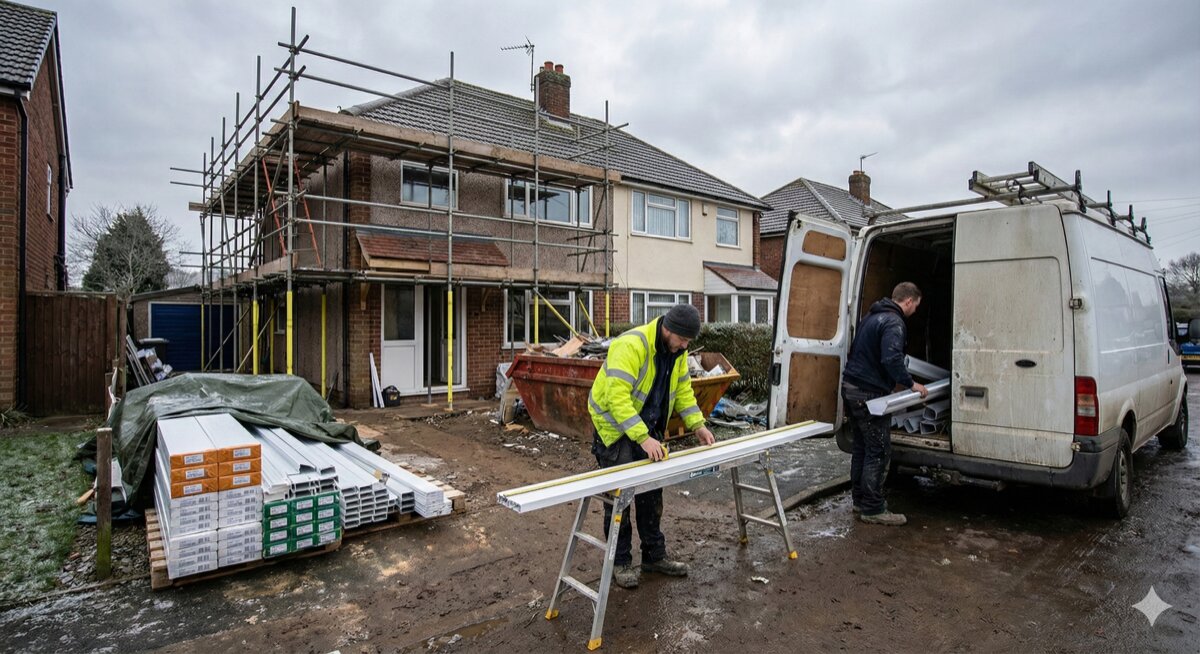
When replacing the roofline (fascia, soffit, bargeboard, and guttering), fitting dry verge at the same time is practical and cost-effective:
- The scaffolding is already in place
- The bargeboard (which the dry verge fixes to) is being replaced
- The installer is already on the roof edge
Kalsi’s bargeboard range works with all standard dry verge systems.
Frequently Asked Questions
What is a dry verge system?
A dry verge system replaces traditional mortar bedding at the gable edge of a pitched roof with mechanical clips or caps that fix each edge tile without mortar. It is more durable, wind-resistant, maintenance-free, and now the required method on new-build homes under BS 8612:2018.
Is dry verge better than mortar?
Yes, in almost every respect. Dry verge is more wind-resistant (mechanically fixed vs friction-held mortar), requires no maintenance, does not crack or crumble, and lasts 30+ years. Mortar verges need repointing every 5–15 years and are vulnerable to frost, wind, and building movement.
Can I fit dry verge on an existing roof?
Yes. You can retrofit dry verge to an existing roof by removing the old mortar, cleaning the verge edge, and fitting the dry verge caps. It does not require stripping or re-tiling the roof. The work is typically done from a scaffold tower or cherry picker.
How much does dry verge cost?
Materials cost £60–120 per gable end. Fitted professionally, expect £140–300 per gable including labour. Over 10 years, it is cheaper than mortar verge because there is no maintenance or repointing cost.
Do I need Building Control approval for dry verge?
No, for retrofitting dry verge to an existing roof. For new builds and complete re-roofs, dry verge (or equivalent mechanical fixing) is required under BS 8612:2018 and NHBC standards. Your roofer or roofline installer should specify a compliant system.