Wall Panel Colour Ideas: 2026 Most Popular Choices
The most popular bathroom wall panel colours in 2026 are warm neutrals (stone, greige, and warm white), marble-effect finishes (Calacatta white and Carrara grey), and nature-inspired tones (sage green, soft blue, and warm terracotta). The trend has moved decisively away from stark clinical white towards softer, warmer tones that create a spa-like atmosphere. Darker accent colours — charcoal, slate, and deep navy — are used as feature walls to add depth and contrast.
Choosing the right colour is one of the most important decisions in a bathroom renovation. Unlike tiles (where colour changes mean starting from scratch), wall panels are relatively easy to replace — but getting it right first time saves money and means you will enjoy the space for years without wanting to change it.
The 2026 Colour Trends
Warm Neutrals (The Dominant Trend)
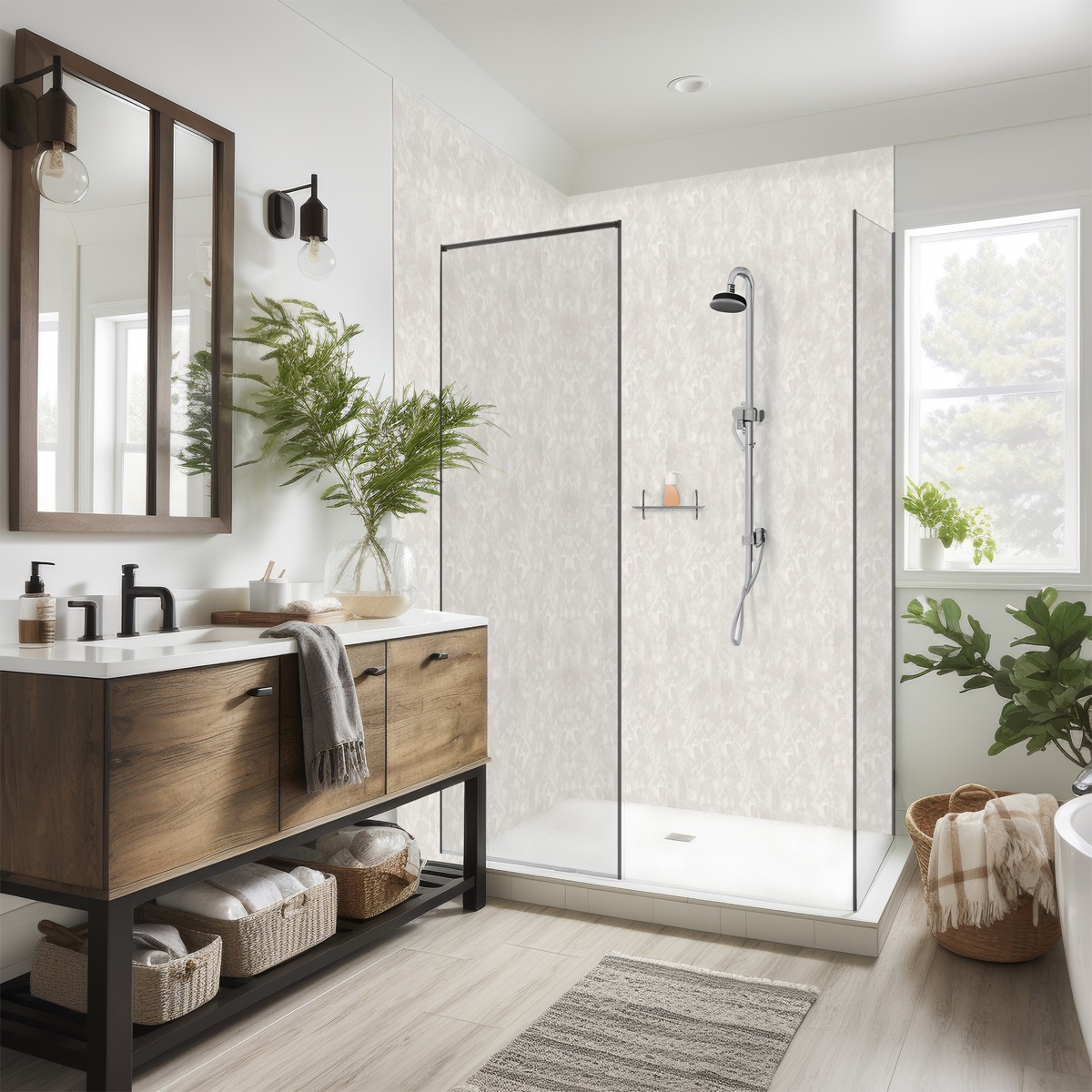
The biggest shift in bathroom design over the past two years has been from cool whites and greys to warm, earthy neutrals. These colours create a sense of calm and comfort that transforms a functional room into a relaxing retreat.
Most requested warm neutrals:
- Stone/sandstone effect — warm beige with subtle tonal variation, mimicking natural stone
- Greige — the grey-beige hybrid that works with virtually any fixture colour
- Warm white — not clinical white, but a softer tone with a hint of cream or linen
- Travertine effect — natural stone pattern with warm honey and cream tones
Why they work: Warm neutrals are forgiving — they do not show water marks or soap residue as obviously as dark colours, and they make small bathrooms feel larger and brighter.
Marble Effects (Enduringly Popular)
Marble-effect wall panels remain the single most popular choice across all price ranges. Modern high-definition printing technology creates genuinely convincing marble patterns on PVC panels at a fraction of the cost of real stone.
Most popular marble effects:
- Calacatta white — white background with bold grey and gold veining (the most specified panel finish in the UK)
- Carrara grey — softer grey tones with fine white veining
- Nero Marquina — dramatic black marble with white veining (feature wall use)
- Emperador brown — warm brown marble for earthy, luxurious schemes
Tip: For a realistic look, avoid perfectly symmetrical panel placement. Real marble slabs have unique veining — alternating the direction of adjacent panels creates a more natural appearance.
Nature-Inspired Tones
Biophilic design — bringing nature into indoor spaces — continues to influence bathroom colour choices:
- Sage green — the colour of the moment; calming, sophisticated, works with brass and gold fittings
- Soft blue — coastal and fresh; pairs beautifully with white fixtures
- Terracotta — warm, Mediterranean-inspired; bold but inviting
- Olive — deeper than sage, more mature; excellent with natural wood accessories
- Forest green — dramatic and rich; best used as a feature wall
Dark and Dramatic (Feature Walls)
Dark colours used across an entire bathroom can feel oppressive, but used on one wall (the feature wall), they create stunning depth and contrast:
- Charcoal/anthracite — sophisticated and modern
- Slate effect — textured dark grey with natural stone character
- Deep navy — classic and elegant; pairs with copper and brass fittings
- Matt black — ultra-contemporary; use sparingly
Rule of thumb for dark panels: Use dark on the wall you see first when entering the room (usually the wall opposite the door). Keep the remaining walls in a lighter complementary colour.
Colour Combinations That Work
1. Marble Feature + Warm Neutral
- Feature wall: Calacatta white marble effect
- Remaining walls: Warm white or greige
- Result: Luxury feel without overwhelming the space
2. Sage Green + White
- Feature wall: Sage green
- Remaining walls: Warm white
- Fixtures: Matt black or brushed brass
- Result: Fresh, contemporary, spa-like
3. Slate + Grey
- Feature wall: Dark slate effect
- Remaining walls: Light grey
- Fixtures: Chrome
- Result: Modern, masculine, clean
4. Wood Effect + Stone
- Feature wall: Oak or walnut wood-grain panel
- Remaining walls: Sandstone or travertine effect
- Result: Warm, natural, boutique hotel feel
5. Navy + White Marble
- Feature wall: Deep navy
- Remaining walls: White marble effect
- Fixtures: Brushed gold or brass
- Result: Classic, elegant, premium
How to Choose: Practical Considerations
Room Size
- Small bathrooms: Lighter colours (warm white, light grey, soft marble) make the space feel larger
- Large bathrooms: Can handle darker colours and bold contrasts without feeling cramped
- Windowless bathrooms: Avoid very dark colours on all walls; use a feature wall approach
Natural Light
- South-facing (lots of light): Any colour works; warm tones glow beautifully
- North-facing (cool light): Avoid cool greys and blues (they look colder); choose warm neutrals
- Artificial light only: Test panel samples under your bathroom lighting before committing
Fixture Colours
- White sanitary ware (most common): Works with virtually any panel colour
- Grey or black fixtures: Pair with lighter panels for contrast
- Coloured fixtures (green, blue): Use neutral panels to avoid colour clashing
Existing Floor
If you are keeping the existing floor, choose panel colours that complement it. Take a floor tile or sample to the panel supplier and hold them together. Colours that clash on the wall and floor are the most common design mistake.
Longevity
Trend colours (terracotta, sage green, specific marble patterns) may feel dated in 5–10 years. If longevity matters more than fashion, choose a classic neutral that you will not tire of. Stone, grey, and warm white are the safest long-term choices.
Finish Types
Beyond colour, the panel finish affects the look and feel:
| Finish | Effect | Best For |
|---|---|---|
| High gloss | Reflective, light-enhancing | Small bathrooms, modern look |
| Matt | Soft, contemporary, fingerprint-resistant | Larger bathrooms, natural look |
| Embossed/textured | Tactile, realistic stone or tile effect | Feature walls, premium installations |
| Smooth | Clean, easy to maintain | Commercial, rental properties |
Kalsi offers panels in smooth and embossed finishes across the full colour range.
Ordering Samples
Never choose a panel colour from a screen image alone. Colours look different on monitors, phones, and in different lighting conditions. Order physical samples and:
- Hold them against your existing fixtures and floor
- View them in your bathroom lighting (not just daylight)
- View them at different times of day (morning and evening light differ significantly)
- Hold them next to your sanitary ware to check compatibility
- Live with the samples taped to the wall for a few days before committing
Most panel suppliers offer free or low-cost sample packs. This small investment prevents expensive mistakes.
Frequently Asked Questions
What colour wall panels for a bathroom?
The most popular choices in 2026 are warm neutrals (stone, greige, warm white), marble effects (Calacatta white, Carrara grey), and nature-inspired tones (sage green, soft blue). For small bathrooms, lighter colours work best. Use darker colours as feature walls for depth and contrast.
Do dark wall panels make a bathroom feel smaller?
Used across all walls, yes. Used on one feature wall with lighter panels on the remaining walls, dark colours create depth and drama without making the space feel cramped. The key is contrast — one dark wall and three light walls is a well-established design technique.
What is the most popular wall panel colour?
Calacatta white marble effect is consistently the most specified wall panel finish in the UK. It offers the luxury look of real marble at a fraction of the cost and works with virtually any bathroom style and fixture colour.
Should I match wall panels to my floor?
They do not need to match exactly, but they should complement each other. Avoid clashing tones (warm wall panels with cool floor tiles or vice versa). Take a floor sample to the panel supplier and compare them side by side.
Can I mix different panel colours in one bathroom?
Yes — this is exactly how feature walls work. Use one colour or pattern on the main walls and a contrasting colour on one wall. Ensure the colours complement each other (same tone family) rather than clash.
Related Kalsi Products
- Wall Panelling Colour Range — full selection of colours and effects
- Smooth Panels — gloss and matt smooth finishes
- Embossed Cladding — textured stone and tile effects
- Decorative Panels — premium designs and patterns
- Wall Panelling Calculator — calculate quantities for your room