Double Embossed Cladding: Kalsi’s Unique Wall Finish
Double embossed wall panelling is a PVC panel that has been pressed twice during manufacturing — once to create the main surface texture (such as a tile grid or stone pattern), and a second time to add fine surface detail (grain, pitting, or veining) that mimics the look and feel of real stone, slate, or ceramic. The result is a panel with genuine three-dimensional depth and tactile texture that is noticeably more realistic than standard flat-printed or single-embossed panels. When you run your hand across a double embossed panel, you can feel the surface variation — it is not just a photograph printed onto flat plastic.
Standard PVC wall panels rely on high-definition digital printing to create their visual effect. The image can be impressive, but the surface is smooth and flat — touch it, and it obviously feels like plastic. Single embossing adds a basic texture (usually a repeating tile grid pattern), which improves realism significantly. Double embossing takes this further by adding a second layer of fine texture within the first, creating a multi-dimensional surface that catches light differently across its face, just as real stone or tile does.
How Double Embossing Works
The Manufacturing Process
- Extrusion: PVC-U is extruded into flat panel blanks of the correct thickness (typically 8–10 mm for wall panelling)
- First emboss (macro texture): The panel passes through heated rollers or a press that imprints the primary surface pattern — for example, a tile grid with individual “tile” shapes raised or recessed
- Surface printing: High-definition digital or rotogravure printing applies the colour, pattern, and visual detail (marble veining, stone grain, woodgrain, etc.)
- Second emboss (micro texture): A second pass through a different roller or press adds fine-scale surface texture within the printed pattern — pitting on a stone effect, grain lines on a wood effect, or glaze texture on a tile effect
- Protective coating: A clear UV-resistant lacquer seals the surface, protecting both the print and the embossing from wear, cleaning chemicals, and UV degradation
The second emboss is what distinguishes Kalsi’s embossed cladding from standard panels. It adds the subtle, irregular surface detail that the eye (and hand) recognises as “real material” rather than “printed image.”
Why It Looks More Realistic
Light Behaviour
A flat, smooth surface reflects light uniformly — it has the characteristic “plastic sheen” that immediately signals an artificial material. A double embossed surface scatters light across its micro-texture, creating subtle shadows and highlights that change as you move. This is the same light behaviour you see on real stone, slate, or ceramic tile.
Tactile Feedback
People instinctively touch wall surfaces. A smooth panel feels like what it is — PVC. A double embossed panel has genuine texture under the fingers — the rough grain of stone, the slight undulation of handmade tile, or the linear grain of natural wood. This tactile feedback is what elevates the panel from “looks like stone” to “feels like stone.”
Visual Depth
The combination of surface printing (colour and pattern) with physical texture (embossing) creates visual depth that a flat print cannot achieve. The micro-texture within the macro-texture means that fine details (individual stone grains, marble veining, tile glaze variations) are not just printed — they are physically present on the surface.
Available Finishes
Double embossed panelling is available in a range of realistic finishes:
| Finish | Description | Best For |
|---|---|---|
| Natural stone | Sandstone, limestone, or slate effect with realistic surface pitting | Feature walls, luxury bathrooms |
| Marble | Calacatta, Carrara, or Emperador effect with printed veining and embossed surface texture | Premium bathrooms, shower enclosures |
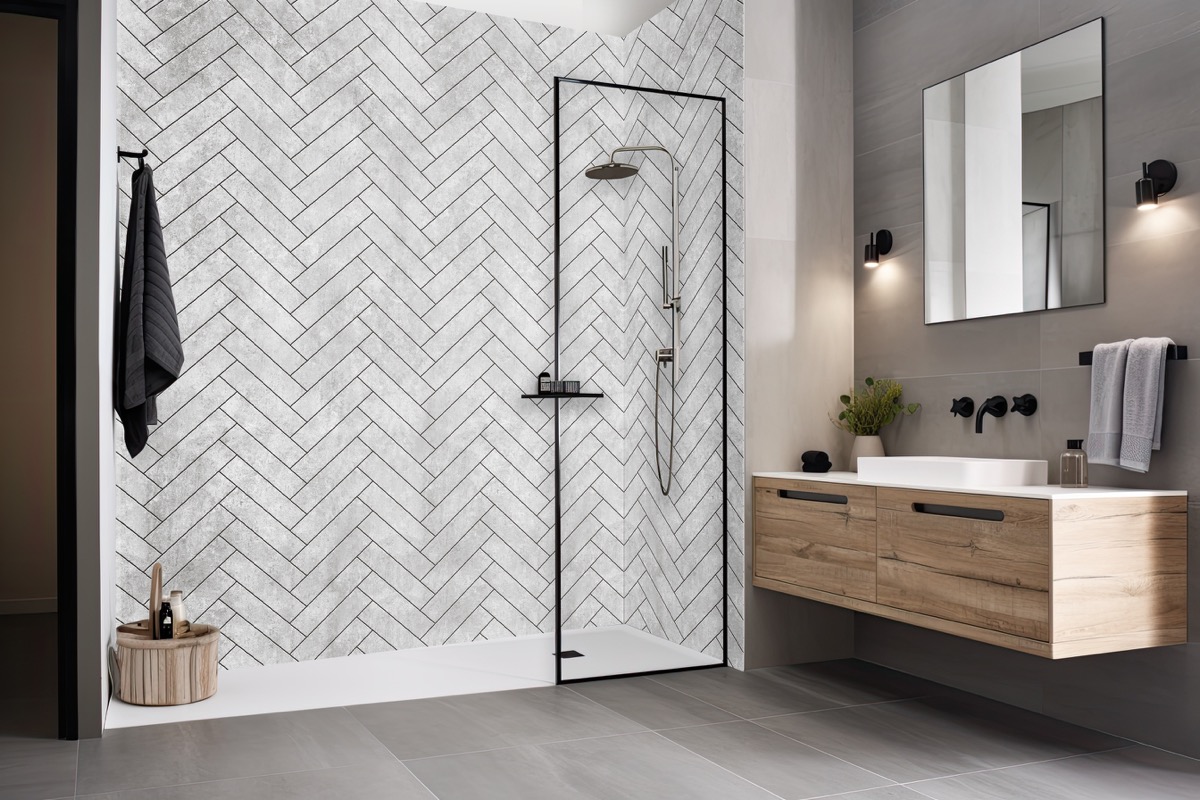
| Tile effect | Individual tile shapes with recessed “grout lines” and glazed surface texture | Traditional bathroom aesthetics |
| Slate | Dark, layered slate with natural cleft texture | Contemporary bathrooms, feature walls |
| Wood grain | Oak, walnut, or ash effect with embossed grain lines | Spa-style bathrooms, boutique hotels |
| Concrete/industrial | Smooth concrete effect with subtle surface variation | Urban, industrial-style bathrooms |
Double Embossed vs Standard Panels
| Feature | Double Embossed | Standard Smooth | Single Embossed |
|---|---|---|---|
| Surface texture | Multi-dimensional (two layers) | Flat, smooth | Basic texture (one layer) |
| Visual realism | Excellent — closest to real stone/tile | Good (print quality dependent) | Good (some 3D effect) |
| Tactile quality | Genuine texture you can feel | Smooth plastic | Basic texture |
| Light behaviour | Scatters light naturally | Uniform reflection (plastic sheen) | Some light scattering |
| Cleaning | Slightly more effort (texture traps less dirt than expected) | Easiest — wipe clean | Moderate |
| Cost | Premium (15–25% more than smooth) | Standard | Moderate premium |
| Best application | Feature walls, premium bathrooms | Commercial, rental, utility | General domestic |
Where to Use Double Embossed Panels
Feature Walls
The most common application. One wall in double embossed stone or marble effect, with the remaining walls in a complementary smooth or lightly textured panel. This creates a focal point that draws the eye and gives the room a premium feel without the premium cost of real stone.
Shower Enclosures
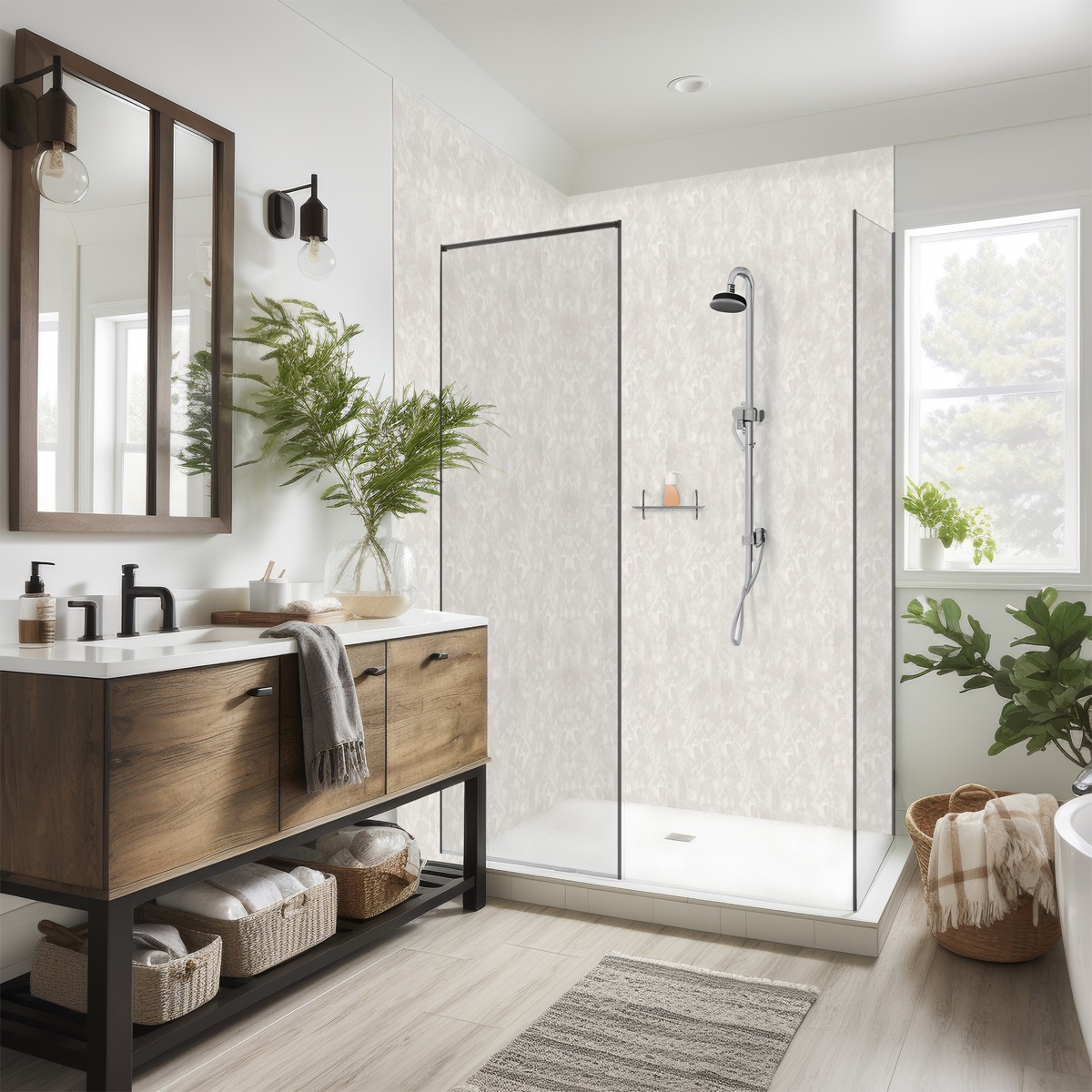
The shower wall is the most visible panel surface in any bathroom. Double embossed marble or stone effect in the shower creates the look of a luxury wet room. The panels are fully waterproof regardless of texture — the embossing does not create water ingress points.
Commercial Installations
Hotels, restaurants, and reception areas where the wall finish needs to impress visitors and withstand high traffic. Double embossed panels deliver the visual quality of natural materials with the practical benefits of PVC — easy cleaning, impact resistance, and no maintenance.
Boutique and Spa-Style Bathrooms
Where the bathroom is designed as a relaxation space rather than just a functional room. The tactile quality of double embossed panelling contributes to the sensory experience — it genuinely feels different to standard smooth panels.
Installation Notes
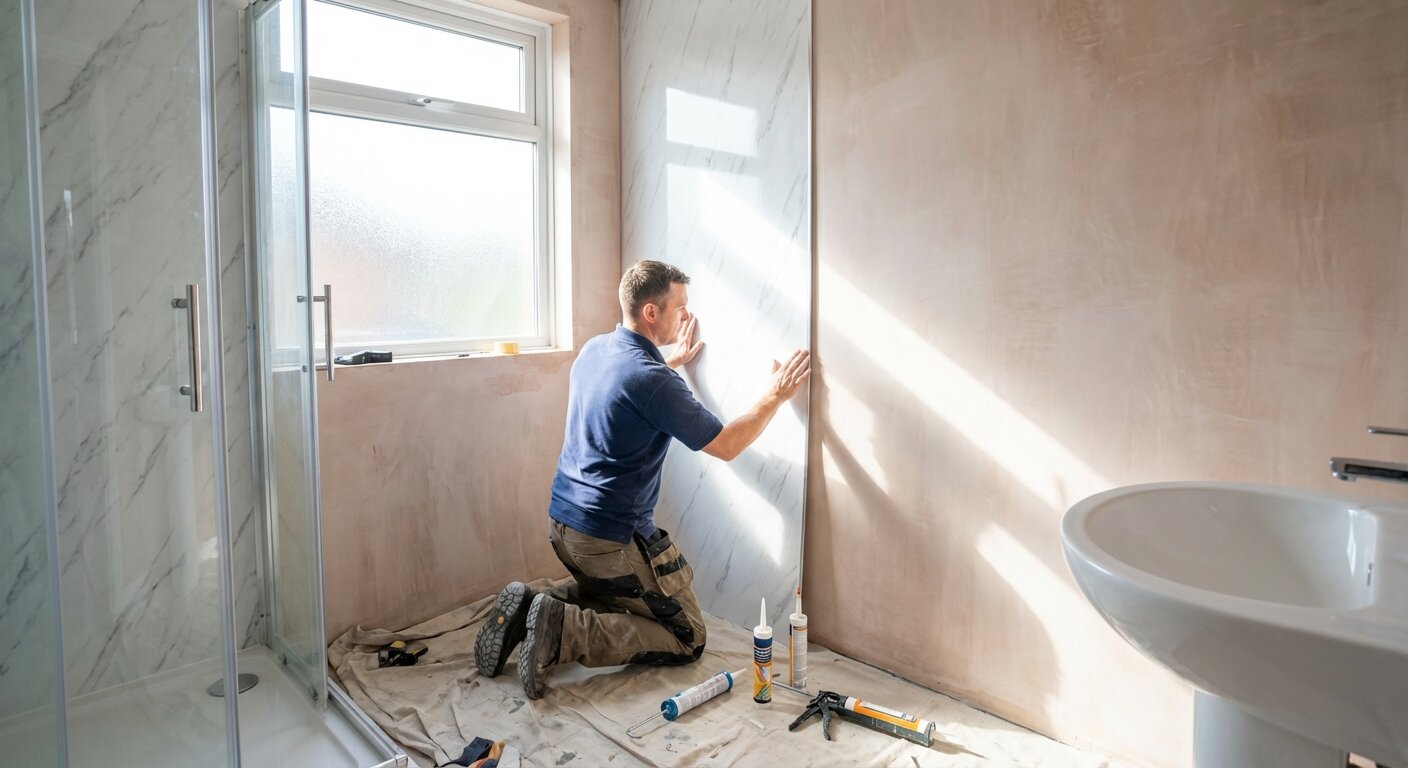
Double embossed panels install exactly like standard wall panels — the same adhesive, the same trims, the same techniques. There are no special requirements for the embossed surface. A few practical tips:
- Cutting: The embossed surface does not affect cutting. Use a fine-toothed saw or jigsaw as normal. The cut edge will show the panel cross-section, so always finish cut edges with a trim profile.
- Adhesive: Apply adhesive in the usual vertical beads. The embossed back surface (often flat) provides the same bonding area as smooth panels.
- Cleaning: Use a soft cloth or sponge. Avoid abrasive pads that could wear the embossed surface detail over time. The textured surface does not trap dirt as much as you might expect — PVC is inherently non-porous.
- Matching patterns: Some embossed designs have a repeating pattern. Check whether adjacent panels need aligning (similar to wallpaper pattern matching) for the most realistic result.
For detailed installation instructions, see our guide on how to install PVC wall panels.
Durability and Maintenance
Double embossed panels are manufactured from the same PVC-U material as standard panels. The embossing is integral to the panel — it is pressed into the material during manufacturing, not applied as a surface coating. This means:
- The texture will not wear off under normal use and cleaning
- The panel is fully waterproof — the embossing does not compromise the waterproof surface
- UV resistance is provided by the protective lacquer coat, which covers the embossed surface
- Lifespan is the same as standard panels: 15–25 years in normal domestic use
The only maintenance difference is that deeply embossed surfaces may require a soft brush or sponge rather than a flat cloth to clean effectively, as a flat cloth can skip over the textured recesses.
Frequently Asked Questions
What is double embossed wall panelling?
It is a PVC wall panel that has been pressed twice during manufacturing — once for the main surface pattern (tile grid, stone shape) and a second time for fine surface detail (grain, pitting, glaze texture). The result is a panel with genuine three-dimensional texture that looks and feels noticeably more realistic than flat-printed or single-embossed panels.
Is double embossed panelling more expensive?
Yes, typically 15–25% more than standard smooth panels. The additional manufacturing step (second embossing pass) adds cost. However, it is still dramatically cheaper than real stone, slate, or high-end ceramic tiles.
Can I use double embossed panels in a shower?
Yes. The panels are fully waterproof regardless of the surface texture. The embossing is pressed into solid PVC — there are no gaps, pores, or water ingress points. Seal edges and joints with silicone sealant as you would with any panel installation.
How do I clean embossed panels?
Use a soft cloth or sponge with warm water and a mild detergent. For deeper cleaning, a soft-bristled brush reaches into the textured surface. Avoid abrasive pads or scouring agents that could wear the embossed detail over time.
Do embossed panels look cheap up close?
No — the opposite. Double embossing creates a genuinely tactile, realistic surface that is more convincing close up than flat-printed panels. The multi-dimensional texture catches light naturally, avoiding the “plastic sheen” that flat panels can have.
Related Kalsi Products
- Embossed Cladding Range — full range of double embossed finishes
- Smooth Panels — flat-finish panels for commercial and rental use
- Decorative Panels — premium designs and special effects
- Colour Range — all available colours and finishes
- Wall Panelling Calculator — calculate quantities for your project