Bathroom Wall Panels vs Tiles: Cost, Speed & Durability
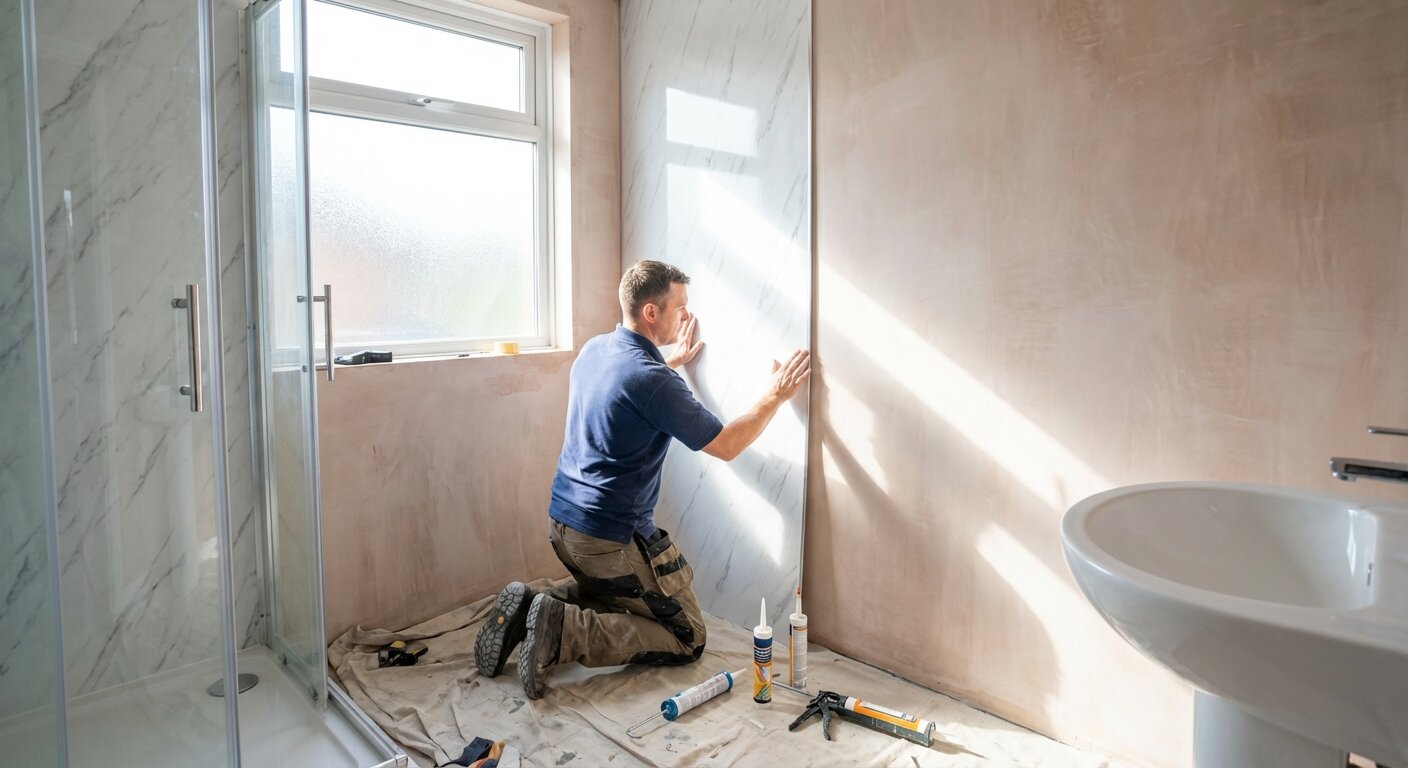
Wall panels are better than tiles in several key respects: they are faster to install (hours vs days), completely waterproof without grout to maintain, cheaper for a full bathroom, and can be fitted over existing tiles without removal. Tiles still win on perceived luxury, unlimited design options, and the ability to create custom patterns — but for practical, cost-effective, low-maintenance bathroom finishes, PVC wall panels are the superior choice for most applications. A panel bathroom can be fitted in a single day by one person; a tiled bathroom typically takes 2–4 days for a skilled tiler plus grouting and drying time.
This comparison has shifted dramatically in the past decade. Wall panels used to be seen as a budget alternative — the “cheap” option. Today’s panels feature realistic stone, marble, and tile-effect finishes that are genuinely convincing, and the practical advantages over tiles are so significant that panels are increasingly specified on mid-range and premium bathroom projects.
Head-to-Head Comparison
| Feature | PVC Wall Panels | Ceramic Tiles |
|---|---|---|
| Installation time (full bathroom) | 4–8 hours | 2–4 days |
| Skill level needed | Basic DIY | Skilled tiler |
| Waterproofing | 100% (no grout joints) | Dependent on grout condition |
| Grout maintenance | None | Regular regrouting (5–10 years) |
| Mould risk | Very low (no grout for mould to colonise) | Moderate (grout is mould-prone) |
| Cost (materials, full bathroom) | £200–600 | £300–1,500+ |
| Cost (fitted, full bathroom) | £400–1,200 | £800–3,000+ |
| Over existing tiles? | Yes — fit directly over | Must remove old tiles first |
| Weight | Very light (~2 kg per panel) | Heavy (wall prep may be needed) |
| Design range | Good — stone, marble, tile, plain, woodgrain | Unlimited — any design, shape, colour |
| Perceived value | Good (improving rapidly) | High (tiles still seen as premium) |
| Durability | 15–25 years | 20–40 years (but grout fails sooner) |
| Repair | Replace individual panel | Replace individual tile (if you have spares) |
| Underfloor heating | Compatible | Compatible |
Cost Comparison: Full Bathroom
For a standard bathroom (approx. 12 m² of wall coverage):
| Item | Wall Panels | Tiles |
|---|---|---|
| Materials (panels/tiles) | £200–600 | £300–1,500 |
| Adhesive/fixings | £20–50 | £30–60 |
| Grout | — | £15–30 |
| Tanking/waterproofing | — | £50–100 |
| Trims and edging | £30–60 | £20–50 |
| Materials total | £250–710 | £415–1,740 |
| Labour (DIY or professional) | £150–500 | £400–1,500 |
| Total fitted | £400–1,210 | £815–3,240 |
Panels save 40–60% on a typical bathroom compared to a mid-range tile specification. For a landlord with multiple properties, or a developer fitting out a block of flats, this cost difference multiplied across dozens of bathrooms is substantial.
The Waterproofing Advantage
This is the single biggest practical advantage of wall panels. A PVC panel bathroom has zero grout joints. The panels butt together with tongue-and-groove or click-fit joints, creating a continuous waterproof surface.
Tiled bathrooms, by contrast, have hundreds of grout joints — every one a potential entry point for water. When grout deteriorates (and it always does, typically within 5–10 years), water penetrates behind the tiles, causing:
- Mould growth on the wall behind
- Tile adhesive failure (tiles fall off)
- Damp patches on the other side of the wall
- Structural damage to plasterboard or timber framing
PVC panels eliminate this risk entirely. Water hits the surface and runs off — there are no joints for it to penetrate. This makes panels particularly well-suited to shower enclosures, around baths, and in any area with direct water contact.
Mould and Hygiene
Grout is porous. Even sealed grout absorbs moisture over time, creating an ideal environment for mould and bacteria. In bathrooms, this manifests as black mould along grout lines — unsightly, unhygienic, and difficult to remove permanently.
PVC panels have a non-porous surface. Mould cannot colonise the material itself. Any surface mould (from general bathroom humidity) wipes off with a damp cloth and mild cleaner. This hygiene advantage is why panels are increasingly specified in care homes, hospitals, and commercial washrooms.
Installation Speed
Wall Panels: Half a Day
- Prepare the surface (clean, flat, dry — panels can go over existing tiles)
- Measure and cut panels (jigsaw, circular saw, or fine-toothed handsaw)
- Apply adhesive or screw to battens
- Click or tongue-and-groove panels together
- Fit trims and sealant at edges
- Done — use the bathroom immediately
Tiles: 2–4 Days
- Remove existing wall covering
- Prepare the surface (level, tank/waterproof wet areas)
- Set out tile layout (plan cuts, symmetry)
- Mix and apply tile adhesive
- Set tiles — allow to dry (24 hours minimum)
- Mix and apply grout — allow to cure (24–48 hours)
- Clean and seal grout
- Fit trims
For rental properties, commercial bathrooms, and any project where minimising downtime matters, panels are dramatically faster. A bathroom can be stripped and re-panelled in a single day, meaning the room is out of service for hours rather than days.
When Tiles Are Still the Right Choice
High-End Residential
In a luxury home where the bathroom is a design statement, large-format porcelain tiles, mosaic features, and bespoke tile layouts create a premium finish that panels cannot replicate.
Specific Design Requirements
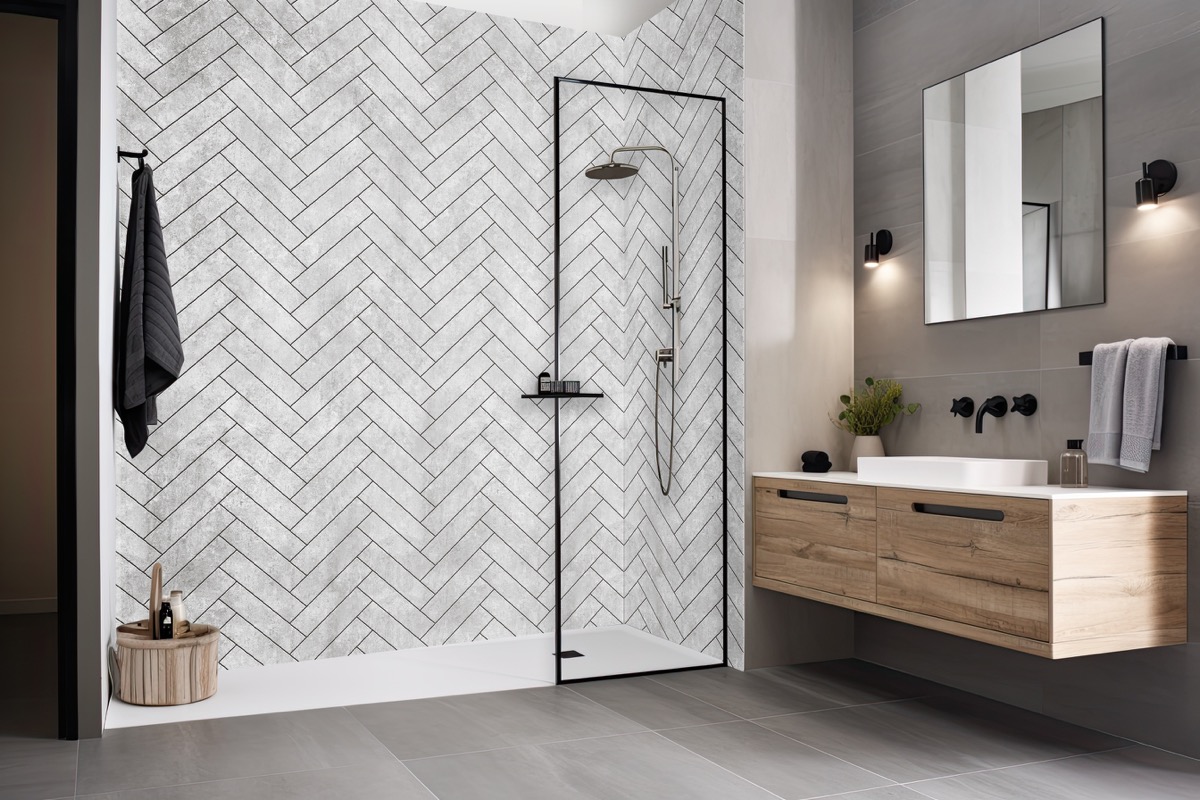
Where the client wants a specific tile pattern (herringbone, Moroccan, metro tile, encaustic), tiles are the only option. Panels offer tile-effect designs but not the texture and tactile quality of real ceramics.
Floor-to-Ceiling Consistency
Tiles can cover floors and walls in the same material, creating visual continuity. Wall panels are wall-only — the floor still needs a separate finish.
Listed Buildings and Conservation Areas
Some conservation requirements may specify traditional materials. Check with your local planning authority if the property is listed or in a conservation area.
When Panels Win Outright
Rental Properties
Landlords need fast, durable, low-maintenance bathroom finishes. Panels install in hours, resist mould without ongoing maintenance, and can be replaced individually if damaged. The cost saving per bathroom multiplied across a portfolio is substantial. See our guide on wall panelling for landlords.
Care Homes and Commercial
Hygiene is critical. PVC panels have no grout joints where bacteria and mould can colonise, and they can be cleaned with standard disinfectants. Many care homes, hotels, and healthcare facilities now specify panels over tiles for this reason.
Retrofits Over Existing Tiles
Panels go directly over existing tiles — no demolition, no dust, no skip. This alone can save £300–600 and 1–2 days on a bathroom refit.
Budget Bathrooms
A full panel bathroom costs £400–1,200 fitted. A tiled equivalent starts at £800+. For cost-conscious projects without compromising on waterproofing or appearance, panels are the clear winner.
Short-Turnaround Projects
Holiday lets, student accommodation, and any property where downtime costs money benefit from panels’ same-day installation. Strip on Monday morning, panel and complete by Monday evening.
Browse Kalsi’s wall panelling range for available designs, colours, and finishes.
Frequently Asked Questions
Are wall panels better than tiles?
For practical performance — speed, cost, waterproofing, and maintenance — yes. Wall panels install in hours, have no grout to maintain, are 100% waterproof, and cost 40–60% less than a tiled equivalent. Tiles remain the better choice for luxury, bespoke design, and perceived premium value.
Do wall panels look cheap?
Modern wall panels with high-definition printed finishes can be surprisingly convincing — realistic stone, marble, and tile effects are available. Budget plain-colour panels can look basic, but mid-range and premium panel ranges offer finishes that rival tile aesthetics at a fraction of the cost.
How long do bathroom wall panels last?
15–25 years with normal use and basic cleaning. They do not deteriorate from water exposure (unlike grout), but the surface can be scratched or damaged by impact. UV exposure (e.g., a bathroom with a large south-facing window) can cause gradual fading over many years.
Can I fit wall panels over existing tiles?
Yes — this is one of the biggest advantages. As long as the existing tiles are firmly fixed and the surface is reasonably flat, panels can be adhesive-mounted directly over the top. No tile removal, no dust, no skip.
Are wall panels waterproof?
PVC wall panels are 100% waterproof. The material itself is impermeable, and the tongue-and-groove or click-fit joints create a continuous sealed surface. They can be used in showers, around baths, and in wet rooms with appropriate edge sealing.
Related Kalsi Products
- Wall Panelling Range — smooth, embossed, and decorative panels
- Smooth Panels — clean, modern finishes
- Embossed Cladding — textured, realistic stone and tile effects
- Colour Range — full colour options
- Wall Panelling Calculator — calculate quantities and budget