How to Spot Rotten Fascia Boards (Before It’s Too Late)
You can identify rotten fascia boards by looking for peeling or bubbling paint, soft or spongy areas (tested by pressing with a screwdriver), visible fungal growth, staining or discolouration, and sections where the board has swollen, warped, or pulled away from the rafters. The earliest sign is usually paint failure — blistering, cracking, or flaking in a localised area — which indicates moisture has entered the timber beneath. By the time the board is visibly soft, bent, or crumbling, the rot is advanced and may have spread to the rafter ends behind. Catching it early saves money and prevents structural damage.
Timber fascia boards are the most vulnerable element of the roofline. They sit at the junction between the roof and the wall, exposed to rain, frost, UV, and constant temperature cycling. They carry the weight of the gutter and trapped rainwater. And they are painted — meaning the protective coating needs regular renewal, which many homeowners neglect. The result is one of the most common (and most ignored) maintenance problems on UK houses.
The 7 Warning Signs
1. Paint Peeling, Blistering, or Flaking
What it looks like: Isolated patches where the paint has lifted away from the wood surface. The exposed timber underneath may appear darker or discoloured.
What it means: Moisture has penetrated behind the paint film, either from above (leaking gutter), from behind (condensation), or through the paint itself (failed coating). Once water gets behind the paint, it cannot escape and the timber begins to rot from the inside.
Severity: Early stage. The timber may still be sound underneath — check with the screwdriver test.
2. Soft or Spongy Areas
The screwdriver test: Press the tip of a flathead screwdriver firmly into the surface of the fascia at various points, paying particular attention to:
- The bottom edge
- Near gutter brackets
- At joints between boards
- The lower end of bargeboards
What it means: If the screwdriver sinks easily into the wood (more than 2–3 mm with moderate pressure), the timber is rotten. Healthy softwood resists penetration firmly.
Severity: Moderate to advanced. The surface rot may be the tip of the iceberg — the interior could be significantly worse.
3. Visible Fungal Growth
What it looks like: Dark patches, green/black spots, or actual fungal fruiting bodies (mushroom-like growths) on the surface. Sometimes visible as a white or grey fibrous growth along the grain.
What it means: Active fungal decay. Wet rot (the most common in UK roofline) requires persistent moisture to grow. Its presence confirms both moisture ingress and active timber degradation.
Severity: Moderate to severe. The fungus is consuming the timber’s structural fibres.
4. Swelling or Warping
What it looks like: The fascia board is no longer flat — it bows outward, twists, or has developed an uneven surface. It may appear thicker in some areas than others.
What it means: The timber has absorbed water and expanded unevenly. When it dries, it does not return to its original shape. Repeated wetting and drying cycles cause progressive warping.
Severity: Moderate. The board’s structural integrity is compromised and it will not hold gutter brackets reliably.
5. Board Pulling Away from Rafters
What it looks like: A visible gap between the back of the fascia board and the rafter ends. The board may be tilting outward, with the top edge further from the wall than the bottom.
What it means: The fixings (nails or screws) have lost their grip because the timber around them has rotted. The board is no longer securely attached.
Severity: Advanced. The gutter is also at risk — if the fascia falls, the gutter goes with it.
6. Staining or Discolouration
What it looks like: Dark streaks running down the face of the board, often starting below a gutter joint, bracket, or at the top edge where the board meets the roof tiles.
What it means: Water is running down or behind the board persistently. The staining is a map of the moisture path. Follow it to find the source — usually a leaking gutter joint, blocked outlet, or failed tile/flashing above.
Severity: Early to moderate. The staining itself is cosmetic, but the underlying moisture is causing rot.
7. Crumbling or Missing Sections
What it looks like: Pieces of the board have broken away, leaving exposed timber or gaps. The remaining material crumbles when touched.
What it means: End-stage rot. The timber has lost all structural strength and is disintegrating.
Severity: Critical. Replacement is essential and urgent.
Where Rot Starts
Fascia rot follows a predictable pattern. These are the most vulnerable points:
| Location | Why It Rots Here |
|---|---|
| Bottom edge of the board | Water runs down the face and collects at the bottom. If the soffit joint is not sealed, it wicks upward. |
| Behind gutter brackets | Screw holes through the paint allow water to enter. Brackets trap moisture against the board. |
| At board joints | End grain is exposed and absorbs water readily. |
| Below leaking gutter joints | A constant drip saturates a small area repeatedly. |
| The lower end of bargeboards | Water runs down the entire slope and concentrates at the bottom. |
| North-facing elevations | Less sun exposure means slower drying after rain. |
What Happens If You Ignore It
Fascia rot is progressive. Left untreated, the damage escalates:
Year 1–2: Paint failure and early surface rot. Cosmetic but easy to fix.
Year 2–5: Rot extends deeper into the board. Board begins to warp, gutter brackets loosen.
Year 5–10: Rot reaches the rafter ends behind the fascia. The structural timber that supports the roofline is now compromised. The board may fall away partially.
Year 10+: Extensive structural rot in rafter feet. Water enters the roof void, causing damp in the bedroom ceilings below. Repair now involves structural carpentry, not just a new fascia board.
The cost escalation is dramatic:
| Stage | Typical Repair Cost |
|---|---|
| Repaint and seal (early catch) | £100–300 |
| Replace fascia board(s) only | £200–600 |
| Replace fascia + repair 2–3 rafter ends | £500–1,200 |
| Replace fascia + extensive rafter repair | £1,500–3,000 |
| Full structural repair (rafter ends, soffit, fascia, internal damp) | £3,000–8,000+ |
Annual Inspection Checklist
Check your fascia boards at least once a year — ideally in spring when winter damage is visible:
- ☐ Walk around the property and look at the fascia from ground level with binoculars
- ☐ Check for paint peeling, bubbling, or discolouration
- ☐ Look for visible warping or boards pulling away from the wall
- ☐ Check beneath gutter joints for staining
- ☐ If accessible, do the screwdriver test at vulnerable points (bottom edge, joints, behind brackets)
- ☐ Check bargeboards — especially the lower 300 mm near the eaves
- ☐ Look into the gutter — is water sitting against the back of the fascia?
The Permanent Fix: PVC-U Replacement
Once timber fascia has rotted, the best long-term solution is full replacement with PVC-U. This eliminates the rot cycle permanently:
- PVC-U does not absorb water → cannot rot
- No paint required → no paint failure → no moisture entry point
- 30+ year lifespan with zero maintenance
- Available in all standard sizes and colours from Kalsi’s roofline range
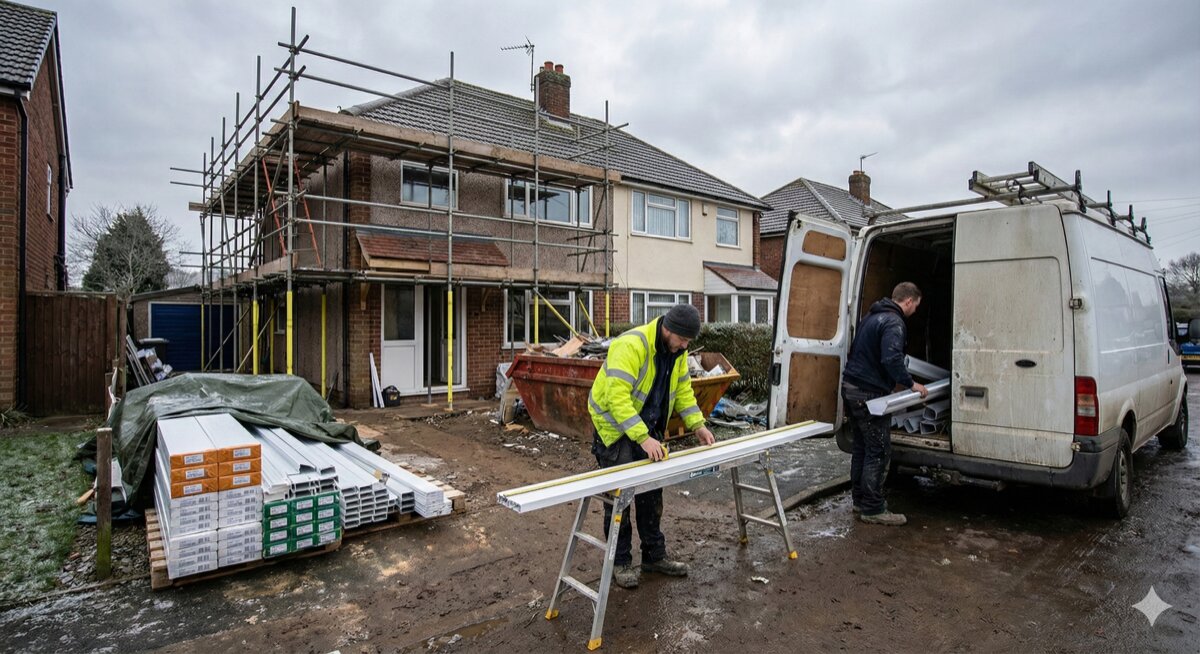
Replacement involves removing the old timber, repairing any damaged rafter ends, and fitting new 16 mm PVC-U boards. See our full guide to fascia board replacement.
Frequently Asked Questions
How do I know if fascia boards are rotten?
Look for peeling paint, soft or spongy areas (test with a screwdriver), visible fungal growth, warping, and boards pulling away from the rafters. The earliest sign is usually localised paint failure — this is the best time to act.
Can I repair rotten fascia without replacing it?
Minor surface rot can be treated with wood hardener and filled with exterior wood filler, then repainted. This is a temporary fix (2–5 years) that buys time. If the rot is more than superficial — the board is soft, warped, or the screwdriver test fails — full replacement is the correct approach.
How much does it cost to replace rotten fascia?
Replacing the fascia boards on a single elevation (e.g., front of a semi-detached) costs £400–900 including materials, labour, and scaffold tower. A full house replacement (all elevations, including soffit and guttering) costs £2,000–4,000 depending on property size and complexity.
Does rotten fascia affect house value?
Yes. Visible roofline deterioration is one of the first things buyers and surveyors notice. It signals deferred maintenance and raises concerns about hidden damage to roof timbers. A survey noting rotten fascia typically leads to a price reduction or a demand for remedial work before exchange.
How can I prevent fascia boards from rotting?
The most effective prevention is replacing timber with PVC-U, which cannot rot. If keeping timber, maintain the paint finish religiously (every 3–5 years), seal all joints and end grain with preservative, ensure gutters are not leaking, and check annually for early signs of moisture ingress.