Smooth vs Embossed Wall Panels: Choosing a Finish
The best wall panel finish depends on your priorities: smooth panels are the easiest to clean, the cheapest, and the most practical for commercial and rental use; embossed panels look more realistic and premium, with genuine three-dimensional texture that mimics stone, tile, or wood grain. For most bathrooms, embossed panels on the feature wall and smooth panels on the remaining walls is the best compromise — you get the visual impact of texture where it matters most, with the easy maintenance of smooth panels everywhere else.
The finish you choose affects how the panels look, feel, clean, and age. It also affects the cost — embossed panels carry a 15–25% premium over smooth equivalents. This guide breaks down the practical differences so you can make the right choice for your specific application.
What Is a Smooth Panel?
A smooth panel has a flat, uniform surface with the design applied via high-definition digital or rotogravure printing. The printed image may show stone, marble, tile, or wood patterns, but the surface itself is perfectly flat — you cannot feel the pattern.
Smooth Panel Characteristics
- Surface: Flat, uniform, no physical texture
- Feel: Smooth PVC (like a laminate worktop)
- Appearance: The printed design can be highly detailed, but the flat surface has a uniform light reflection
- Cleaning: Extremely easy — single wipe with a cloth
- Availability: Widest colour and design range
- Cost: Standard pricing (the baseline for comparison)
What Is an Embossed Panel?
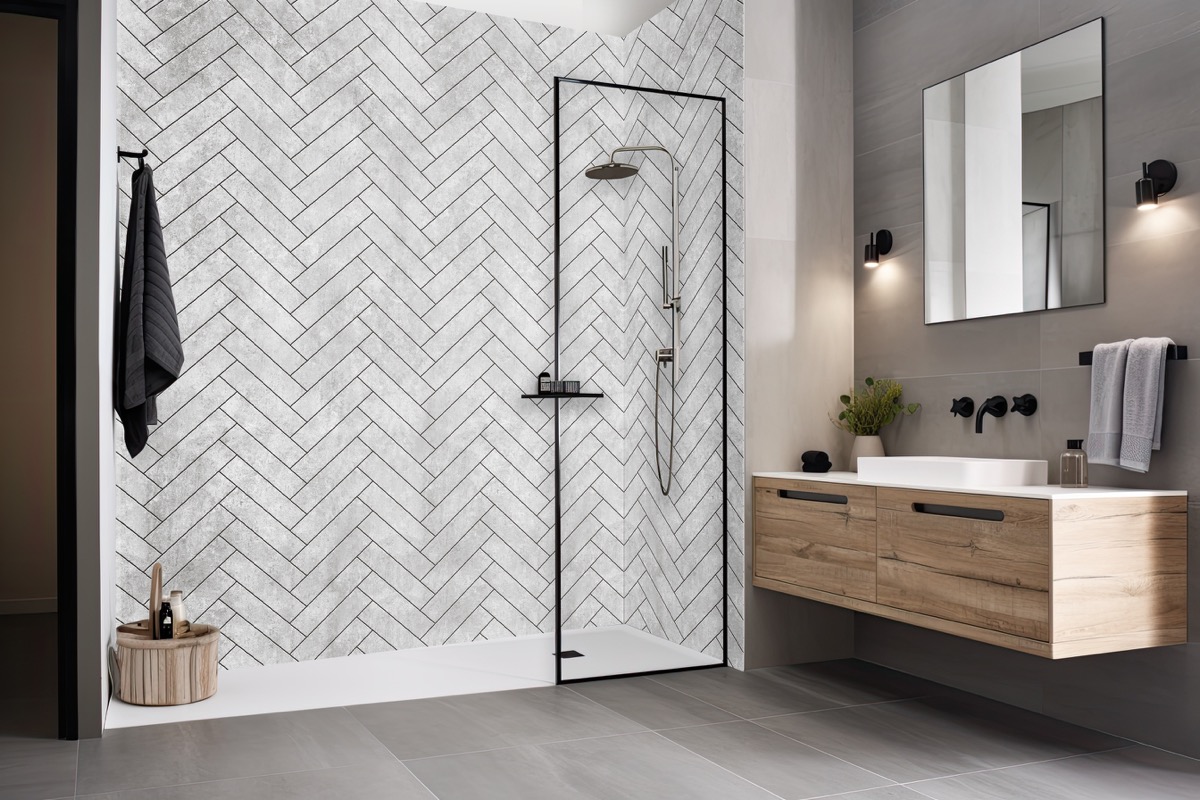
An embossed panel has a physically textured surface created during manufacturing. The texture is pressed into the PVC, creating raised and recessed areas that you can see and feel. The design is printed onto this textured surface, so the visual pattern aligns with the physical texture.
Single Embossed
One layer of texture — typically a tile grid pattern or a basic stone texture. Adds some dimensional interest but the texture is relatively uniform and repetitive.
Double Embossed
Two layers of texture — a macro pattern (tile grid, stone shape) plus a micro texture (grain, pitting, veining) within the macro pattern. This creates a multi-dimensional surface that looks and feels significantly more realistic. See our detailed guide on double embossed cladding.
Embossed Panel Characteristics
- Surface: Three-dimensional, physically textured
- Feel: Tactile — you can feel the stone grain, tile edge, or wood grain
- Appearance: More realistic. The texture scatters light naturally, avoiding the “flat plastic” look
- Cleaning: Slightly more effort — texture can trap minimal dirt (but PVC is non-porous, so it wipes off)
- Availability: Smaller range than smooth (not all colours available embossed)
- Cost: 15–25% premium over smooth
Side-by-Side Comparison
| Feature | Smooth Panels | Embossed Panels |
|---|---|---|
| Realism | Good (high-definition print) | Excellent (print + physical texture) |
| Tactile quality | None (flat PVC) | Genuine texture you can feel |
| Light behaviour | Uniform reflection | Natural light scattering |
| Cleaning ease | Excellent — single wipe | Very good — occasional soft brush |
| Fingerprint visibility | Shows fingerprints on dark gloss | Less visible (texture diffuses) |
| Water mark visibility | Shows limescale spots on dark colours | Less visible on textured surface |
| Mould risk | Minimal | Minimal (same non-porous PVC) |
| Cost per m² | £15–35 | £22–45 |
| Colour range | Widest available | More limited |
| Best for | Commercial, rental, utility, general | Feature walls, premium bathrooms, hospitality |
| Perceived value | Good | Premium |
Which Is Best for Your Application?
Standard Bathroom
Recommendation: Embossed feature wall + smooth remaining walls
The feature wall (usually the wall you see first when entering the room, or the wall behind the bath/shower) gets the visual impact of embossed texture. The other walls use matching smooth panels for easy cleaning and lower cost. This creates a layered, designed look at a reasonable budget.
Shower Enclosure
Recommendation: Either (both are equally waterproof)
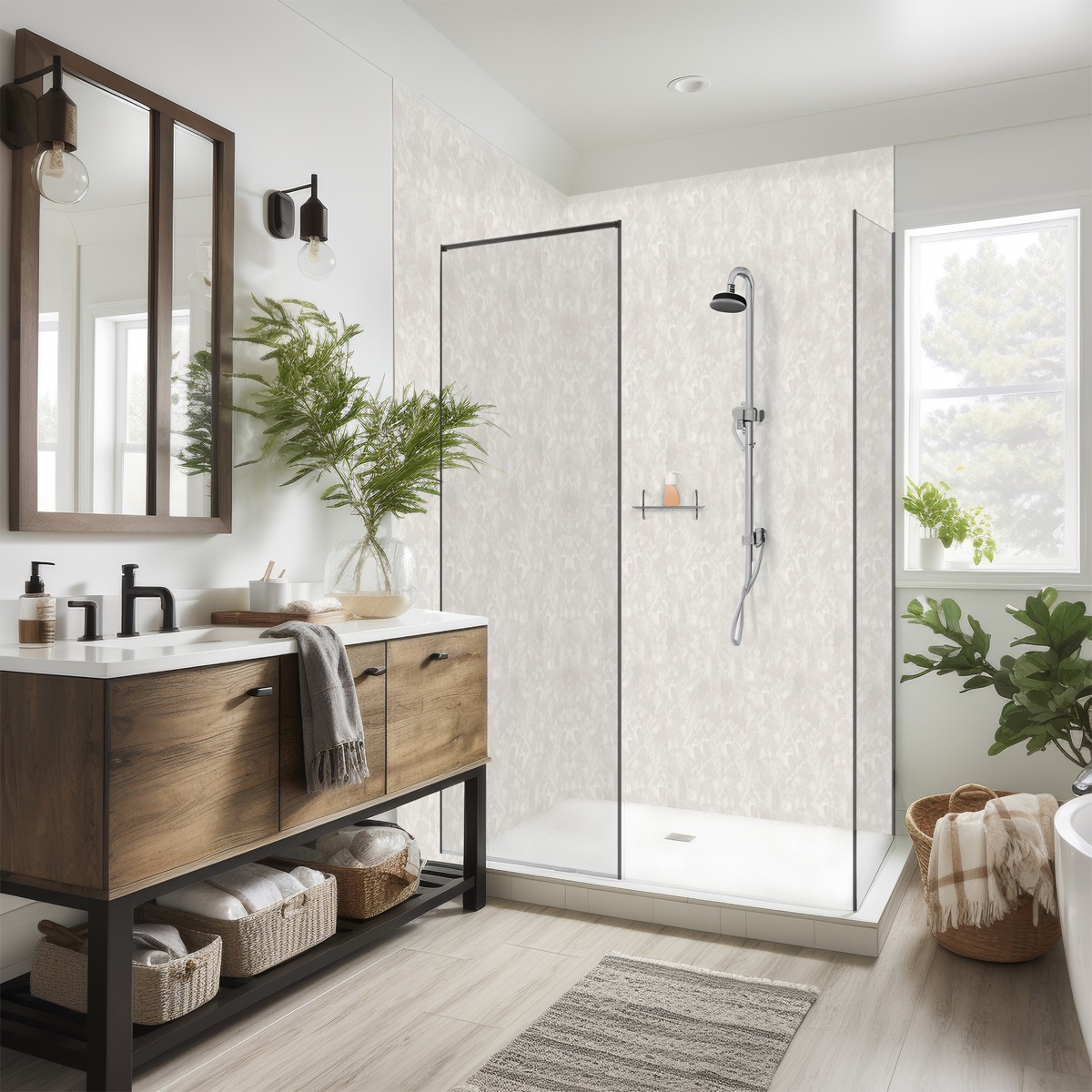
If you want the shower to be the visual centrepiece, use embossed marble or stone panels. If easy cleaning is the priority (especially in hard-water areas where limescale is an issue), smooth panels show limescale less on lighter colours and are easier to wipe clean.
Rental Property
Recommendation: Smooth panels
Easy cleaning is the priority in rental properties. Tenants may not maintain textured panels as carefully as a homeowner would. Smooth panels stay looking clean with minimal effort and are slightly cheaper — both advantages for a landlord managing multiple properties.
Commercial (Care Homes, Hotels, Schools)
Recommendation: Depends on the setting
- Care homes: Smooth — hygiene and easy cleaning are paramount. See our guide on commercial wall panelling
- Hotels: Embossed — the premium look justifies the extra cost in guest-facing spaces
- Schools: Smooth — durability and easy cleaning in high-traffic environments
- Restaurants: Embossed for customer areas, smooth for kitchens
Wet Room
Recommendation: Smooth panels
In a wet room where the entire floor is the shower, maximum water exposure means easy cleaning is critical. Smooth panels have no texture to trap moisture or cleaning product residue. For more on wet room specifications, see our guide on wall panelling for wet rooms.
Ceiling
Recommendation: Smooth panels
Ceilings are harder to clean than walls (gravity). Smooth gloss panels on the ceiling reflect light and are effortless to wipe down. Textured ceiling panels can trap condensation droplets in the embossing.
The Cleaning Question in Detail
The most common concern about embossed panels is cleaning. Here is the reality:
Smooth Panels
- Wipe with a damp cloth. Done.
- Limescale spots wipe off with a standard bathroom spray.
- Dark gloss surfaces show fingerprints and water marks — wipe after cleaning for a streak-free finish.
Embossed Panels
- Wipe with a damp cloth — cleans 95% of the surface.
- For the 5% in deeper texture recesses, use a soft sponge or brush.
- The cleaning difference is genuinely minimal — we are talking about an extra 30 seconds per panel on a weekly clean.
- PVC is non-porous, so dirt and grime cannot penetrate the surface — it sits on top and wipes off.
The cleaning difference between smooth and embossed panels is often overstated. Both are dramatically easier to clean than tile grout.
Cost Impact
For a standard bathroom (12 m² of wall area):
| Scenario | Material Cost | Saving |
|---|---|---|
| All smooth panels (£22/m²) | £290 | Baseline |
| All embossed panels (£32/m²) | £422 | +£132 (46% more) |
| Feature wall embossed + smooth rest | £330 | +£40 (14% more) |
The feature wall approach gives 80% of the visual impact for 14% more cost — the best value compromise.
Frequently Asked Questions
Which wall panel finish is best?
For most bathrooms, a combination works best: embossed panels on the feature wall for visual impact, smooth panels on the remaining walls for easy cleaning and lower cost. For commercial and rental use, smooth panels are preferred for maximum ease of cleaning.
Are embossed panels harder to clean?
Marginally. The textured surface requires a soft sponge or brush rather than a flat cloth for the deepest texture recesses. The cleaning difference is minimal — both are dramatically easier to clean than tiles with grout.
Do smooth panels look cheap?
Not with modern high-definition printing. A well-printed marble or stone-effect smooth panel looks convincing on the wall. However, when touched, the flat surface does feel like PVC rather than real stone. If tactile realism matters, embossed panels are the better choice.
Can I mix smooth and embossed in one room?
Yes — this is the recommended approach. Use embossed on the feature wall and smooth on the remaining walls. Ensure the colours complement each other (same colour family, same manufacturer for consistent colour matching).
Are embossed panels more durable?
The durability of both types is identical — they are manufactured from the same PVC-U material with the same wall thickness and structural properties. The embossing is pressed into the panel during manufacturing and will not wear off under normal cleaning. The protective lacquer coating covers both smooth and embossed surfaces equally, providing the same UV resistance and chemical resistance regardless of the surface texture. Both types have an expected lifespan of 15–25 years in normal domestic use.
Related Kalsi Products
- Smooth Panels — full range of smooth-finish panels
- Embossed Cladding — double embossed premium finishes
- Decorative Panels — special designs and effects
- Colour Range — all colours across both finishes
- Wall Panelling Calculator — calculate quantities and budget