How to Replace a Soil Stack (Full Walkthrough)
Replacing a soil stack typically costs £800–2,500 for a standard two-storey house, covering materials (£150–400), scaffolding (£300–800), and labour (£400–1,200 for 1–2 days’ work). The process involves removing the old stack from vent to base, fitting a new 110 mm PVC-U stack with connections for all WCs and waste pipes, sealing the roof penetration, and connecting to the underground drain. If the existing stack is cast iron or the original waste connections need reconfiguring, the cost and time increase.
A soil stack replacement is typically triggered by one of three things: the old stack has cracked or corroded beyond repair (common with cast iron stacks over 50 years old), the property is being refurbished and the drainage needs modernising, or new bathroom fixtures are being added and the existing stack cannot accommodate them. Whatever the trigger, the process is straightforward for an experienced plumber but involves working at height, which usually means scaffolding.
When to Replace
| Symptom | Likely Cause | Action |
|---|---|---|
| Visible corrosion on cast iron | Age-related deterioration | Replace with PVC-U |
| Cracks in PVC pipe (UV damage) | Old stack exposed to sunlight for decades | Replace |
| Persistent leaks at joints | Failed putty (cast iron) or seals (PVC) | Repair or replace |
| Blocked stack (recurring) | Internal corrosion/scale narrowing bore | Replace |
| Adding new fixtures | Existing stack has no spare boss positions | Replace or extend |
| Foul smell despite good traps | Cracked pipe leaking gas | Replace affected section or full stack |
| Sagging or misaligned sections | Bracket failure or structural movement | Refix or replace |
Repair vs Replace
Minor issues (a single cracked section, one leaking joint) can often be repaired by cutting out the damaged section and inserting new pipe with repair couplings. Full replacement is more cost-effective when:
- Multiple sections are damaged
- The material is cast iron and widespread corrosion is evident
- The stack layout needs changing (adding connections, relocating)
- The property is being fully refurbished and all services are being upgraded
Cost Breakdown
| Component | Cost Range |
|---|---|
| PVC-U soil pipe and fittings (110 mm) | £150–400 |
| Weathering slate / roof collar | £15–40 |
| Scaffolding (2-storey house) | £300–800 |
| Labour (plumber, 1–2 days) | £400–1,200 |
| Building Control fee (if applicable) | £100–300 |
| Skip / waste disposal (cast iron removal) | £50–150 |
| Total | £800–2,500 |
Cast-iron-to-PVC replacement is at the higher end because the old iron is heavy, difficult to remove safely, and may require structural support modifications. On three-storey properties, scaffold costs increase significantly, pushing the total towards £3,000+.
Step-by-Step Replacement
1. Plan and Prepare
- Draw the existing stack layout: pipe route, branch connections (WCs, basins, baths), vent position, underground connection
- Order all materials: pipe lengths, bends, boss connectors, brackets, weathering slate, rest bend
- Erect scaffolding (for external stacks above single-storey height)
- Notify Building Control if required (new or significantly altered drainage)
- Inform occupants: no WC or waste discharge during the replacement
- Arrange temporary sanitation if the work will take more than one day
2. Disconnect Internal Plumbing
- Turn off water supply to WCs, basins, and baths connected to the stack
- Flush and empty all cisterns
- Disconnect waste pipes from the stack connections (bosses or branch fittings)
- Cap or plug all disconnected waste outlets temporarily
3. Remove the Old Stack
For PVC-U:
- Start at the top — remove the vent terminal and weathering slate
- Work downward, unclipping or unscrewing pipe brackets
- Cut the pipe into manageable sections with a hacksaw
- Remove the rest bend at the base
For cast iron:
- Caution: cast iron is heavy and brittle. Support sections before cutting to prevent them falling.
- Use an angle grinder with a metal-cutting disc to cut the stack into sections
- Lower sections carefully with ropes — do not let them drop
- Remove bolted or caulked joints at the base
- Old cast iron has scrap value — set aside for recycling
4. Install the New Stack
Working from the bottom up:
Rest bend:
- Fit a 110 mm PVC-U rest bend into the underground drain socket
- Ensure the invert level is correct for the existing drain gradient
- Use a flexible coupling if connecting to an existing clay or cast iron drain socket
Vertical pipe:
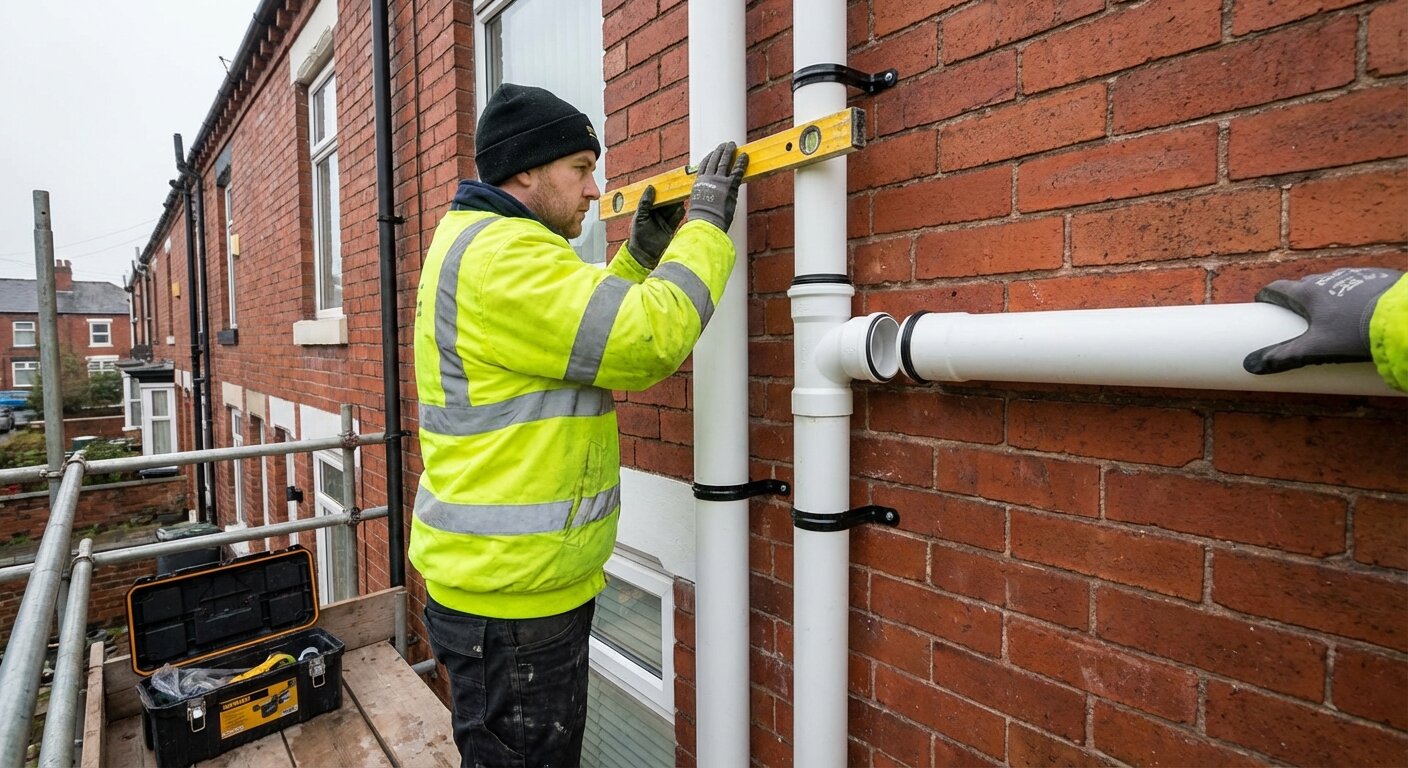
- Build up the stack with 110 mm PVC-U pipe lengths
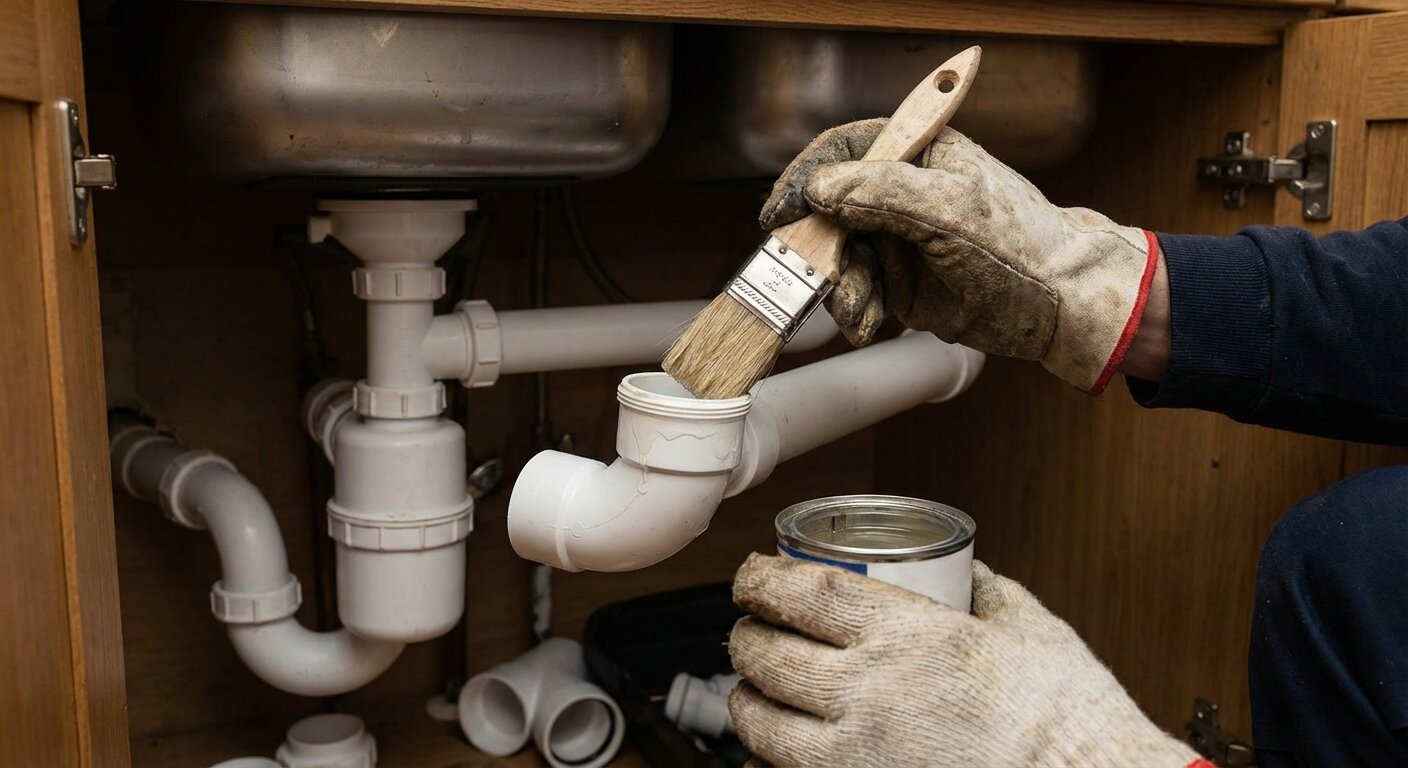
- Use solvent weld fittings for the main stack (permanent, rigid joints)
- Fit pipe brackets at maximum 1,800 mm intervals, secured to the wall
- Allow for thermal expansion on long vertical runs — include an expansion coupling if the stack exceeds 6 m
Branch connections:
- At each floor level, fit boss connectors or branch fittings for WC (110 mm) and waste (32/40 mm) connections
- Ensure WC connections enter the stack at the correct height and angle
- Ensure waste connections are at least 200 mm above or below WC connections (the cross-flow prevention rule)
Roof penetration:
- Pass the stack through the roof opening
- Fit a new weathering slate over the pipe, seating it over the surrounding tiles
- Seal with lead flashing or proprietary sealant
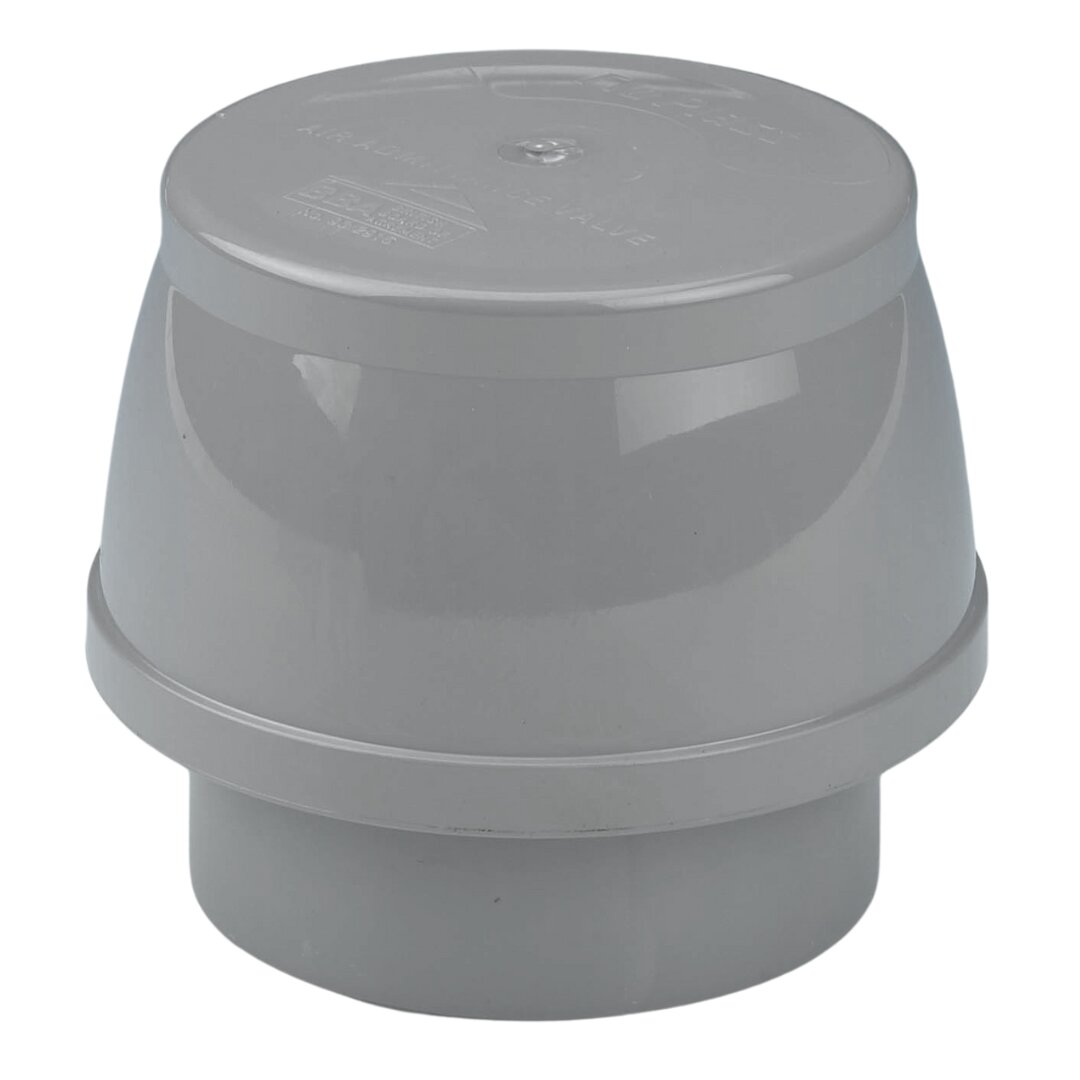
- Fit the vent terminal at least 900 mm above any nearby opening window
5. Reconnect Internal Plumbing
- Connect all waste pipes to the new boss connectors
- Reconnect WC pans to the 110 mm stack connections
- Turn water back on and fill all traps
- Check all internal connections for alignment and tightness
6. Test
- Run water through every connected fixture
- Check all joints for leaks (visual inspection from scaffolding)
- Flush all WCs and observe flow through the stack
- Check the underground drain connection for leaks
- Confirm the vent terminal is correctly positioned
- Run a full-system test: discharge multiple fixtures simultaneously to check for surcharging or trap siphonage
7. Building Control Sign-Off
If Building Control was notified, arrange inspection of the completed installation. They will check pipe sizing, gradient, vent position, branch distances, and underground connection integrity.
Cast Iron to PVC-U: Special Considerations
| Issue | Solution |
|---|---|
| Different pipe sizes | Use flexible adaptors at the junction with existing clay/iron drain below |
| Bracket positions | PVC uses different bracket centres — relocate fixings |
| Heavier wall fixings | Cast iron’s wall fixings may have caused brick damage — repair before fitting new brackets |
| Roof opening | May need adjustment for different pipe diameter |
| Connected pipework | Waste pipes from old iron branches may not align with new PVC boss positions — use adaptors or rerun short sections |
| Weight on structure | Cast iron is significantly heavier — removing it may improve the structural situation, but check that the original fixings are still sound |
Materials Checklist
For a standard two-storey external stack replacement:
| Item | Typical Quantity |
|---|---|
| 110 mm PVC-U pipe (3 m lengths) | 2–3 lengths |
| Rest bend (110 mm) | 1 |
| Boss connectors (32 mm, 40 mm) | 2–4 |
| WC branch fitting (110 mm) | 1–2 |
| Pipe brackets (110 mm) | 4–6 |
| Weathering slate | 1 |
| Vent terminal / cage | 1 |
| Solvent cement | 1 tin |
| Repair couplings (if connecting to existing pipe) | 1–2 |
| Flexible coupling (drain connection) | 1 |
Frequently Asked Questions
How much to replace a soil stack?
£800–2,500 for a standard two-storey house, including materials (£150–400), scaffolding (£300–800), and labour (£400–1,200). Cast iron to PVC replacement is at the higher end due to the weight and difficulty of removing old ironwork.
Can I replace a soil stack myself?
The plumbing work is within the capability of a competent DIYer, but the height access (scaffolding) and Building Regulations implications make it more practical as a professional job. If you are comfortable working at height and can manage the scaffold hire, DIY is feasible — but have Building Control inspect the work.
How long does soil stack replacement take?
A professional plumber typically completes a standard external stack replacement in 1–2 days. Cast iron removal adds time (the weight and cutting are slower). Internal stack replacement in a duct takes longer due to access constraints.
Do I need Building Control for a soil stack replacement?
Like-for-like replacement (same position, same connections) may not require formal approval. However, if you are changing the stack position, adding or moving connections, or the work is part of a larger building project, Building Control notification is required. Check with your local authority.
Should I replace cast iron with PVC?
Yes. Cast iron soil stacks over 50 years old are frequently corroded, cracked, or scaled internally. PVC-U is lighter, cheaper, easier to maintain, and has a 50+ year lifespan. The only exception is on some listed buildings where the conservation officer may require like-for-like cast iron replacement.
Related Kalsi Products
- Soil & Waste Systems — 110 mm soil pipe, fittings, and boss connectors
- 160mm Solvent Weld System — large-bore soil pipe for commercial projects
- Underground Drainage — below-ground connections
- Installation Guides — step-by-step fitting instructions
- Technical Downloads — datasheets and specifications