Kitchen Splashback Alternatives: PVC Panel Options
Yes, you can use PVC wall panels as a kitchen splashback — they are waterproof, easy to clean, and available in a wide range of designs including marble, stone, and tile effects. However, there is one important limitation: PVC panels must not be placed directly behind a gas hob or any other open flame. PVC can withstand normal kitchen temperatures (steam, splashes, heat radiation from electric hobs), but it softens at around 60–70°C and can deform or discolour with sustained direct heat above this temperature. Behind a gas hob, a non-combustible splashback (glass, stainless steel, or tiles) is required. For all other areas of kitchen wall — behind sinks, worktops, and electric or induction hobs with an appropriate gap — PVC panels are an excellent, cost-effective splashback solution.
Kitchen splashbacks serve two purposes: protecting the wall from water, grease, and food splashes, and contributing to the kitchen’s appearance. Traditionally, tiles have dominated this space, but PVC panels offer a faster, cheaper, and lower-maintenance alternative that suits many kitchen configurations.
PVC vs Other Splashback Materials
| Feature | PVC Panels | Ceramic Tiles | Glass | Stainless Steel | Acrylic |
|---|---|---|---|---|---|
| Waterproof | Yes | Yes (grout degrades) | Yes | Yes | Yes |
| Heat resistance | Moderate (not behind gas hobs) | Excellent | Excellent | Excellent | Moderate |
| Installation time | 1–2 hours | 4–8 hours | 1–2 hours (bespoke) | 1–2 hours | 1–2 hours |
| DIY-friendly | Yes | No (skilled tiler) | No (bespoke cut) | Moderate | Yes |
| Cost (per m²) | £15–40 | £25–80 | £80–200 | £60–150 | £40–100 |
| Design options | Good (marble, stone, plain) | Unlimited | Limited (plain, printed) | Limited (brushed, mirror) | Good (printed) |
| Grout maintenance | None | Regular regrouting | None | None | None |
| Cleaning | Wipe clean | Grout needs scrubbing | Wipe clean (shows marks) | Wipe clean (shows fingerprints) | Wipe clean |
Where PVC Panels Work in the Kitchen
Behind the Sink
The area behind and around the kitchen sink gets constant water splashes. PVC panels handle this perfectly — they are the same material used in shower enclosures. No grout to go mouldy, no seams for water to penetrate.
Behind Worktops (General)
The wall between worktop and wall units receives general cooking splashes. PVC panels protect the wall and clean up easily. This is the largest splashback area in most kitchens and where panels save the most money compared to tiles.
Behind Electric and Induction Hobs
Electric and induction hobs generate radiant heat but no open flame. PVC panels can be used behind these hobs provided there is a minimum gap of 50–100 mm between the rear of the hob and the panel surface (check the hob manufacturer’s installation instructions for the required clearance). Many electric hobs have a built-in upstand that provides this gap.
Utility Room and Laundry Area
Behind washing machines, tumble dryers, and utility sinks. These areas get splashes and condensation but no significant heat. PVC panels are ideal.
Breakfast Bar and Island Splash Zones
Decorative panelling on the wall behind a breakfast bar or seating area. No heat exposure, purely decorative and protective — perfect for PVC.
Where PVC Panels Should NOT Be Used
Directly Behind a Gas Hob
Gas hobs produce open flame. The heat output is concentrated and can exceed 200°C at the wall surface. PVC softens at 60–70°C and can deform, discolour, or (in extreme cases) melt. Building Regulations and gas safety guidance require a non-combustible material behind gas hobs.
Alternatives for behind gas hobs:
- Glass splashback (toughened safety glass)
- Ceramic or porcelain tiles
- Stainless steel sheet
- Stone or composite splashback
Practical solution: Use PVC panels across the majority of the kitchen splashback area, and install a small section of glass or stainless steel immediately behind the gas hob. This gives you the cost benefit of panels with the heat safety of a non-combustible material where it matters.
Behind Wood-Burning Ranges (AGA, Rayburn)
These produce sustained radiant heat over large areas. The splashback behind and around these appliances must be non-combustible. Use tiles, stone, or metal.
Installation as a Kitchen Splashback
Preparation
- Remove any existing splashback or wall covering
- Clean the wall surface — remove grease, dust, and loose paint
- Check the wall is flat (use a straight edge). Minor imperfections are fine; significant undulations need correcting with filler or battens
Cutting
Measure the area between the worktop and the underside of wall units. Cut panels to fit using a fine-toothed saw or jigsaw. See our detailed guide on how to cut PVC wall panels.
Cut-outs for sockets: Kitchen splashbacks typically have multiple electrical sockets. Measure socket positions carefully, drill starter holes at corners, and cut the opening with a jigsaw. Use socket box extenders if the panel sits proud of the original wall surface.
Fixing
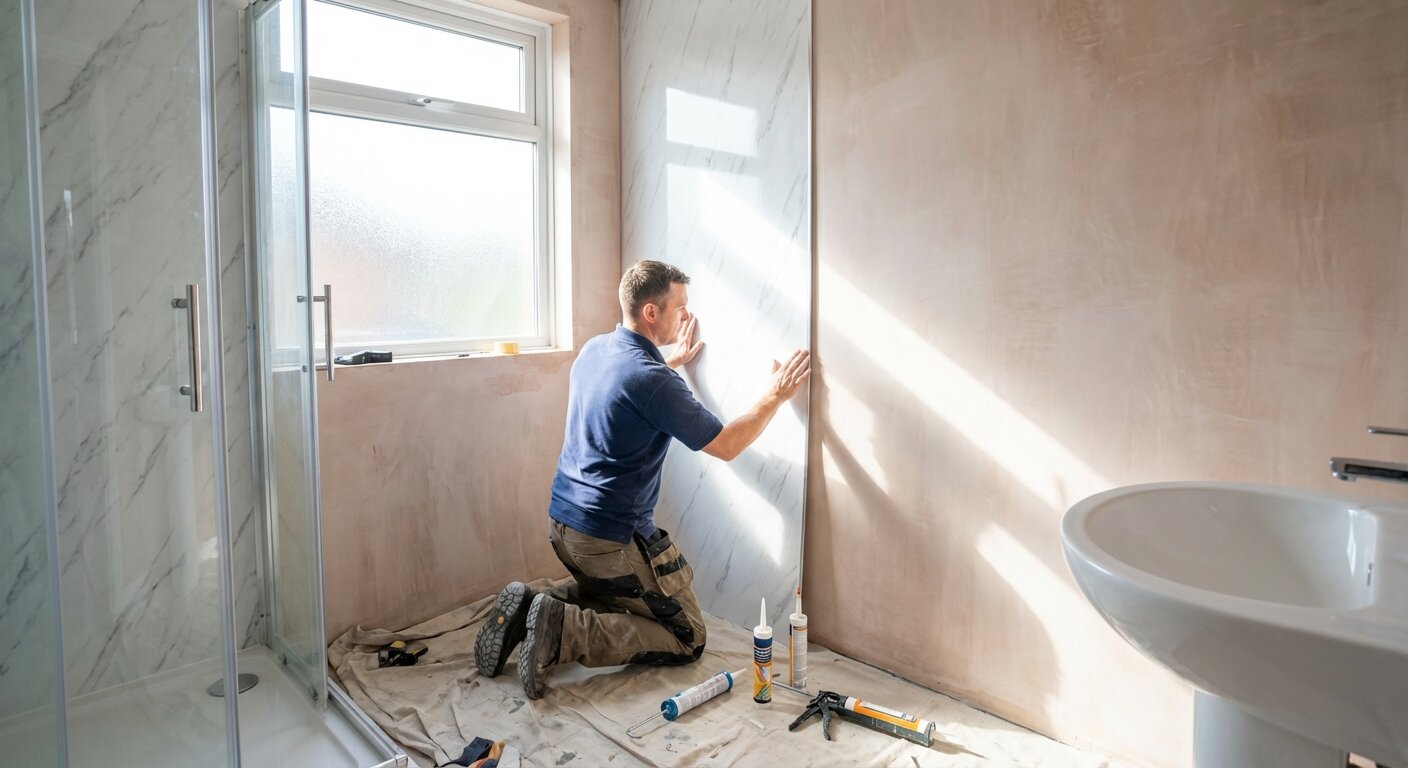
Apply panel adhesive in vertical beads to the back of each panel. Press firmly onto the wall. The adhesive should make full contact — use a clean roller or cloth to press the panel evenly.
For extra security (especially behind the sink where water exposure is highest), use adhesive plus mechanical fixings (screws through the panel edges, hidden by trims).
Edge Finishing
- At worktop: Apply a bead of kitchen sealant (mould-resistant silicone) along the junction between panel and worktop
- At wall units: Fit a trim profile or run sealant along the top edge
- At corners: Use internal corner trims for a neat finish
- At edges: End trims or matching sealant
Design Ideas for Kitchen Splashbacks
Marble Effect
The most popular choice. A Calacatta or Carrara marble-effect panel creates a luxury look at a fraction of the cost of real marble or a bespoke glass splashback.
Matching the Worktop
Choose a panel colour that complements your worktop. Stone-effect panels with a wood worktop create a natural, warm kitchen. Grey marble panels with a white composite worktop create a modern, clean look.
Bold Feature Colour
Use a contrast colour for the splashback — sage green, navy, or charcoal behind light-coloured units creates a striking focal point.
Tile Effect
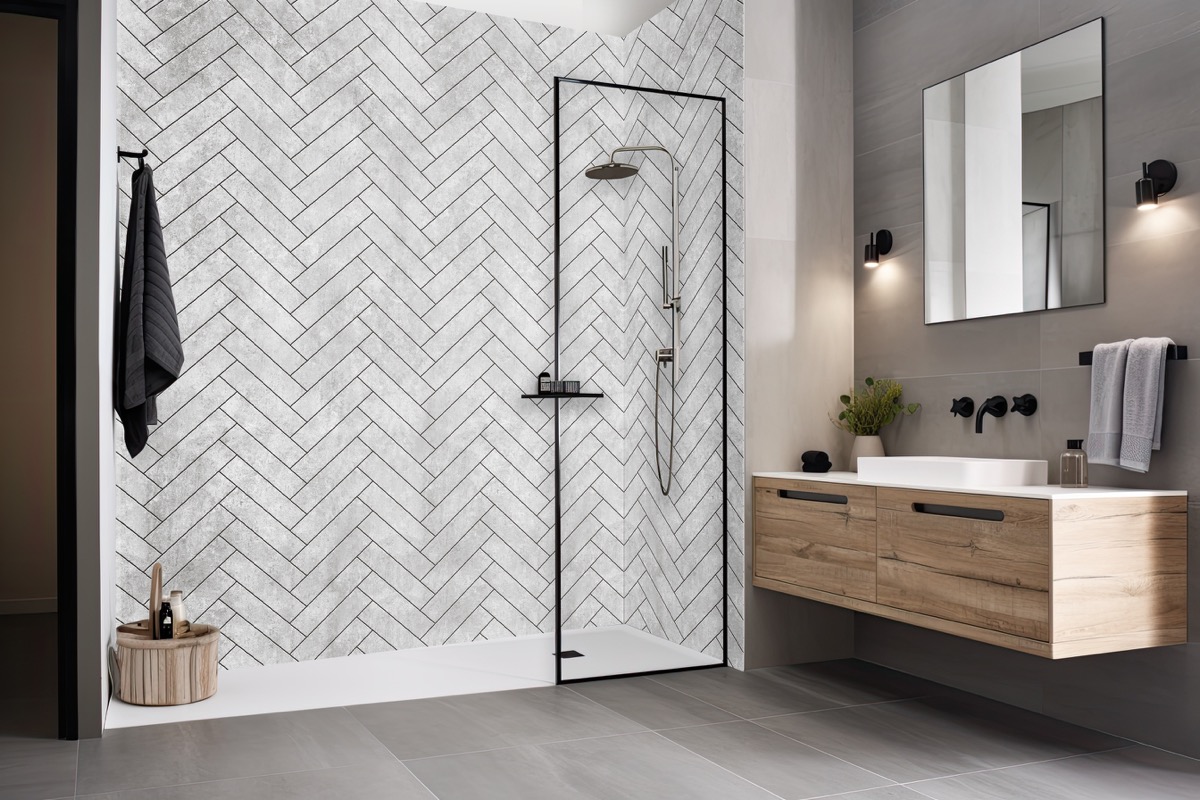
Tile-effect panels give the appearance of tiling without the grout. Metro tile, herringbone, and large-format tile patterns are available in panel form.
Consistent Panelling
Use the same panel across the kitchen splashback and bathroom for a coordinated look throughout the property — particularly effective in rental properties and new builds.
Maintenance
Kitchen splashbacks need more regular cleaning than bathroom panels due to grease and cooking residue:
- Daily: Wipe down after cooking with a damp cloth and kitchen spray
- Weekly: Clean with a degreaser or kitchen surface cleaner
- Avoid: Abrasive pads, scouring powder, neat bleach, solvent-based cleaners
- Stain removal: Most food stains (including turmeric, tomato, and coffee) wipe off PVC with standard kitchen cleaner. Stubborn stains can be treated with a cream cleaner applied gently
Frequently Asked Questions
Can I use wall panels as a kitchen splashback?
Yes, for most kitchen areas — behind sinks, worktops, and electric/induction hobs (with adequate clearance). Do not use PVC panels directly behind gas hobs or open flames. For gas hob areas, use glass, tiles, or stainless steel.
Are PVC kitchen splashbacks heat-resistant?
PVC withstands normal kitchen temperatures (steam, warm splashes, radiant heat from electric hobs). It is not suitable for direct exposure to gas flames or sustained temperatures above 60–70°C. Always maintain the hob manufacturer’s recommended clearance between the hob and the wall.
How do I clean a PVC splashback?
Wipe with a damp cloth and standard kitchen cleaner. For grease, use a degreasing kitchen spray. Avoid abrasive pads and scouring powder. PVC cleans more easily than tile grout — a single wipe is usually sufficient.
Is a PVC splashback cheaper than tiles?
Significantly. PVC panels cost £15–40 per m² and install in 1–2 hours (DIY). Tiles cost £25–80 per m² plus labour (£25–50 per m²) and take 4–8 hours. A typical kitchen splashback (3–4 m²) costs £60–160 in PVC panels vs £200–500 in tiles.
Can I fit a PVC splashback over existing tiles?
Yes. Clean the tile surface, apply adhesive to the panel backs, and press onto the tiles. This is the quickest kitchen splashback renovation — no tile removal, no replastering.
Related Kalsi Products
- Wall Panelling Range — full range of colours and finishes
- Smooth Panels — clean finish, easy to maintain
- Colour Range — find the right colour for your kitchen
- Decorative Panels — premium designs and effects
- Wall Panelling Calculator — calculate quantities for your project