Connecting to Existing Drainage: Adaptor Guide
To connect to an existing drain, you need to expose the pipe, cut into it if necessary, and use an appropriate adaptor or junction fitting to join the new pipe to the old. The method depends on the existing pipe material (PVC-U, clay, cast iron, or pitch fibre) and whether you are connecting to a pipe, an inspection chamber, or a manhole. Building Control approval is required for all new connections to existing drainage — notify them before starting work, as they will need to inspect the connection before backfilling.
Connecting new drainage to old is one of the most common groundwork tasks on UK building projects. Whether you are adding a bathroom in an extension, connecting a new build to an existing sewer, or replumbing a house, the junction between new PVC-U pipe and whatever is already in the ground requires the right fitting and the right technique.
Identifying the Existing Pipe
Before ordering any fittings, identify what you are connecting to:
| Material | Visual Clues | Common Era | Typical Sizes |
|---|---|---|---|
| PVC-U (orange/terracotta) | Smooth plastic, orange colour, push-fit joints | 1980s–present | 110 mm, 160 mm |
| Clay (vitrified) | Brown/grey ceramic, socketed joints with mortar or rubber seals | Pre-1960s to present | 100 mm, 150 mm, 225 mm |
| Cast iron | Heavy, dark grey/black metal, flanged or spigot-and-socket joints | Pre-1960s | Various imperial sizes |
| Pitch fibre | Black, light, fibrous-looking, sometimes deformed | 1950s–1980s | 100 mm, 150 mm |
| Concrete | Grey, heavy, often ribbed exterior | Various | 150 mm+ |
| uPVC (grey/white) | Older PVC, often grey; soil/waste pipe above ground | 1970s–present | Various |
Connection Methods
Method 1: Via an Inspection Chamber
The cleanest and most accessible method. Install a new inspection chamber at the junction point:
- Expose the existing pipe at the intended connection point
- Cut the existing pipe
- Install a new inspection chamber with the correct base configuration (straight through + branch)
- Connect the existing pipe into two sides of the chamber
- Connect the new pipe into the third entry
- The chamber provides future rodding access at the junction
When to use: Any junction where the pipe is accessible, and where Building Control requires an access point (which is most junctions).
Method 2: Saddle Connection (Y-Junction)
A saddle fitting clamps around the existing pipe and provides a branch outlet:
- Expose the existing pipe
- Cut a hole in the pipe using a hole saw at the correct angle (45° for flow direction)
- Fit the saddle over the hole, clamping it to the pipe
- Seal with the integral rubber gasket
- Connect the new pipe to the saddle outlet
When to use: Mid-run connections where installing a full inspection chamber is impractical. Building Control may require a rodding point downstream.
Method 3: Direct Junction Fitting
Cut the existing pipe and insert a Y-junction or T-junction fitting:
- Expose the pipe and cut out a section long enough for the fitting
- Use slip couplings (repair couplings) to connect the junction fitting into the existing pipe run
- Connect the new pipe to the branch outlet
When to use: PVC-to-PVC connections where the existing pipe is accessible and in good condition.
Adaptors by Pipe Material
PVC-U to PVC-U
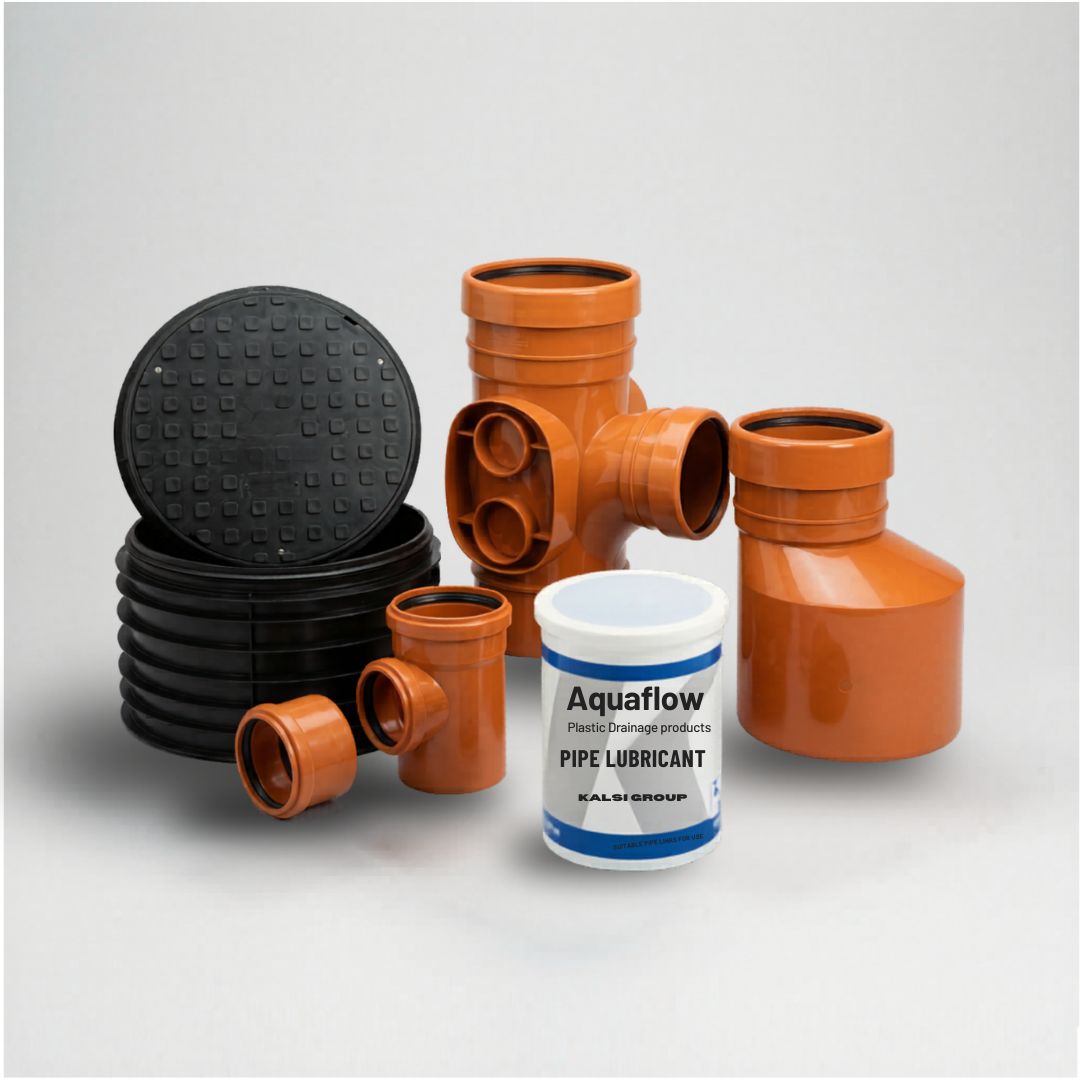
The simplest connection. Use standard fittings from the underground drainage range:
- Couplers (repair couplings) with rubber seals
- Y-junctions and T-junctions
- 45° and 90° bends
- All push-fit with ring seals
PVC-U to Clay
Clay pipes come in different sizes (100 mm, 150 mm) and joint types. Use:
- Flexible coupling (Fernco / Mission type) — a rubber sleeve with stainless steel clamps that bridges the size and material difference
- Clay-to-PVC adaptor — a purpose-made fitting with a clay socket one end and PVC spigot the other
- Flexible couplings accommodate slight size variations between manufacturers
PVC-U to Cast Iron
Cast iron drain pipes have various diameters (typically imperial sizes that do not match metric PVC). Use:
- Flexible coupling with wide-range rubber sleeve
- The rubber accommodates the size difference and creates a watertight seal
- Support the connection with compacted bedding — cast iron is heavy and the joint must not be stressed
PVC-U to Pitch Fibre
Pitch fibre pipes are problematic — they deform, delaminate, and often need replacing rather than connecting to. If the pitch fibre is in reasonable condition:
- Flexible coupling over the pitch fibre end
- Patch liner inside the pitch fibre to restore the bore before connecting
- If the pitch fibre is badly deformed, replace the damaged section with PVC-U before making the connection
Step-by-Step: Connecting to an Existing Clay Drain
This is the most common adaptor scenario on UK properties:
1. Expose the Existing Clay Pipe
Excavate carefully around the pipe. Clay is brittle — a careless spade strike can shatter it.
2. Plan the Connection Point
Ideally, connect at or near an existing joint in the clay pipe. Clay pipe comes in short lengths (600 mm–1,000 mm) with socketed joints. Connecting at a joint avoids cutting the pipe.
3. Remove a Section (If Needed)
If you need to insert a junction mid-run, cut the clay pipe with an angle grinder fitted with a diamond blade. Score a line around the circumference, then tap gently to break along the line.
4. Fit the Flexible Coupling
Slide a flexible coupling over each cut end of the clay pipe and over the new PVC junction fitting. Tighten the stainless steel clamps firmly.
5. Connect the New PVC Pipe
Push the new PVC pipe into the branch outlet of the junction. Standard ring-seal push-fit connection.
6. Check Levels
The new pipe’s invert must match or be slightly above the invert of the existing clay pipe. Water must flow downhill from new to old.
7. Test Before Backfilling
Run water through the system and check all connections for leaks.
Building Control Requirements
All new connections to existing drainage require Building Control notification. The inspector will check:
- ✅ The connection fitting is appropriate for the pipe materials involved
- ✅ The invert levels are correct (water flows in the right direction)
- ✅ The junction has adequate access (inspection chamber or rodding point)
- ✅ The seal is watertight
- ✅ The new drain meets gradient requirements
- ✅ The connection does not compromise the existing drainage capacity
Connecting to a Public Sewer
If the existing pipe you are connecting to is a public sewer (maintained by the water company), additional requirements apply:
- Section 106 agreement required from the water company before connecting
- The water company may specify the connection method and location
- An approved contractor may be required to make the physical connection
- The connection must not cause surcharge or blockage of the public sewer
Frequently Asked Questions
How to connect to an existing drain?
Expose the existing pipe, identify the material and size, and use an appropriate adaptor (flexible coupling for clay/cast iron, standard fittings for PVC-to-PVC). The preferred method is to install an inspection chamber at the junction for future access. Notify Building Control before starting — they will inspect the connection.
Can I connect PVC to clay drainage pipe?
Yes. Use a flexible coupling (rubber sleeve with stainless steel clamps) that bridges the size and material difference between PVC-U and clay. Alternatively, use a purpose-made clay-to-PVC adaptor fitting.
Do I need permission to connect to existing drainage?
You need Building Control approval for any new connection to existing drainage. If the existing pipe is a public sewer, you also need a Section 106 agreement from the water company. Failure to obtain these approvals can cause legal and practical problems when selling the property.
What is a flexible coupling?
A flexible coupling (also called a Fernco coupling or Mission coupling) is a rubber sleeve with stainless steel clamps that connects two pipes of different materials, sizes, or types. It compresses over the outside of each pipe, creating a watertight seal. It is the most versatile adaptor for connecting new PVC drainage to old clay, cast iron, or pitch fibre pipes.
Should I install an inspection chamber at a new drain connection?
Yes, in almost all cases. Building Regulations require access at every junction, and an inspection chamber provides it. It also gives you future rodding access if the connection ever blocks — which is far more likely at a junction than on a straight run.