Connecting a New Bathroom to Existing Soil Stack
To connect a new bathroom to an existing soil pipe, you drill or cut into the stack and fit boss connectors — a 110 mm boss for the WC and 32/40 mm bosses for basins, baths, and showers. The branch pipes from each fixture run at the correct gradient to the stack, with traps on every fixture. The key Building Regulations rules are: the WC branch must be within 6 m of the stack, waste branches must be within 1.7 m (32 mm) or 3 m (40 mm), and no waste branch should enter the stack within 200 mm below a WC connection on the same floor.
Adding an en-suite, second bathroom, or downstairs WC to an existing property is one of the most common domestic plumbing projects. The biggest practical challenge is connecting the new fixtures to the existing soil stack — particularly when the stack is on the opposite side of the building from the new bathroom.
Connection Methods
Boss Connector (Strap-On Boss)
The most common method for connecting to an existing PVC-U stack:
- Mark the boss position on the stack (correct height and angle)
- Drill a hole through the stack wall using the appropriate hole saw (32 mm, 40 mm, or 110 mm)
- Deburr the hole — remove all swarf to prevent obstruction
- Fit the boss connector over the hole — it straps around the outside of the stack with a rubber gasket and bolts
- Push the waste pipe into the boss connector
For WC connections: Use a 110 mm boss or a pre-formed branch fitting. If the stack cannot accommodate a boss (e.g., too close to another connection), cut a section of the stack and insert a manufactured branch fitting.
Important: When drilling into a live stack, take precautions against debris falling into the drain. Work quickly and clear any swarf that enters the pipe.
Branch Fitting (Cut-In)
For connections that need maximum flow capacity or where a boss is not suitable:
- Support the stack above and below the connection point
- Cut out a section of the stack equal to the branch fitting length
- Insert the branch fitting using repair couplings (slip joints)
- Connect the branch pipe to the fitting
This method is more involved but gives a cleaner, higher-capacity connection. It is essential when adding a 110 mm WC connection to a stack that cannot accept a strap-on boss.
Manifold Connection
For multiple fixtures connecting at similar heights, a manifold branch fitting provides several outlets from a single cut-in. This reduces the number of individual holes in the stack and keeps connections neat and compliant with spacing rules.
Positioning Rules (Approved Document H)
| Rule | Requirement |
|---|---|
| WC branch distance from stack | Maximum 6 m (110 mm branch, 1:50 gradient minimum) |
| Basin branch distance from stack | Maximum 1.7 m (32 mm) or 3 m (40 mm) |
| Bath/shower branch distance | Maximum 3 m (40 mm) |
| Waste connection position relative to WC | At least 200 mm above WC centreline, or at least 200 mm below WC invert |
| Opposite connections on stack | Acceptable if staggered by at least 200 mm vertically |
| Gradient (all branches) | 18–90 mm/m (1:12 to 1:50) |
The 200 mm Rule
This is critical. If you connect a basin waste directly opposite and at the same height as a WC branch, waste from the toilet can flow across the stack and up into the basin’s waste pipe. The 200 mm vertical offset prevents this cross-flow. In practice, aim for more than 200 mm where possible — it provides a safety margin and makes inspection clearer.
Practical Routing: Getting There from Here
New En-Suite Next to Stack Wall
The simplest scenario. Short branch runs through the wall to the stack.
- WC: 110 mm direct through wall (0.5–1.5 m)
- Basin: 32 mm through wall (0.5–1.5 m)
- Shower: 40 mm through floor/wall (1–2 m)
New Bathroom on Opposite Wall
The waste pipes need to cross the floor void or run along the external wall:
- WC: 110 mm through floor void to stack (may need to notch joists — within Building Regs limits)
- Basin/bath/shower: 40 mm/32 mm through floor void
- Consider a shared 50 mm waste run for basin + bath
Downstairs WC (Ground Floor)
Often the most challenging because the WC is far from the stack:
- If within 6 m: run 110 mm branch pipe below floor or through external wall to stack
- If over 6 m: install a macerator pump (Saniflo type) that pumps waste to the stack or directly to the underground drain
- Alternative: install a separate mini-stack or connect directly to the underground drain via a new inspection chamber
Loft Conversion Bathroom
Common in UK properties where the loft is converted to habitable space:
- Typically requires a new internal mini-stack running down through the building to the underground drain
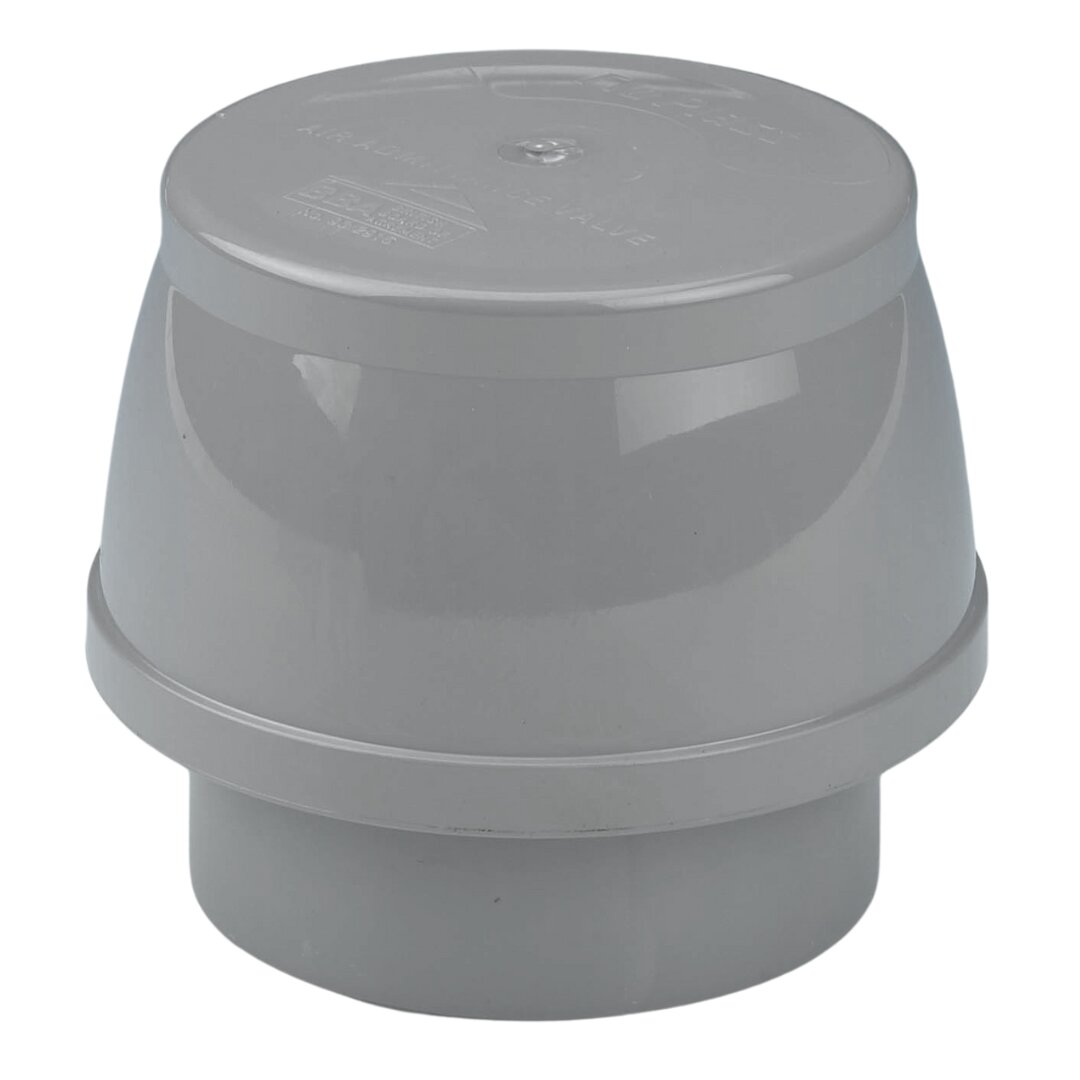
- The mini-stack terminates with an air admittance valve in the loft space
- Short branch runs from fixtures to the stack keep everything within maximum lengths
- Acoustic treatment is essential where the stack passes through bedrooms below
Tools and Materials
| Item | Purpose |
|---|---|
| Hole saw (32 mm, 40 mm, 110 mm) | Cutting boss holes in the stack |
| Boss connectors | Connecting branches to the stack |
| Repair couplings (if cutting in) | Slip joints for inserting branch fittings |
| Pipe (32 mm, 40 mm, 110 mm) | Branch runs from fixtures |
| Traps (bottle, P, S, bath, shower) | Required on every fixture |
| Pipe clips | Support branch pipes at 500–800 mm centres |
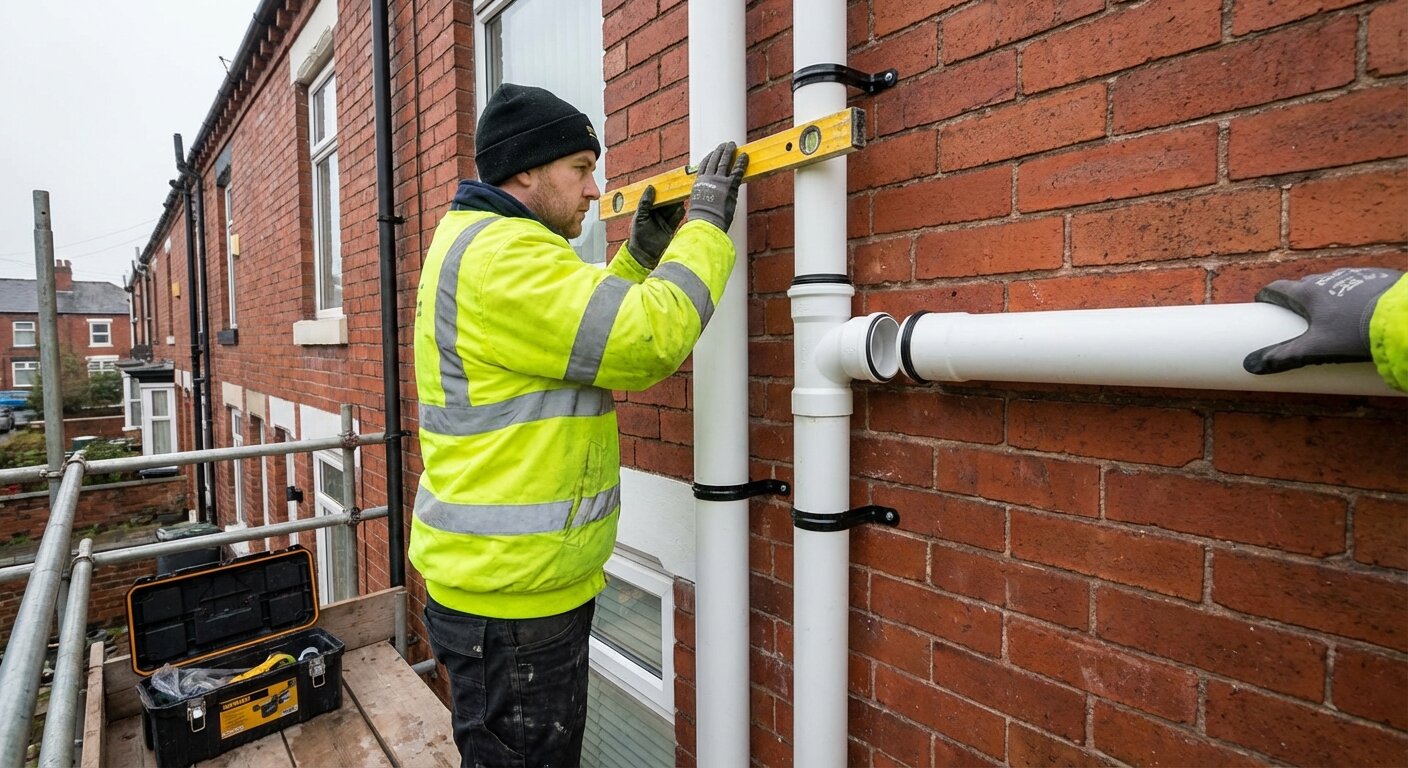
| Spirit level | Checking gradient on branch runs |
| Pencil and tape measure | Marking positions and lengths |
| Waste pipe fittings | Bends, tees, adaptors |
Common Challenges
1. Stack Has No Room for More Connections
If the existing stack already has connections at the height you need, fit the new boss above or below (maintaining the 200 mm offset rule). If there is genuinely no space, a branch fitting cut into the stack gives more flexibility.
2. Floor Joists Block the Route
Waste pipes running through floor voids may need to pass through joists. Building Regulations limit notching and drilling:
- Notches: Only in the first quarter of the joist span from each support, maximum depth = 0.125 × joist depth
- Holes: Only in the middle third of span, at mid-depth, maximum diameter = 0.25 × joist depth
If the pipe is too large for the joist, run it below the joists (dropping the ceiling) or above (raising the floor).
3. Insufficient Gradient
The fall from the new fixture to the stack connection point must achieve 18–90 mm per metre. If the fixture is on the same floor as the stack connection, the pipe must drop within the floor void or below the floor. Low-profile shower traps and raised platforms may be needed.
4. Cast Iron Existing Stack
Connecting to a cast iron stack requires specialist boss connectors designed for iron pipe, or replacing a section of the cast iron with PVC-U using flexible couplings. Cast iron bosses use a saddle that clamps around the iron pipe with a rubber seal.
5. Acoustic Concerns
An additional bathroom means more waste discharge through the stack, potentially increasing noise. If the stack passes through habitable rooms, consider adding acoustic treatment at the same time as making the new connections.
Building Regulations
Do You Need Approval?
| Scenario | Building Control? |
|---|---|
| Adding an en-suite as part of an extension | Yes (part of extension application) |
| Adding a WC to an existing room (no structural changes) | Check — some areas require notification for new drainage connections |
| Moving existing fixtures within the same room | Usually not required |
| Adding a second bathroom (no structural changes) | May require notification for drainage |
| Loft conversion with new bathroom | Yes (part of conversion application) |
When in doubt, call your local Building Control office. Notification is usually straightforward and avoids potential problems at property sale. The fee is typically £100–300 and the inspector visits once to check the completed work.
Frequently Asked Questions
How to connect new bathroom to soil pipe?
Drill into the existing stack and fit boss connectors for each fixture — 110 mm for the WC and 32/40 mm for basins, baths, and showers. Run branch pipes at the correct gradient (18–90 mm per metre). Maintain the 200 mm vertical offset between WC and waste connections.
Can I add an en-suite to my existing soil stack?
Yes, provided the stack has capacity (most 110 mm stacks serving domestic properties have headroom for additional fixtures) and there is a suitable position for boss connections. The en-suite should ideally be on the same wall as the stack or within 3–6 m.
What if the bathroom is too far from the soil stack?
If the WC is more than 6 m from the stack, options include: a macerator pump (pumps waste to the stack or directly to the drain), a new mini-stack with its own drain connection, or repositioning the bathroom closer to the existing stack.
Do I need an air admittance valve for a new bathroom?
Possibly. If the new branch connections are long or the stack vent is distant, an AAV at the end of the longest branch prevents trap siphonage. If the existing stack is properly vented (open vent above roof), short branches generally do not need additional AAVs.
Can I connect waste pipes to a cast iron soil stack?
Yes, using purpose-made boss connectors designed for cast iron. These clamp around the iron pipe and seal with a rubber gasket. Alternatively, replace the section of cast iron where the connections are needed with a PVC-U section using flexible couplings.
Related Kalsi Products
- Soil & Waste Systems — boss connectors, branch fittings, soil pipe
- Waste Push-Fit System — 32 mm, 40 mm and 50 mm waste pipe
- MultiFlex Waste System — flexible waste pipe for tight routing
- Underground Drainage — inspection chambers and below-ground connections
- Installation Guides — step-by-step fitting instructions