How to Vent a Soil Stack (AAV vs Open Vent)
You need an air admittance valve (AAV) when you cannot vent the soil stack through the roof — typically on internal stacks, extensions where roof penetration is impractical, or additional WC installations in locations far from the main stack. An AAV opens under negative pressure to admit air into the system (preventing trap siphonage) and closes under positive pressure to prevent sewer gas escaping. It is a legitimate alternative to an open vent under Building Regulations, provided at least one open vent exists elsewhere on the drainage system. If the property has no open vent at all, at least one stack must terminate above the roofline.
Venting is the aspect of drainage that most DIYers and even some builders overlook. Without adequate venting, waste flowing through pipes creates vacuum and pressure fluctuations that siphon water from traps — the water seals that prevent sewer gas entering your home. The result is gurgling plugholes, bad smells, and potentially hazardous gas exposure.
How Drainage Venting Works
When waste flows through a pipe (especially a large volume like a toilet flush), it pushes air ahead of it and creates a partial vacuum behind it. Without ventilation:
- Negative pressure (vacuum) behind the waste slug sucks water out of nearby traps
- Positive pressure ahead of the waste slug can push water out of traps further down the system
- Lost trap seals allow sewer gas (hydrogen sulphide, methane) to enter the building
An open vent or AAV allows air to enter the system, equalising the pressure and maintaining all trap seals. This is why BS EN 12056-2 and Approved Document H both require adequate ventilation on every drainage system — it is not optional.
Open Vent (Traditional)
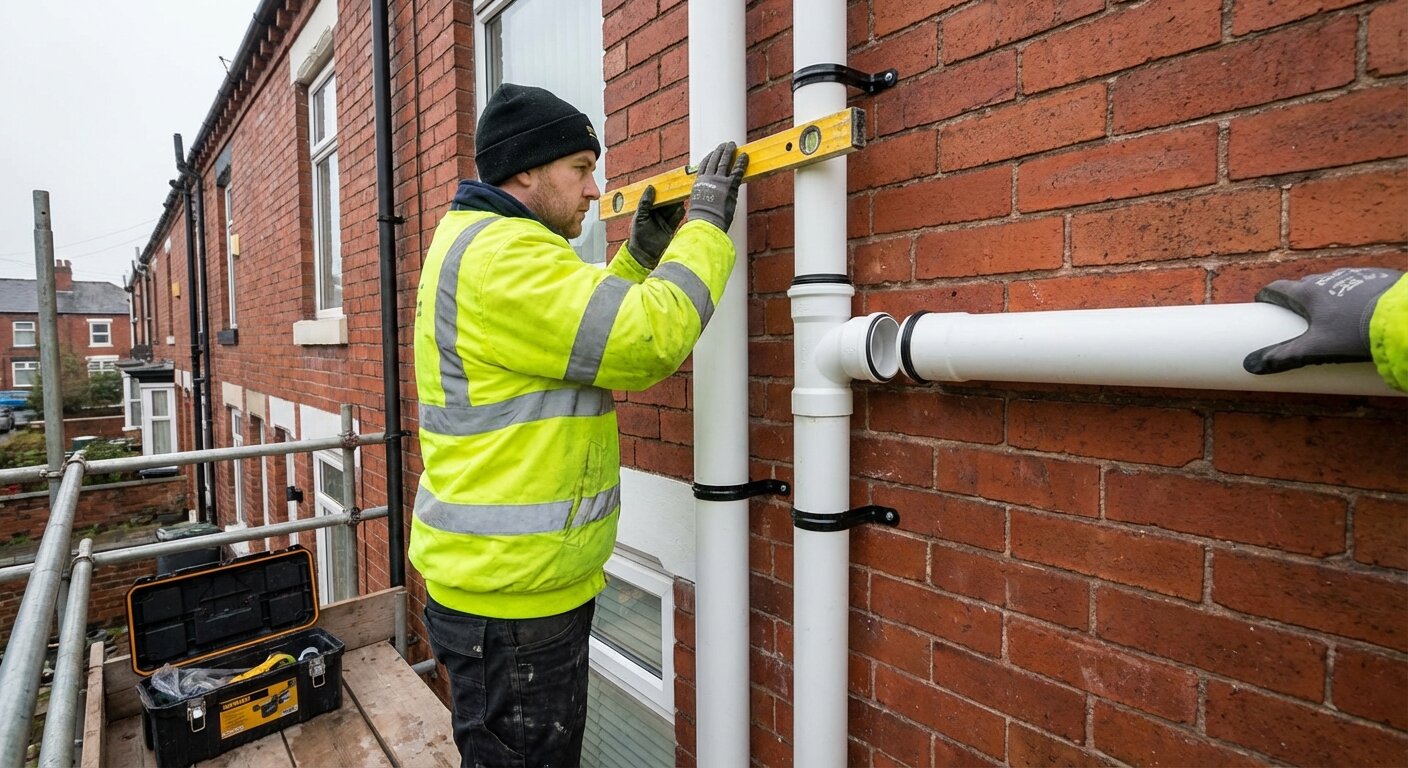
The soil stack extends above the roofline and terminates with an open end (fitted with a cage or mushroom cap to prevent birds nesting).
Requirements
- Terminal must be at least 900 mm above the highest opening window within 3 m horizontally
- Must be open to atmosphere (not sealed)
- Must extend through the roof with a weathering slate/collar to prevent leaks
- One open vent is required per drainage system (Building Regulations)
Advantages
- Simple, reliable, no moving parts
- Works in all conditions (even during positive pressure events)
- Required by Building Regulations — at least one per drainage system
- Allows sewer gas to dissipate safely above the roofline
- Zero maintenance over the life of the building
Disadvantages
- Requires a roof penetration (potential leak point)
- Visible on the roofline (aesthetic consideration on some properties)
- Not feasible for internal stacks in multi-storey flats without a roof above
- Cold air can enter the stack in winter, potentially causing condensation
Air Admittance Valve (AAV)
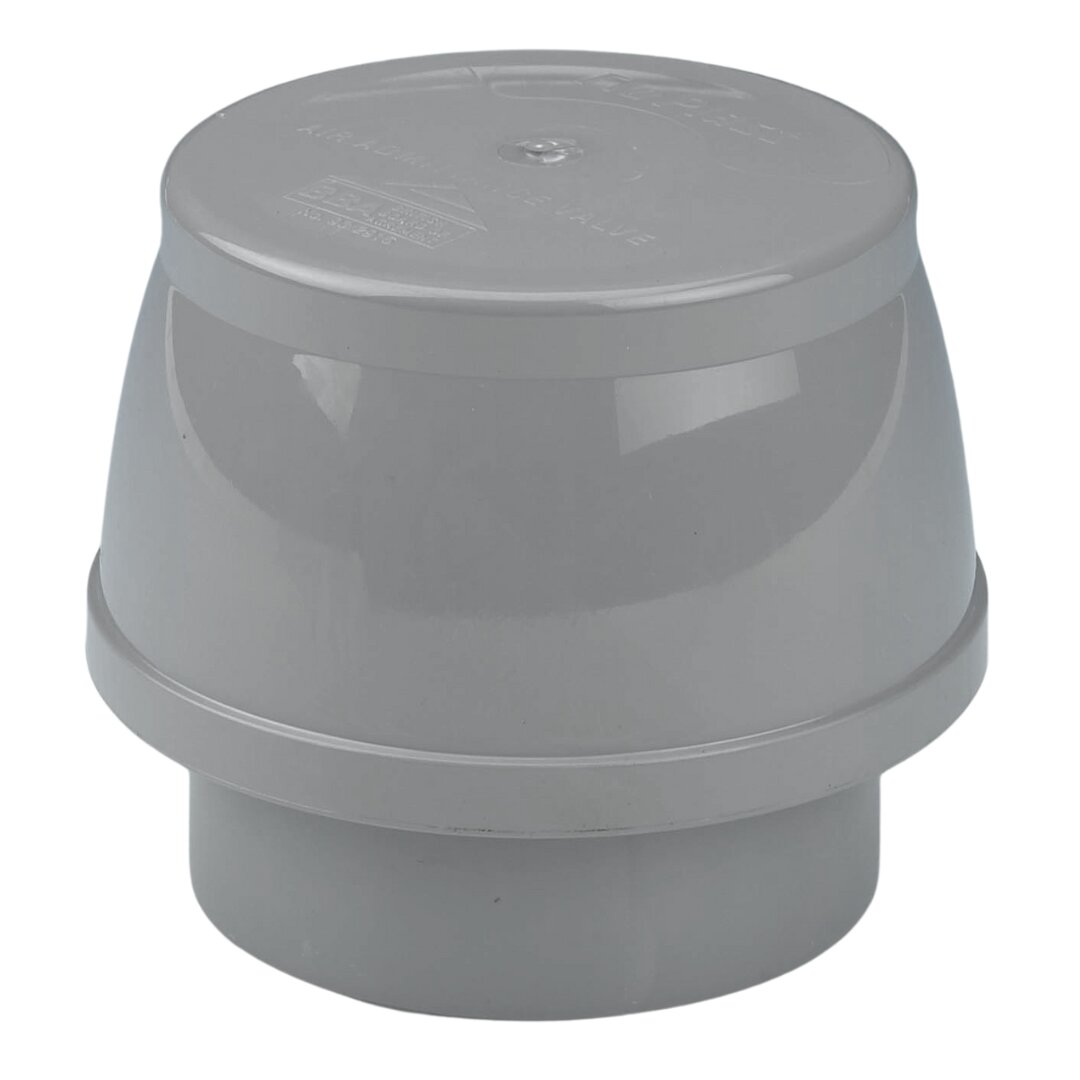
An AAV (also called a Durgo valve or Studor valve after common brand names) is a one-way valve fitted at the top of a soil stack or waste pipe. It opens when negative pressure occurs (admitting air) and closes under gravity or positive pressure (preventing gas escape).
How It Works
- Normal state: valve is closed (prevents sewer gas escaping)
- Waste discharge creates negative pressure: valve opens, admitting air
- Pressure equalises: valve closes again
The mechanism is purely mechanical — a rubber or silicone diaphragm lifts under suction and drops back under gravity. No power or electronics are involved. This simplicity is what makes AAVs reliable for 10–25 years before needing replacement.
Where You Can Use an AAV
- Internal soil stacks where roof penetration is impractical
- Additional WC installations connected to existing drainage
- Waste pipe branches that are too long for passive venting
- Extensions with new plumbing far from the main stack
- Conversions (loft, basement) where the stack cannot easily extend
- En-suite additions in existing properties
Where You CANNOT Use an AAV
- As the only vent on the entire drainage system — at least one open vent must exist
- Below the flood level of the highest fixture — the AAV must be above overflow level
- In unventilated enclosed spaces — the AAV needs access to air to function
- Where positive pressure events are expected (sewer surcharge areas — the AAV only admits air, it does not release it)
- On interceptor traps or systems requiring positive pressure relief
Building Regulations
Approved Document H accepts AAVs as an alternative to open vents, subject to:
| Requirement | Detail |
|---|---|
| At least one open vent exists on the system | The main stack or another stack must vent through the roof |
| AAV must be above the flood level of the highest fixture served | Typically 200 mm+ above the highest overflow |
| AAV must be accessible for inspection and replacement | Not buried in a wall or permanently sealed duct |
| AAV must be in a ventilated space | Not in an airtight enclosure |
| AAV must comply with BS EN 12380 | Performance standard for air admittance valves |
Scottish Requirements
Section 3 of the Technical Handbooks has similar provisions, accepting AAVs where at least one open vent serves the system.
Northern Ireland
Technical Booklet N mirrors the England and Wales approach, requiring at least one open vent per system with AAVs permitted as supplementary venting.
Installation
AAV on a Soil Stack (Internal)
- Terminate the stack above the overflow level of the highest fixture (typically in the loft space or a high-level duct)
- Fit a 110 mm AAV onto the top of the stack (push-fit or solvent weld depending on model)
- Ensure the AAV is accessible — fit a removable panel or locate in an accessible void
- The AAV does not need to be exposed to the outside — it works with internal air
- Verify the valve opens freely by gently pulling the diaphragm — it should lift easily and drop back under gravity
AAV on a Waste Pipe Branch
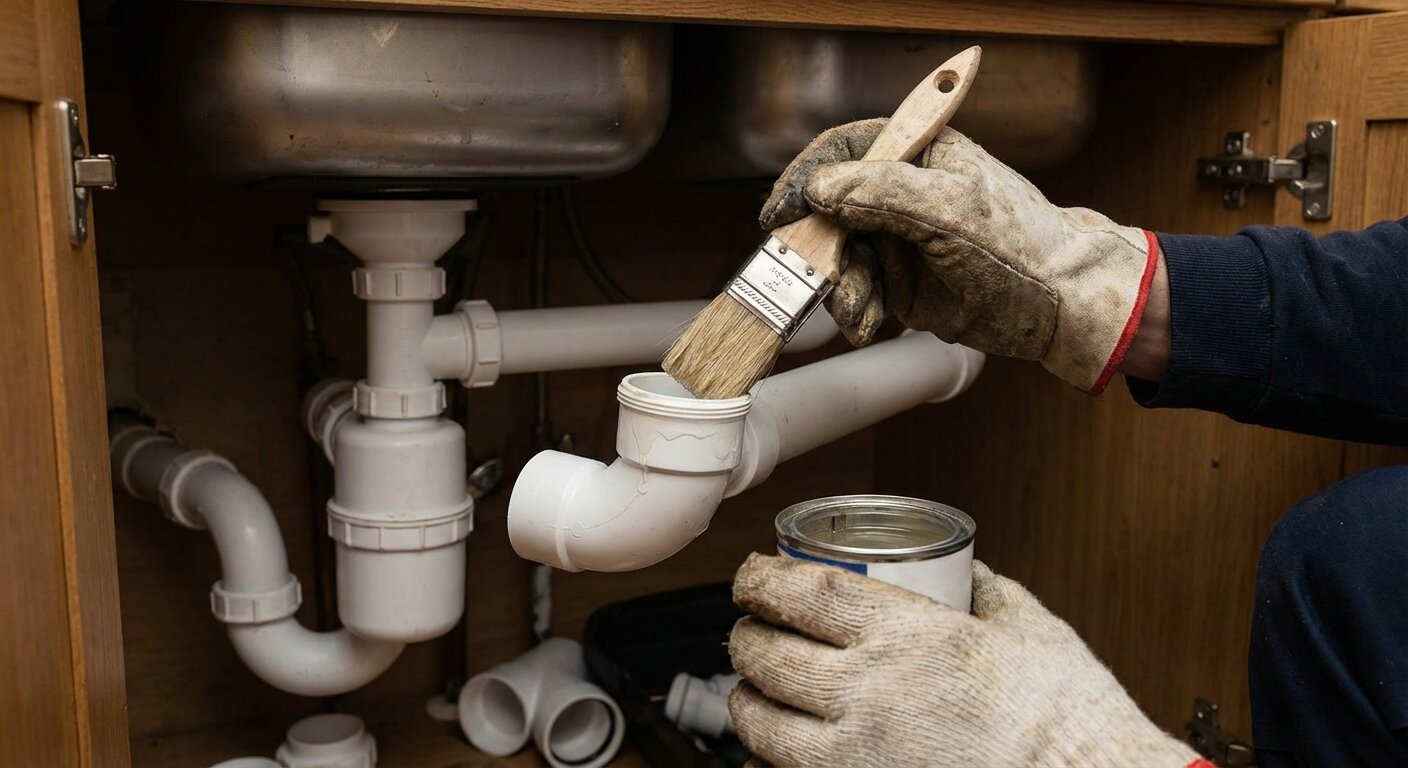
- Fit a 32 mm or 40 mm AAV at the end of the waste branch, above the overflow level of the fixture
- The AAV prevents trap siphonage on long waste runs
- Commonly fitted in the void behind a kitchen unit or vanity
- Ensure the space is not completely airtight — a small amount of air circulation is needed
Common Installation Errors
- Fitting the AAV too low — if it is below the overflow level of a fixture and a blockage occurs, sewage can back up through the valve
- Sealing it in an airtight enclosure — the valve needs to draw air from somewhere; a completely sealed duct defeats its purpose
- Using a waste-size AAV on a soil stack — a 32 mm or 40 mm AAV does not have sufficient airflow capacity for a 110 mm soil stack
- Forgetting accessibility — Building Control will ask to see the AAV during inspection and may require demonstration that it can be replaced
AAV vs Open Vent: Quick Comparison
| Feature | Open Vent | AAV |
|---|---|---|
| Moving parts | None | Diaphragm valve (wears over time) |
| Lifespan | Indefinite | 10–25 years (replaceable) |
| Handles positive pressure | Yes (gas vents upward) | No (closes under positive pressure) |
| Handles negative pressure | Yes (air enters) | Yes (valve opens) |
| Roof penetration | Required | Not required |
| Building Regs | Required — at least one per system | Acceptable as supplement |
| Cost | £15–30 (fitting) | £10–25 (valve) |
| Maintenance | None | Occasional check (valve function) |
| Frost risk | None (open pipe) | Low (internal fitting) |
| Aesthetic impact | Visible pipe above roofline | Hidden internally |
Troubleshooting Existing Systems
Gurgling Traps
If traps gurgle after a toilet flush or when another fixture is in use, the system is under-ventilated. Check for:
- A blocked or missing open vent (bird nests, debris, capping during roofwork)
- A failed AAV (stuck closed — replace it)
- Branch pipes exceeding maximum permitted lengths
Sewer Smells
If you can smell drains inside the building:
- Check all trap seals — any dry traps? Run water to refill.
- A failed AAV stuck in the open position allows gas to escape — replace immediately
- Check the open vent terminal — has it been capped or blocked?
Slow Drainage
If fixtures drain slowly despite clear pipes, the issue may be ventilation rather than a blockage. Insufficient venting creates back-pressure that slows discharge. An AAV on a long waste branch can resolve this without replumbing.
Frequently Asked Questions
Do I need an air admittance valve?
You need one if you are installing a soil stack or waste pipe that cannot be vented through the roof — typically internal stacks, extensions, and additional WC installations. An AAV prevents trap siphonage by admitting air under negative pressure. At least one open vent must exist elsewhere on the drainage system.
Can I use an AAV instead of venting through the roof?
Yes, provided at least one other stack on the property vents through the roof. An AAV is an accepted alternative under Building Regulations and BS EN 12380. It is commonly used on internal stacks and extensions.
Where should an AAV be positioned?
Above the overflow level of the highest fixture it serves, in an accessible location with ventilated air space. Typically fitted in a loft, high-level duct, or behind a removable panel. It must not be sealed in an airtight enclosure.
Do AAVs fail?
The diaphragm inside an AAV can deteriorate over 10–25 years, causing it to stick open (allowing sewer gas to escape) or stick closed (not admitting air, leading to trap siphonage). They are designed to be replaceable — which is why accessibility is a Building Regulations requirement.
What causes gurgling in waste pipes?
Gurgling is caused by negative pressure in the waste system drawing air through a trap. This happens when venting is inadequate — typically a missing or blocked vent, a failed AAV, or branch pipes that are too long for the pipe diameter. An AAV or open vent at the correct position resolves the issue.
Related Kalsi Products
- Soil & Waste Systems — complete 110 mm soil pipe and fittings range
- Waste Push-Fit System — 32 mm, 40 mm and 50 mm waste pipe
- 160mm Solvent Weld System — large-bore soil pipe
- Installation Guides — step-by-step fitting instructions
- Technical Resources — datasheets and specifications