110mm vs 160mm Soil Pipe: Which for Your Build?
For most residential properties, 110 mm soil pipe is the correct choice — it handles the waste from a standard household (up to three WCs, multiple basins, baths and showers) comfortably within Building Regulations requirements. You need 160 mm soil pipe for larger commercial buildings, multi-occupancy properties with high fixture loads, or where the soil stack serves more than about 10 WCs. The decision is driven by the total discharge unit (DU) loading on the stack, as defined in BS EN 12056-2 and referenced in Approved Document H.
Oversizing a soil pipe wastes money and creates practical problems (larger holes through floors and walls, heavier materials, more complex connections). Undersizing is worse — it risks surcharging, slow drainage, and Building Control rejection. This guide helps you calculate which size you actually need.
Quick Comparison
| Feature | 110 mm Soil Pipe | 160 mm Soil Pipe |
|---|---|---|
| External diameter | 110 mm | 160 mm |
| Nominal bore | ~103 mm | ~152 mm |
| Wall thickness | 3.2 mm (standard) | 4.0 mm (standard) |
| Max flow rate | ~4.5 l/s | ~12 l/s |
| Typical DU capacity | Up to ~30 DU | Up to ~80+ DU |
| Standard lengths | 3 m, 4 m | 3 m, 4 m, 6 m |
| Material | PVC-U (BS EN 1329-1) | PVC-U (BS EN 1329-1) |
| Colour | Grey or brown (external), white (internal) | Grey or brown (external) |
| Weight per metre | ~1.0 kg | ~1.8 kg |
| Typical use | Residential houses, small commercial | Large commercial, multi-occupancy |
Understanding Discharge Units
Building Regulations and BS EN 12056-2 use discharge units (DUs) to calculate the total loading on a soil stack. Each fixture type is assigned a DU value based on its flow rate:
| Fixture | Discharge Units (DU) |
|---|---|
| WC (6-litre flush) | 2.0 |
| WC (9-litre flush) | 2.5 |
| Basin | 0.5 |
| Bath | 0.8 |
| Shower | 0.6 |
| Kitchen sink | 0.8 |
| Washing machine | 0.8 |
| Dishwasher | 0.8 |
| Urinal (single) | 0.5 |
Example: Standard 3-Bedroom House
| Fixture | Quantity | DU Each | Total DU |
|---|---|---|---|
| WC | 2 | 2.0 | 4.0 |
| Basin | 2 | 0.5 | 1.0 |
| Bath | 1 | 0.8 | 0.8 |
| Shower | 1 | 0.6 | 0.6 |
| Kitchen sink | 1 | 0.8 | 0.8 |
| Washing machine | 1 | 0.8 | 0.8 |
| Total | 8.0 DU |
At 8.0 DU, a 110 mm stack handles this comfortably — it has capacity for roughly 30 DU before 160 mm is required.
Example: 20-Flat Apartment Block (Single Stack)
| Fixture | Quantity | DU Each | Total DU |
|---|---|---|---|
| WC | 20 | 2.0 | 40.0 |
| Basin | 20 | 0.5 | 10.0 |
| Bath/shower | 20 | 0.8 | 16.0 |
| Kitchen sink | 20 | 0.8 | 16.0 |
| Total | 82.0 DU |
At 82 DU, this exceeds the capacity of a single 110 mm stack. Options: use 160 mm, or split the building across multiple 110 mm stacks.
When 110mm Is the Right Choice
Residential Houses
Any house up to about 4 bedrooms with 2–3 bathrooms and a kitchen is well within 110 mm capacity. This covers the vast majority of domestic new builds and extensions in the UK.
Small Commercial
Small offices, shops, and restaurants with limited sanitary facilities (1–3 WCs plus basins) can typically use 110 mm.
Extensions and Additions
Adding an en-suite or downstairs WC to an existing property almost always uses 110 mm, matching the existing stack.
HMOs (Up to ~6 Bedrooms)
Houses in multiple occupation with shared bathroom facilities generally stay within 110 mm capacity, though the loading should be calculated to confirm.
When 160mm Is Needed
Multi-Storey Residential (Flats)
Apartment blocks where a single stack serves multiple flats on multiple floors often exceed 110 mm capacity. The critical factor is the total number of WCs and fixtures on the stack.
Commercial Buildings
Office blocks, hotels, restaurants, schools, and healthcare facilities with high fixture counts require 160 mm stacks — often multiple stacks across the building.
Industrial and Institutional
Factories, hospitals, and public buildings where the fixture loading is very high or where specialist waste (e.g., commercial kitchens producing high grease loads) requires greater pipe capacity.
Where Building Control Specifies It
Some local authorities have specific requirements for 160 mm in certain building types or configurations. Always confirm with your Building Control body during the design stage.
Practical Considerations
Fittings Availability
110 mm fittings are stocked by every builders’ merchant and plumbing supplier in the UK. 160 mm fittings have a more limited range and may need ordering — plan ahead to avoid delays on site.
Wall and Floor Penetrations
A 160 mm pipe needs a 180–200 mm hole through walls and floors (pipe diameter plus clearance and fire collar). This is significantly larger than the 130–140 mm hole needed for 110 mm. In timber-frame and lightweight construction, this can be structurally significant — consult a structural engineer if in doubt.
Weight
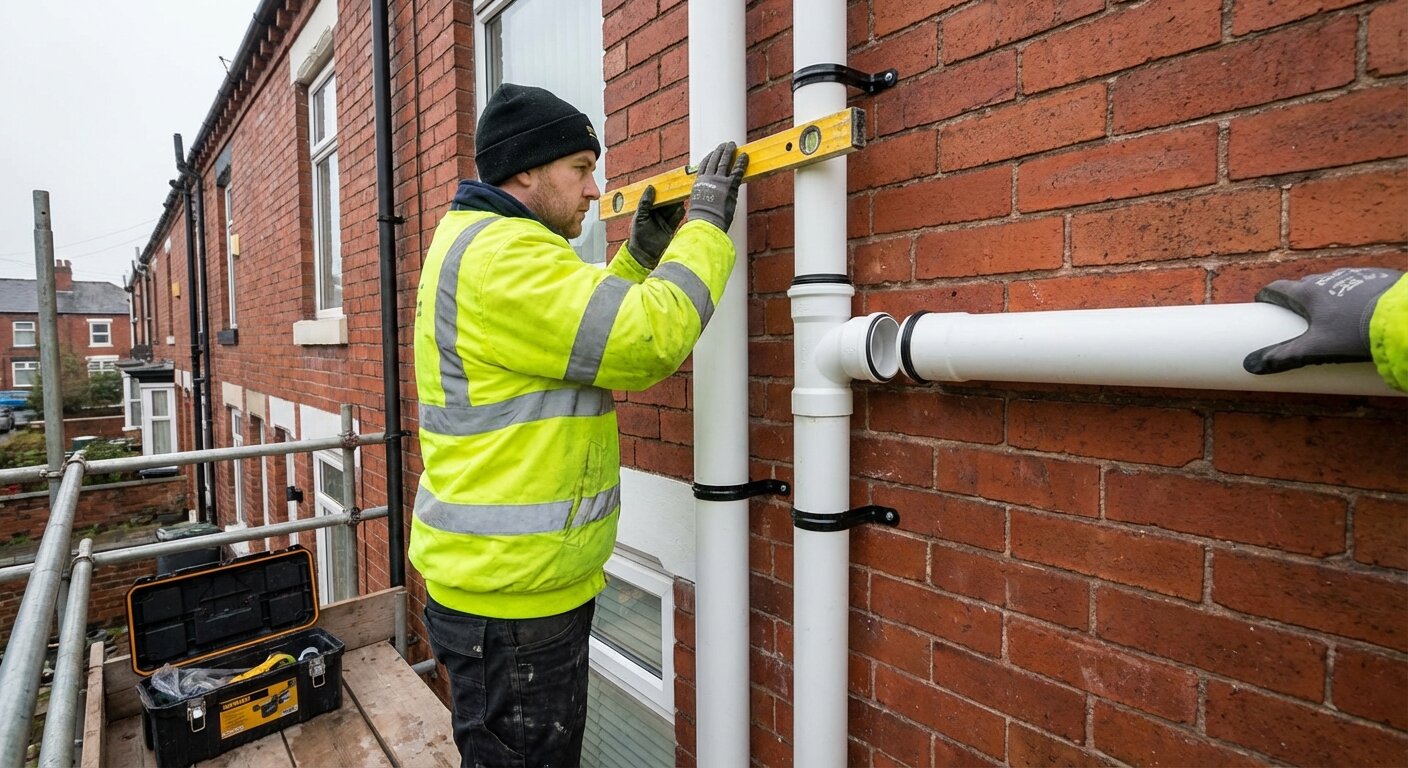
160 mm pipe is approximately 80% heavier per metre than 110 mm. Bracket and fixing requirements increase, and the pipe is harder to handle at height on scaffolding.
Underground Connection
Both 110 mm and 160 mm soil pipes connect to underground drainage systems. The underground drain itself is typically 110 mm for domestic properties and may be 160 mm for larger developments. If you are using a 160 mm stack above ground, the underground system should match or you will need a reducer at the connection point.
Cost
160 mm pipe and fittings cost approximately 50–80% more than their 110 mm equivalents. For a full stack replacement, the material cost difference is typically £100–300 — not dramatic, but unnecessary if 110 mm is adequate.
Building Regulations Requirements
Approved Document H does not mandate a minimum soil pipe size in absolute terms. Instead, it requires that the pipe system has adequate capacity for the fixtures it serves. In practice:
- 110 mm satisfies the requirement for virtually all single-dwelling residential properties
- 160 mm is typically needed when the DU calculation exceeds the capacity of 110 mm
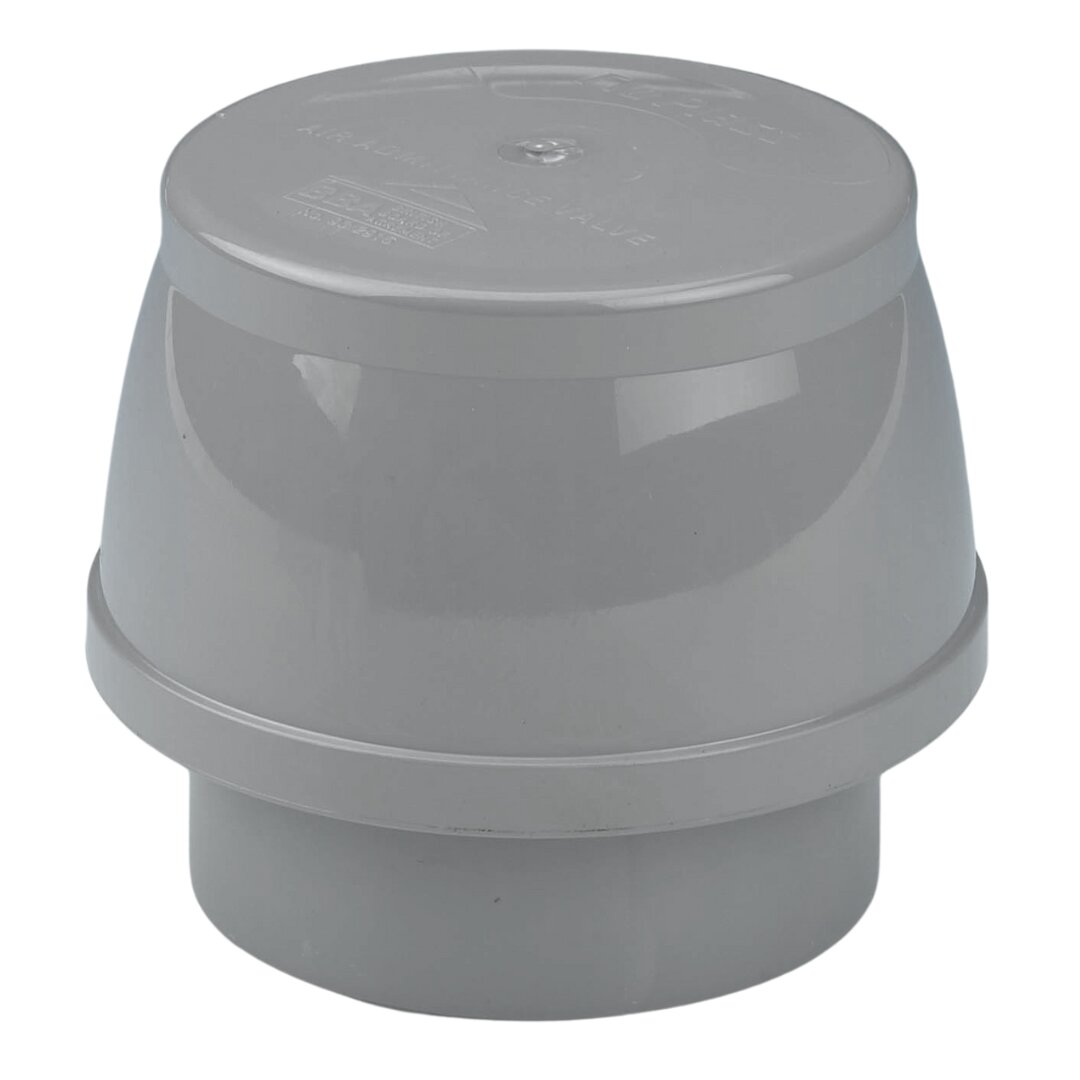
- The stack must be vented — either through the roof (open vent) or with an air admittance valve
- Branch connections must maintain the 200 mm vertical offset between WC and waste connections
BS EN 12056-2 provides the detailed calculation method for pipe sizing based on DU loading, frequency of use, and stack height.
Making the Decision: A Simple Flowchart
- Count all fixtures that will connect to the stack
- Calculate total discharge units using the DU table above
- If total DU is under 30: Use 110 mm
- If total DU is 30–80: Consider 110 mm with careful design, or use 160 mm for safety margin
- If total DU exceeds 80: Use 160 mm, or split across multiple 110 mm stacks
- Check with Building Control during design — they may have local preferences
For borderline cases, err on the side of the larger pipe. The cost difference is modest, and an oversized pipe causes no performance problems — an undersized one does.
Frequently Asked Questions
What size soil pipe do I need?
For a standard residential property (house, bungalow, or small HMO), 110 mm is almost always correct. For flats, commercial buildings, and properties with high fixture counts (more than about 10 WCs on a single stack), calculate the discharge units and consider 160 mm.
Can I mix 110mm and 160mm in one system?
Yes. A common arrangement in larger buildings uses 160 mm for the main vertical stack and 110 mm for horizontal branches to individual WCs. Reducers and adaptors are available to transition between sizes.
Is 160mm soil pipe stronger than 110mm?
The wall is thicker (4.0 mm vs 3.2 mm), so it is more robust. However, both sizes are manufactured to the same material standard (BS EN 1329-1) and both have adequate structural strength for their intended applications.
What about noise — is 160mm quieter?
Not inherently. The noise from a soil stack comes from water hitting the pipe wall and bends, not from the pipe diameter. Acoustic treatment (lagging, resilient clips, mineral wool in ducts) makes far more difference than pipe size. See our guide on waste pipe noise reduction.
Do I need Building Control approval for a soil pipe replacement?
Like-for-like replacement in the same position generally does not require formal approval. Changing the pipe size, stack position, or adding new connections does. Check with your local Building Control office.
Related Kalsi Products
- 110mm Underground Drainage System — 110 mm pipes and fittings for below-ground drainage
- 160mm Underground Drainage System — 160 mm pipes and fittings for larger projects
- 160mm Solvent Weld Soil System — 160 mm above-ground soil pipe
- Soil & Waste Range — complete above-ground drainage systems
- Technical Resources — specifications and design guidance