Sovereign Guttering: Premium Traditional Look for Period Homes
The best guttering for a period property is a sovereign or heritage-style PVC-U profile that replicates the deep, decorative mouldings of Victorian and Edwardian cast ironwork. Sovereign gutter systems combine an authentic traditional appearance — with their characteristic deep ogee or moulded profiles — with all the practical benefits of modern PVC-U: no rust, no painting, lightweight, easy to install, and maintenance-free for 30+ years. For homeowners restoring period properties, or specifiers working in conservation areas, sovereign profiles deliver the right look at a fraction of the cost and upkeep of genuine cast iron.
Period properties deserve period-appropriate detailing. The gutter may seem like a small element, but on a Victorian terrace or Edwardian villa, the roofline profile is a defining feature. Original cast iron guttering had deep, ornate profiles that gave weight and elegance to the eaves. Modern standard PVC — functional though it is — can look thin and bland by comparison. Sovereign profiles bridge that gap.
What Is a Sovereign Gutter Profile?
Sovereign guttering is a premium PVC-U profile range that replicates traditional moulded gutter designs. The term “sovereign” describes the heritage-influenced shape rather than a specific technical specification.
Key characteristics:
- Deep, pronounced ogee profile with a moulded front face
- Greater depth than standard ogee — typically 75–90 mm compared to 55–60 mm
- Wider opening — usually 125–135 mm across the top
- Higher flow capacity than standard profiles — typically 1.3–1.8 l/s
- Period-appropriate colour finishes — black, white, brown, and specialist heritage shades
- Optional textured (cast-iron-effect) finish for maximum authenticity
The profile is designed to match the scale and proportions of original Victorian and Georgian ironwork. Viewed from the street, it gives the same visual weight and shadow lines as the originals.
Where Sovereign Guttering Works Best
Victorian Terraces (1840–1900)
Victorian terraces are the backbone of British housing. Their original rainwater goods were typically cast-iron ogee or half-round profiles in black. Sovereign gutter profiles closely replicate the Victorian ogee moulding, making them the ideal replacement on these properties.
Edwardian Villas (1901–1910)
Edwardian houses tend to be slightly grander than Victorian terraces, with wider frontages and more decorative external details. The deeper sovereign profile matches the Edwardian emphasis on ornamental craftsmanship.
Georgian Townhouses
Georgian properties used simpler profiles but still in substantial proportions. A sovereign half-round or deep ogee in black recreates the look without the weight.
Arts and Crafts Properties (1900–1930)
Arts and Crafts architecture celebrates traditional materials and craftsmanship. Sovereign guttering in a heritage colour complements the handmade aesthetic.
Conservation Areas
Properties in designated conservation areas may have specific requirements for external appearance. Sovereign profiles, especially with a cast-iron-effect texture, are widely accepted by conservation officers as an appropriate replacement for original ironwork. Check with your local planning authority for specific requirements.
Listed Buildings
For Grade II listed properties, sovereign PVC-U is often acceptable subject to listed building consent. Grade I and Grade II* buildings may require genuine cast iron — discuss with your conservation officer early in the planning process.
Sovereign vs Standard Ogee vs Cast Iron Effect
| Feature | Standard Ogee | Sovereign | Cast Iron Effect |
|---|---|---|---|
| Profile depth | 55–60 mm | 75–90 mm | 65–80 mm |
| Width | 116 mm | 125–135 mm | 116–125 mm |
| Flow capacity | 1.1 l/s | 1.3–1.8 l/s | 1.1–1.3 l/s |
| Surface finish | Smooth PVC | Smooth or textured | Textured (sand-cast effect) |
| Visual weight | Moderate | Substantial, period-appropriate | Authentic heritage |
| Decorative detail | Simple S-curve | Deep, pronounced moulding | Moulded + textured |
| Price per metre | £4–7 | £6–10 | £5–12 |
| Best for | Modern homes wanting a step up from half-round | Period properties, prestige installations | Conservation areas, listed buildings |
For the most authentic period look, combine a sovereign profile with a cast-iron-effect textured finish for a result that is virtually indistinguishable from original ironwork.
Colour Selection for Period Properties
Colour choice matters more on period properties because the original colour palette was limited and specific:
Black
The overwhelming majority of Victorian, Edwardian, and Georgian rainwater goods were black — either naturally (raw cast iron) or painted. Black sovereign guttering is the default choice for period authenticity.
White
White is less historically authentic for ironwork but common on rendered period properties where the guttering was painted to match the render. Also suitable for Victorian seaside and cottage properties.
Dark Green
Some Victorian terraces and institutional buildings had rainwater goods painted in dark green — a heritage colour that is available in some sovereign ranges.
Brown
Suitable for properties with natural stone, timber framing, or mock-Tudor styling.
Heritage Colours
Some manufacturers offer period-specific heritage colours (dark grey, lead grey, sage green) that match documented Victorian and Edwardian paint schemes.
Installation Considerations
Bracket Style
Sovereign guttering typically uses concealed brackets that mount behind the front profile, keeping the decorative face uninterrupted. This differs from standard half-round, where brackets are visible beneath the gutter.
For maximum period authenticity, rafter-arm brackets — which project from beneath the roof tiles without being fixed to the fascia — replicate the way original cast-iron guttering was supported before fascia boards became standard.
Weight
Sovereign profiles are heavier than standard PVC because of their greater depth and width. While still much lighter than cast iron (roughly 1.5–2.0 kg/m vs 6–10 kg/m for cast iron), fascia brackets must be spaced at no more than 600mm centres, reduced to 300mm in areas of heavy snow or extreme weather conditions, with additional support near unions, outlets, angles and stop ends.
Fascia Board Compatibility
The deeper profile requires a fascia board of at least 175 mm depth, and 200 mm is preferable. If the existing fascia is shallow, upgrading to a deeper board — which also covers more of the rafter feet — improves both function and aesthetics.
Kalsi’s fascia board range includes appropriate depths for sovereign gutter installations.
Downpipe Options
Sovereign systems pair naturally with:
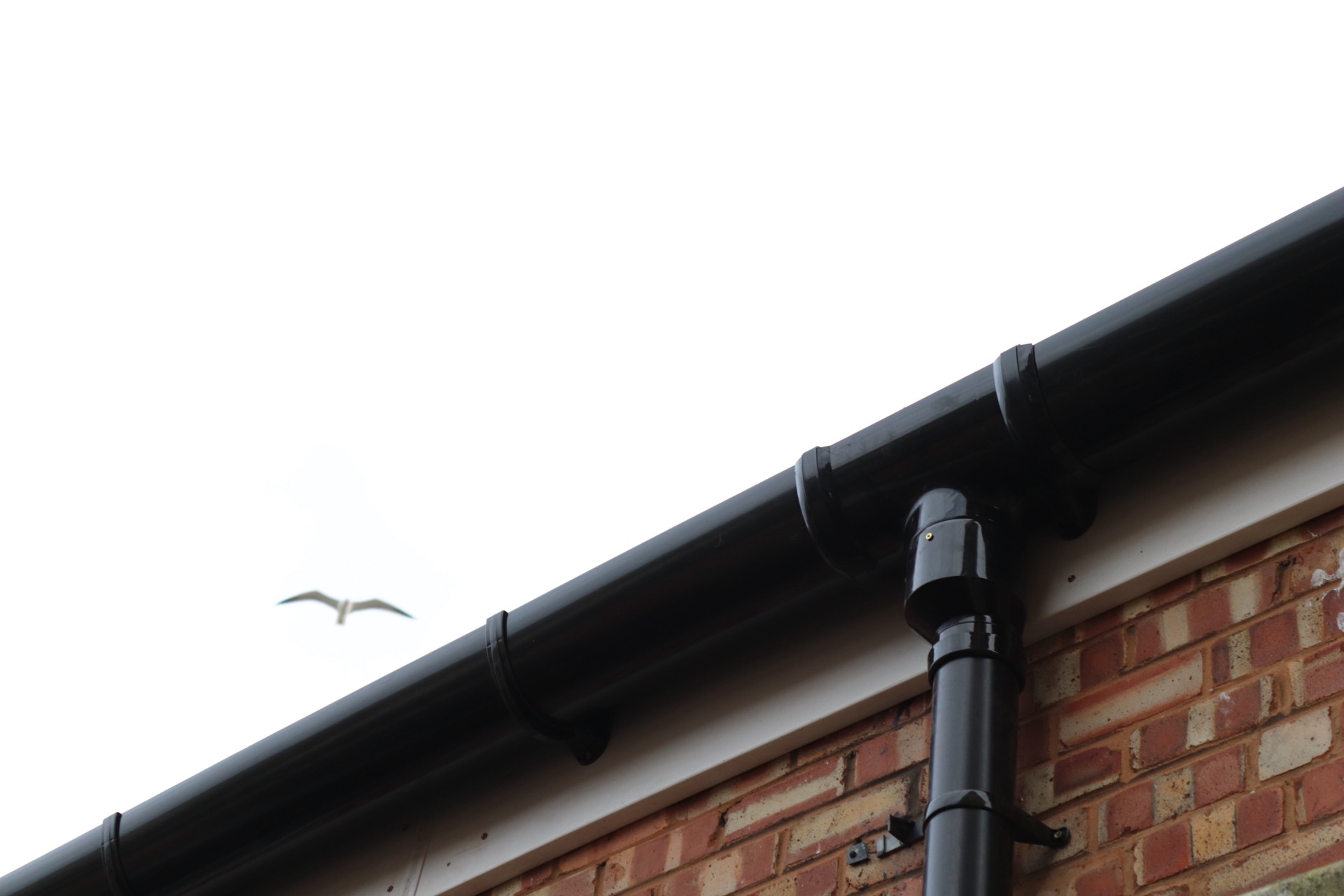
- Round downpipes (68 mm or 80 mm) in matching heritage colours
- Circular section with ear-band clips — the traditional fixing method that creates a period-appropriate detail visible on the wall elevation
- Hopper heads — decorative hoppers at the downpipe junction add an authentic period touch and also serve a practical function by collecting water from multiple directions
Cost Comparison: Sovereign vs Genuine Cast Iron
For a typical Victorian terrace with 16 m of gutter and 8 m of downpipe:
| Component | Sovereign PVC-U | Genuine Cast Iron |
|---|---|---|
| Gutter (16 m) | £96–160 | £400–960 |
| Downpipes (8 m) | £32–56 | £200–480 |
| Fittings | £50–100 | £200–400 |
| Materials total | £178–316 | £800–1,840 |
| Labour | £300–500 | £600–1,200 |
| Total installed | £478–816 | £1,400–3,040 |
Sovereign PVC-U delivers the same visual impact at 50–75% less cost, with no ongoing painting or rust-treatment maintenance.
Pairing with Period Roofline Products
For a fully coordinated heritage roofline, combine sovereign guttering with:
- Fascia boards in matching colours — white or heritage shades from the roofline range
- Tongue-and-groove soffit boards that replicate traditional timber soffits
- Decorative bargeboards on gable ends
- Window trims that complement the period moulding style
A complete roofline upgrade — fascia, soffit, bargeboard, and sovereign guttering — transforms the appearance of a period property while eliminating all the maintenance headaches of timber and iron.
Frequently Asked Questions
Best guttering for period property?
A sovereign or heritage-style PVC-U profile is the best choice for most period properties. It replicates the deep moulded profiles of Victorian and Edwardian cast iron without the rust, weight, and maintenance. For conservation areas, a cast-iron-effect textured finish adds extra authenticity. For Grade I/II* listed buildings, check with your conservation officer — genuine cast iron may be required.
What is sovereign guttering?
Sovereign is a premium PVC-U gutter profile range that replicates traditional period mouldings. It features a deeper, wider profile than standard ogee, with decorative front-face detailing that matches the scale and style of Victorian and Georgian cast iron. It is designed for period properties, heritage-style new builds, and conservation area installations.
Is PVC acceptable in a conservation area?
In most cases, yes. Cast-iron-effect PVC with a textured finish is widely accepted by conservation officers as an appropriate replacement for original ironwork on properties in conservation areas. Always check with your local authority before ordering, especially on individually listed buildings.
How does sovereign compare to cast iron?
Sovereign PVC-U weighs a fraction of cast iron (roughly 1/5), costs 50–75% less, requires no painting or rust treatment, and lasts 30+ years maintenance-free. Cast iron lasts longer in absolute terms (50–100+ years) but requires ongoing care. For most practical purposes, sovereign PVC-U is the better value proposition.
Can I mix sovereign guttering with standard PVC fittings?
Sovereign profiles use their own specific fittings — standard union clips and brackets from other profiles will not fit correctly. Always order the complete sovereign system including gutters, fittings, brackets, and downpipe accessories to ensure compatibility and a consistent appearance.