Cast Iron Effect Guttering: Get the Look Without the Rust
Yes, cast iron effect PVC guttering is an excellent choice — it replicates the appearance of traditional cast iron at a fraction of the weight, cost, and maintenance. Modern PVC-U cast-iron-effect systems use textured finishes, authentic moulded profiles, and heritage colours to mimic the look of Victorian and Edwardian ironwork. They will not rust, do not need painting, weigh roughly a fifth of the real thing, and last 30 years or more with zero maintenance. For period properties, conservation areas, and homeowners who want traditional charm without the upkeep, cast iron effect guttering is the practical, sensible answer.
Real cast iron guttering has a magnificent look. The weight, the texture, the deep profiles — there is something about the original that catches the eye. But real cast iron also rusts, cracks, weighs a considerable amount, needs regular painting, and costs a small fortune to replace section by section. Cast iron effect PVC takes the aesthetic and leaves the problems behind.
What Is Cast Iron Effect Guttering?
Cast iron effect guttering is PVC-U rainwater goods manufactured with:
- Textured surface finish that replicates the slightly rough, sand-cast feel of traditional iron
- Deep moulded profiles matching classic Victorian and Georgian shapes (typically ogee or half round)
- Heritage colours — most commonly black, but also available in white, brown, and grey with the textured finish
- Period-style fittings including hopper heads, ear-band downpipe clips, and decorative stopends
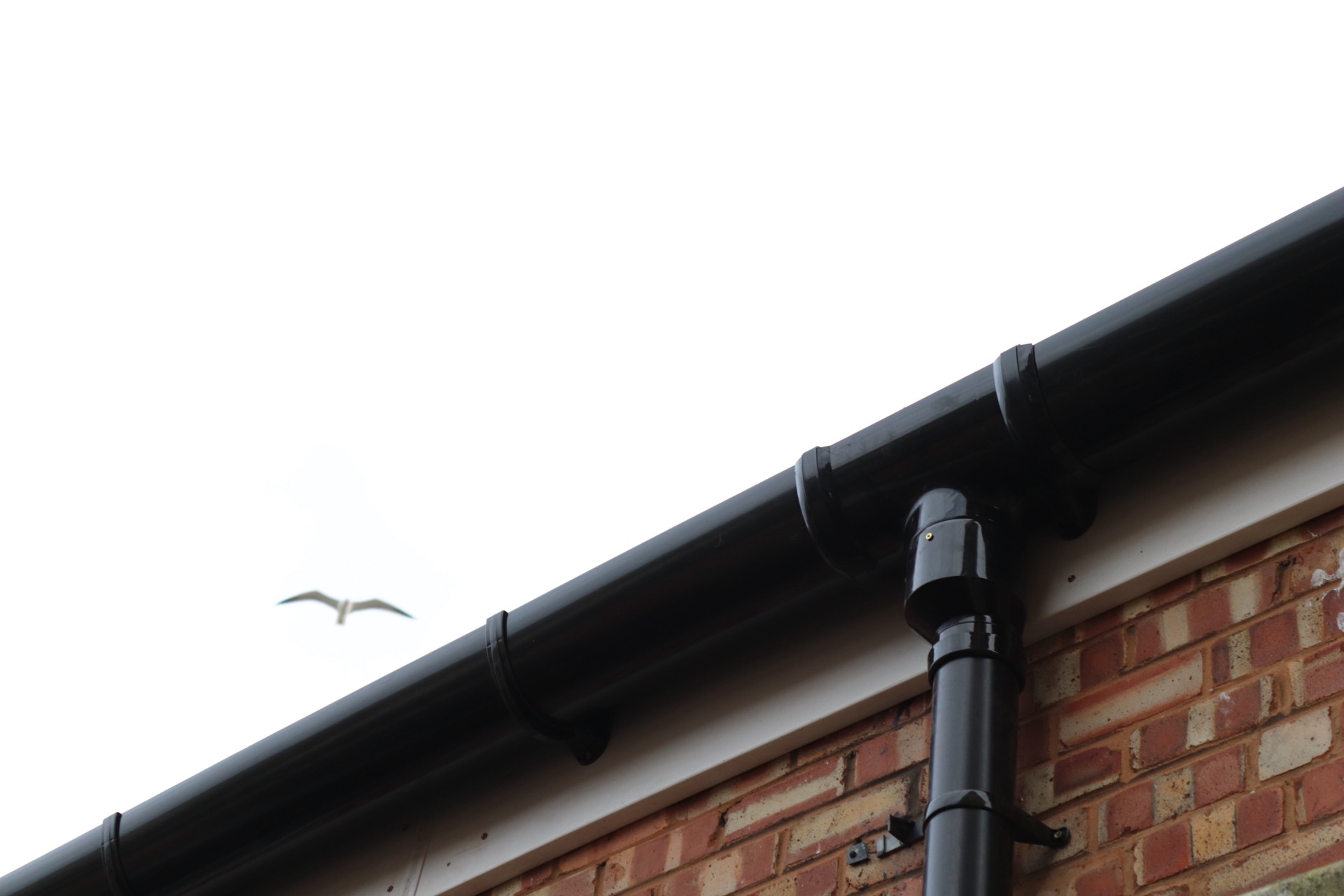
From the ground, it is virtually indistinguishable from real cast iron. Even up close, a good cast iron effect system is remarkably convincing.
Kalsi Plastics manufactures a dedicated cast iron effect rainwater range with the full suite of gutters, downpipes, and accessories to complete any period installation.
Cast Iron Effect vs Real Cast Iron
| Feature | Real Cast Iron | Cast Iron Effect PVC |
|---|---|---|
| Weight per metre (gutter) | 6–10 kg | 1.2–1.8 kg |
| Weight per metre (downpipe) | 8–12 kg | 0.8–1.2 kg |
| Rust | Yes — ongoing problem | No — PVC does not corrode |
| Painting | Every 3–5 years | Never |
| Lifespan | 50–100+ years (if maintained) | 30–50 years (maintenance-free) |
| Cost per metre (gutter) | £25–60 | £5–12 |
| Installation | Heavy — often needs 2 people + scaffolding | Light — one-person job |
| Fittings | Bolted joints with putty/sealant | Push-fit or union clip |
| Expansion allowance | Minimal (iron barely expands) | Required — PVC expands in heat |
| Repair | Specialist foundry or welding | Simple clip-in replacement |
| Recycling | Scrap metal value | PVC recycling schemes |
The Weight Factor
This is the most practical difference on-site. A 4-metre length of cast iron gutter weighs 25–40 kg. The PVC equivalent weighs 5–7 kg. For the installer, that means:
- No heavy lifting overhead on a ladder
- No second person needed to hold sections while bolting
- Faster installation — a full house in a day rather than two or three
- Lower scaffolding hire costs because the job is quicker
Where Cast Iron Effect Guttering Is Used
Conservation Areas
If your property is in a designated conservation area, the local planning authority may have specific requirements for external appearance, including rainwater goods. Many councils now accept cast iron effect PVC as a suitable replacement for original cast iron, provided the profile shape and colour match the existing.
Tip: Check with your local authority before ordering. Some conservation officers insist on genuine cast iron for Grade I and Grade II* listed buildings, while Grade II and conservation-area properties generally accept the PVC alternative.
Period Property Refurbishment
Victorian terraces, Edwardian semis, Georgian townhouses, and arts-and-crafts properties all benefit from the authentic look. Common specifications include:
- Black ogee gutter with textured finish
- Circular-section downpipes (65 mm or 68 mm) with ear-band brackets
- Hopper heads at the downpipe junction for an authentic period detail
- Decorative stop ends with moulded patterns
New Builds with Heritage Design
Developers building in a traditional vernacular style — particularly in rural areas, market towns, or adjacent to conservation areas — often specify cast iron effect to satisfy planning conditions while keeping build costs manageable.
High-End Residential
For homeowners who simply prefer the traditional look, cast iron effect gives them an authentic aesthetic without committing to the maintenance burden of the real thing.
Installation Guide
Cast iron effect PVC installs exactly like any other PVC rainwater system. The key steps:
1. Remove Existing Guttering
If replacing real cast iron, take care during removal. Cast iron is heavy, brittle, and can shatter if dropped. Work from scaffolding or a secure platform, have a helper, and lower sections carefully.
Old cast iron has scrap value — a local scrap merchant will often collect it for free.
2. Inspect and Repair the Fascia
With the old gutter removed, check the fascia board. Cast iron gutters are heavy, and years of weight may have caused the fascia to bow, split, or rot. Replace any damaged sections before fitting the new system. Kalsi’s fascia boards range includes period-appropriate options.
3. Fit New Brackets
Cast iron effect PVC uses matching fascia brackets or suitable rafter-arm brackets. Space fascia brackets at no more than 600mm centres, reducing to 300mm in areas of heavy snow or extreme weather conditions, with a gentle fall of 3mm per metre towards each downpipe outlet.
4. Fit Gutter Lengths, Fittings, and Downpipes
- Allow for thermal expansion — leave the gap specified in the manufacturer’s instructions at each union joint
- Use the correct seals and adhesive where specified
- Fit downpipes with spacer brackets to maintain the correct offset from the wall
5. Final Check
Run water through the system with a hose to check:
- No leaks at joints
- Water flows freely to all outlets
- No pooling or standing water in the gutter
- Downpipes discharge correctly into gullies or drainage
Colour Matching Existing Properties
The vast majority of cast iron effect installations are in black, which is the traditional colour for ironwork on period properties. However, some properties originally had painted cast iron in:
- Dark green (common on Victorian terraces in certain regions)
- Dark grey (used on some Edwardian and inter-war properties)
- White (painted iron on rendered buildings)
- Brown (particularly on mock-Tudor and suburban properties)
Kalsi’s cast iron effect range covers the most common heritage colours. If your property has an unusual original colour, the PVC can also be painted with exterior-grade paint, though this adds a maintenance step that somewhat defeats the purpose.
Cost Breakdown
Here is a realistic cost comparison for a typical 3-bed semi-detached with approximately 24 m of gutter and 12 m of downpipe:
| Component | Real Cast Iron | Cast Iron Effect PVC |
|---|---|---|
| Gutter (24 m) | £600–1,440 | £120–288 |
| Downpipes (12 m) | £360–720 | £60–144 |
| Fittings | £200–400 | £80–160 |
| Materials total | £1,160–2,560 | £260–592 |
| Labour (specialist vs standard) | £800–1,500 | £400–700 |
| Scaffolding (longer hire for iron) | £400–600 | £250–400 |
| Total installed | £2,360–4,660 | £910–1,692 |
The PVC option is typically 60–70% cheaper than a like-for-like real cast iron replacement, with identical visual impact when viewed from ground level.
Maintenance
This is where cast iron effect PVC truly wins. The maintenance schedule is:
| Task | Real Cast Iron | Cast Iron Effect PVC |
|---|---|---|
| Painting | Every 3–5 years | Never |
| Rust treatment | Annually (inspect, treat spots) | Never |
| Joint re-sealing | Every 5–10 years | Rarely (20+ years) |
| Cleaning | Twice yearly | Twice yearly |
| Replacement frequency | Sections every 30–50 years | Full system every 30–50 years |
The only maintenance cast iron effect PVC needs is a twice-yearly clean with soapy water and clearing any debris from the gutter channel and downpipe outlets. That is it.
Will Planning Officers Accept It?
In most cases, yes. The current planning guidance across England and Wales recognises that PVC-U rainwater goods with an authentic cast iron effect finish are an acceptable replacement on:
- Properties in conservation areas (not individually listed)
- Grade II listed buildings (subject to listed building consent and conservation officer approval)
- New builds within conservation area boundaries
For Grade I and Grade II listed buildings*, you may need genuine cast iron or aluminium. Always check with your local conservation officer before specifying.
Having technical data sheets from the manufacturer — including profile dimensions, colour samples, and photographs of installed examples — helps your case when applying for consent.
Alternatives to Consider
If cast iron effect PVC does not meet your requirements, here are the other options:
| Material | Pros | Cons |
|---|---|---|
| Real cast iron | Authentic, long-lasting, high scrap value | Heavy, rusts, expensive, specialist fitting |
| Aluminium (cast effect) | Light, no rust, very durable | Expensive (£20–40/m), limited profiles |
| GRP (fibreglass) | Can replicate any profile exactly | Very expensive, specialist supply |
| Standard PVC-U | Cheapest, lightest, easiest | No heritage appearance |
For the majority of properties, cast iron effect PVC hits the sweet spot between appearance, practicality, and cost.
Frequently Asked Questions
Is cast iron effect guttering any good?
Cast iron effect PVC guttering is excellent. It accurately replicates the look and profile of traditional cast iron while being lighter, cheaper, rust-free, and maintenance-free. Modern textured finishes are convincing even at close range, and the product is widely accepted in conservation areas.
Can you tell the difference between cast iron and PVC from the ground?
In most cases, no. Good-quality cast iron effect PVC with a textured sand-cast finish and heritage colour is virtually indistinguishable from real cast iron when viewed from ground level. The difference only becomes apparent on very close inspection — the weight and tap-test give it away.
Is cast iron effect PVC acceptable in conservation areas?
Generally yes. Most local planning authorities in England and Wales accept cast iron effect PVC as a suitable replacement for original cast iron on properties in conservation areas. For individually listed buildings, check with your conservation officer first — Grade I and II* may require genuine cast iron.
How long does cast iron effect PVC guttering last?
Expect 30–50 years of maintenance-free life. PVC-U is UV-stabilised to resist colour fade and will not rust, rot, or corrode. Unlike real cast iron, which requires regular painting to achieve its full lifespan, PVC performs without any intervention beyond basic cleaning.
Can I mix cast iron effect guttering with standard PVC fittings?
This depends on the specific system. Some cast iron effect ranges use standard-dimension fittings with a textured overlay, meaning they are compatible with standard PVC fittings of the same size. However, for a consistent heritage appearance, it is best to use the full cast iron effect range throughout, including fittings, downpipes, and accessories.