Rainwater Harvesting: Using Gutters for Water Collection
Yes, you can absolutely use your existing gutters for rainwater harvesting — and with water bills rising and hosepipe bans becoming more frequent, it makes excellent sense. A simple water butt connected to a gutter downpipe is the most basic form of rainwater harvesting and costs under £50. A more advanced system with underground storage tanks, pumps, and filtered supply to WCs and washing machines can reduce mains water consumption by 40–50%. Your gutters are already doing the hard work of collecting rainwater from the roof — harvesting simply means storing it instead of sending it straight to the drain.
The average UK house roof collects between 50,000 and 100,000 litres of rainwater per year. Most of it runs through the gutter, down the downpipe, and disappears into the storm drain. Capturing even a fraction of this free resource reduces your water bill, keeps your garden green during dry spells, and reduces the load on municipal drainage — which is increasingly relevant as climate change brings both more intense rainfall and longer dry periods.
How Much Water Can You Collect?
The amount of rainwater you can harvest depends on your roof area and local rainfall:
Annual collection = Roof area (m²) × Annual rainfall (mm) × 0.80
The 0.80 factor accounts for evaporation, splash loss, and first-flush waste (the initial dirty runoff).
| Roof Area | Annual Rainfall (750 mm) | Annual Rainfall (1,000 mm) | Annual Rainfall (1,500 mm) |
|---|---|---|---|
| 50 m² | 30,000 litres | 40,000 litres | 60,000 litres |
| 75 m² | 45,000 litres | 60,000 litres | 90,000 litres |
| 100 m² | 60,000 litres | 80,000 litres | 120,000 litres |
| 150 m² | 90,000 litres | 120,000 litres | 180,000 litres |
For context, a typical UK household uses approximately 150 litres per person per day. A family of four uses about 219,000 litres per year. If 40% of that could be replaced with harvested rainwater (toilet flushing, laundry, garden), that is 87,600 litres — well within the collection capacity of most UK house roofs.
Levels of Rainwater Harvesting
Level 1: Water Butt (Simple, DIY)
The entry-level system. A water butt connects to your downpipe via a diverter and stores rainwater for garden use.
Components:
- Water butt (200–350 litres, typically)
- Downpipe diverter kit (fits into the existing downpipe)
- Stand (raises the butt for gravity-fed tap)
- Overflow connection (routes excess back to the drain)
Cost: £30–80 complete Installation time: 30 minutes Best for: Garden watering, car washing, allotments
How it works: The diverter inserts into the downpipe at the height of the water butt inlet. Water flowing down the pipe is diverted into the butt. When the butt is full, water bypasses and continues down the downpipe to the drain. A tap at the base lets you fill watering cans.
Level 2: Multiple Butts or Larger Tanks (Intermediate)
Linking multiple water butts in series or using a larger slimline tank (500–1,000 litres) increases storage capacity.
Components:
- 2–4 linked water butts or a single large tank
- Linking kits (connect butts at the base so water levels equalise)
- Diverter and overflow
- Optional submersible pump for pressurised delivery
Cost: £100–400 Installation time: 1–2 hours Best for: Larger gardens, smallholdings, greenhouse irrigation
Level 3: Underground Tank System (Advanced)
A buried tank (1,500–10,000+ litres) with pump, filter, and plumbing to supply non-potable water to WCs, washing machines, and outdoor taps.
Components:
- Buried polyethylene or concrete tank
- Calmed inlet (reduces sediment disturbance)
- Filter (removes debris before it enters the tank)
- Floating suction filter (draws clean water from below the surface)
- Submersible or suction pump
- Mains water top-up (automatic backup when tank is empty)
- Backflow prevention to comply with WRAS regulations
- Separate pipework (non-potable — must not cross-connect with mains)
Cost: £2,000–6,000 installed Installation time: 1–2 days (including excavation) Best for: New builds, eco-homes, large families, water-metered properties
The Gutter System’s Role
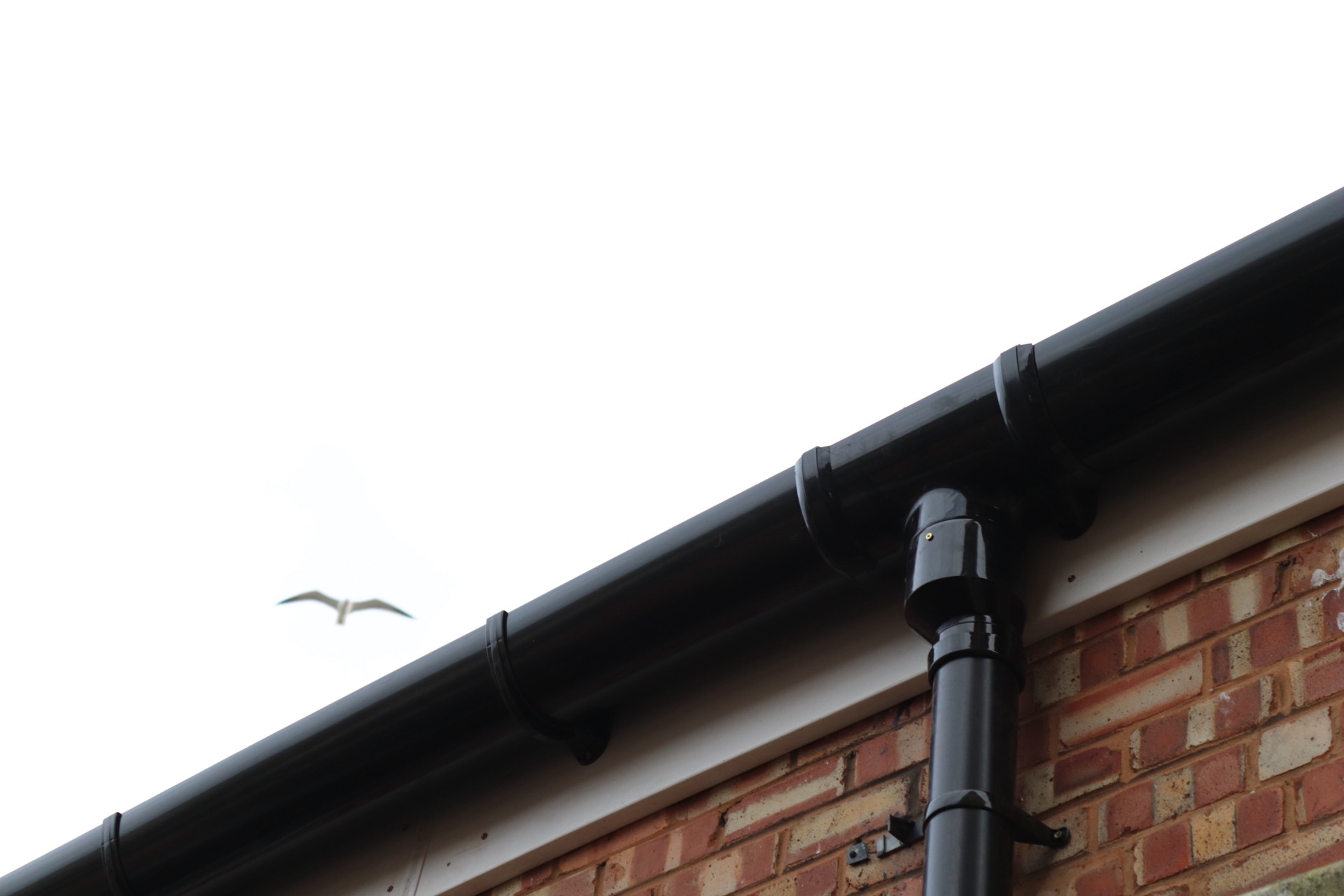
Your gutters and downpipes are the collection infrastructure. The better they work, the more water you can harvest and the cleaner it will be.
Gutter Sizing for Harvesting
Standard domestic guttering is designed to handle peak rainfall without overflowing. For harvesting, the same sizing applies — if the gutter overflows, you lose water. Ensure your gutter system is correctly sized for your roof area.
Gutter Guards
A leaf guard or mesh over the gutter keeps debris out of the water before it reaches the downpipe. This reduces contamination in the water butt and extends the life of any filters in the system. Guards do not replace downstream filtering but they reduce the maintenance burden.
Gutter Material
PVC-U gutters (like Kalsi’s rainwater ranges) are ideal for rainwater harvesting. They do not corrode, do not leach heavy metals (unlike some older lead or zinc systems), and maintain a smooth interior that minimises debris accumulation.
First-Flush Diverter
The first few litres of rainwater after a dry spell wash bird droppings, dust, pollen, and atmospheric pollutants off the roof. A first-flush diverter captures this initial dirty water (typically the first 1–2 litres per m² of roof) and diverts it to the drain. Cleaner water then flows to the storage tank.
Water Quality
Harvested rainwater is not potable (drinkable) without treatment. It is, however, perfectly adequate for:
| Use | Suitability | Notes |
|---|---|---|
| Garden watering | Excellent | Plants prefer rainwater (no chlorine, limescale) |
| Car washing | Excellent | Soft water — no water spots |
| Toilet flushing | Excellent (with Level 3 system) | Saves 30% of household water use |
| Washing machine | Good (with filtration) | Soft water reduces detergent use |
| Pressure washing | Good | Use with a pump |
| Drinking / cooking | Not recommended | Requires UV sterilisation + filtration to potable standard |
| Filling ponds | Excellent | Fish-safe, no chlorine |
For Level 3 systems connected to indoor plumbing, the pipework must be clearly marked as non-potable and must not cross-connect with the mains supply. This is a legal requirement under the Water Supply (Water Fittings) Regulations 1999 and WRAS guidelines.
Regulations and Planning
Water Regulations (WRAS)
- Rainwater systems connected to indoor plumbing must comply with the Water Supply (Water Fittings) Regulations 1999
- A backflow prevention device is required where the system has a mains water top-up
- All non-potable pipework must be clearly marked (typically purple/violet pipe or labels)
- The system must be notified to your local water company
Building Regulations
- A standalone water butt in the garden does not require Building Regulations approval
- Underground tank systems connected to the building’s plumbing are considered building work and should be notified to Building Control
- Part G (Sanitation, Hot Water Safety and Water Efficiency) covers water reuse systems
- Part H (Drainage) covers the overflow and drainage connections
Planning Permission
- Rainwater harvesting does not normally require planning permission
- Underground tanks in conservation areas may need consent if they involve visible above-ground infrastructure
- Tanks in flood-risk areas may need assessment
Installation: Connecting a Water Butt to Your Downpipe
This is the simplest and most popular rainwater harvesting installation:
What You Need
| Item | Cost |
|---|---|
| Water butt (200 litres) | £20–40 |
| Downpipe diverter kit | £8–15 |
| Butt stand | £10–20 (or build from blocks) |
| Overflow hose | £5 (often included with diverter) |
Steps
-
Position the water butt on a flat, stable base next to the downpipe. Use a purpose-made stand or concrete blocks to raise it — gravity-fed taps need the butt elevated above watering-can height.
-
Mark the diverter position on the downpipe. The diverter inlet should align with the top of the water butt. Mark the cut line on the downpipe.
-
Cut the downpipe. Use a fine-toothed hacksaw. You are removing a section to insert the diverter.
-
Install the diverter. Follow the kit instructions — typically you push-fit the diverter into the cut downpipe. The water flow hits an internal fin that directs it towards the butt when there is space, and lets it bypass when the butt is full.
-
Connect the hose from the diverter to the butt inlet.
-
Fit an overflow. Connect a hose from the overflow outlet (near the top of the butt) back to the downpipe below the diverter, or direct it to a garden soakaway.
-
Test. Run a hose into the gutter and watch the system work. Water should fill the butt, then overflow safely back to the drain.
Maximising Your Harvest
- Connect multiple downpipes. A house with four downpipes can feed four water butts or a linked system.
- Use the largest butt that fits. A 350-litre butt costs only slightly more than a 200-litre and carries you through longer dry spells.
- Keep gutters clean. Blocked gutters do not deliver water to the downpipe — you lose the harvest and the gutter overflows.
- Install leaf guards on gutters that feed harvesting systems.
- Consider a first-flush diverter for cleaner stored water.
Frequently Asked Questions
Can I use gutters for rainwater harvesting?
Yes. Your gutters already collect all the rainwater from your roof — you just need to add a diverter and storage container to capture it. A simple water butt costs under £50 and takes 30 minutes to install. Advanced underground systems can supply WCs and washing machines.
How much water can I collect from my roof?
A 75 m² roof in an area with 800 mm annual rainfall collects approximately 48,000 litres per year. Even accounting for losses, that is enough to keep a large garden irrigated year-round and fill a 200-litre water butt roughly 200 times.
Is harvested rainwater safe for the garden?
Absolutely. Rainwater is actually better for plants than mains water — it contains no chlorine, no limescale, and has a near-neutral pH. Most plants, including acid-loving species like rhododendrons and blueberries, thrive on rainwater.
Do I need planning permission for a water butt?
No. A water butt in the garden is classed as permitted development and does not require planning permission. Underground tank systems may need Building Control notification if they connect to the building’s plumbing, but standalone garden water butts are completely unrestricted.
Can I use harvested rainwater for toilet flushing?
Yes, with a properly designed Level 3 system that includes filtration, a pump, mains water backup with backflow prevention, and clearly marked non-potable pipework. Toilet flushing accounts for approximately 30% of household water use, so this can significantly reduce your water bill. The system must comply with the Water Supply (Water Fittings) Regulations 1999.