PVC-U Explained: What It Is and Why We Use It
What Is PVC-U?
PVC-U stands for Polyvinyl Chloride — Unplasticised. It is a rigid thermoplastic polymer widely used in the manufacture of building products including rainwater systems, roofline (fascia, soffit, and bargeboards), underground drainage, soil and waste pipes, wall panelling, and external cladding. The “U” in PVC-U is critical — it indicates that no plasticisers have been added to the base PVC compound, which gives the material its characteristic rigidity, strength, and long-term dimensional stability.
PVC-U has been the dominant material for plastic building products in the UK since the 1970s, progressively replacing timber, cast iron, and asbestos cement across virtually every external building application. Today, it accounts for the vast majority of rainwater goods, roofline products, and drainage systems installed on UK residential and commercial buildings.
PVC-U vs PVC: What’s the Difference?
PVC (Polyvinyl Chloride) is a broad family of thermoplastic polymers. The properties of PVC vary enormously depending on how it is formulated — specifically, whether plasticisers are added:
-
PVC-U (Unplasticised) — Rigid, strong, and dimensionally stable. Used for structural and semi-structural building products where stiffness and long-term performance are essential. This is the material used in pipes, profiles, and building products.
-
PVC-P (Plasticised) — Flexible and soft. Created by adding plasticiser compounds to the PVC base resin. Used for applications requiring flexibility, such as electrical cable insulation, flooring, and synthetic leather. Not used for structural building products.
When people refer to “PVC” building products in the UK construction industry, they almost always mean PVC-U. The terms are often used interchangeably in everyday conversation, but the distinction matters technically because the two materials have very different physical properties.
How PVC-U Is Made
PVC-U is manufactured through a multi-stage process:
1. Polymerisation
Vinyl chloride monomer (VCM) is polymerised to produce PVC resin — a fine white powder. VCM is derived from ethylene (a petrochemical) and chlorine (produced from common salt via electrolysis). Notably, PVC is one of the least petroleum-dependent plastics: approximately 57% of its molecular weight comes from chlorine (salt-derived) rather than petrochemical feedstock.
2. Compounding
The PVC resin is blended with a carefully formulated mixture of additives to create a compound tailored to the intended application. Key additives include:
- Stabilisers — Protect the PVC from thermal degradation during processing and from UV degradation during service. Modern PVC-U building products use calcium-zinc or organic-based stabiliser systems, having moved away from the lead-based stabilisers used historically
- Impact modifiers — Improve the material’s resistance to impact damage, particularly at low temperatures. Essential for building products that may be struck during installation or service
- UV absorbers and light stabilisers — Protect the surface from discolouration and degradation caused by exposure to sunlight
- Pigments — Provide colour. White is the most common for building products, but PVC-U can be coloured to virtually any shade
- Fillers — Calcium carbonate (chalk) is commonly added to reduce cost and improve stiffness. The proportion of filler affects the product’s impact resistance and must be carefully controlled
3. Extrusion
The compounded PVC-U is fed into an extruder — a machine that heats the material to around 170–190°C and forces it through a shaped die to produce a continuous profile. For pipes, the die produces a circular cross-section. For fascia boards, soffits, and cladding, the die produces the required profile shape, often incorporating hollow chambers for stiffness and insulation.
The extruded profile is then cooled, cut to length, and undergoes quality checks for dimensions, colour, and physical properties.
4. Injection Moulding
Fittings, connectors, and accessories that cannot be produced by extrusion (such as gutter angles, downpipe shoes, drainage bends, and inspection chamber components) are manufactured by injection moulding. Molten PVC-U compound is injected under high pressure into a precisely machined mould cavity, cooled, and ejected as a finished part.
Properties of PVC-U
The widespread use of PVC-U in building products is driven by a combination of properties that make it uniquely suited to the construction environment:
Durability
PVC-U does not rot, rust, corrode, or require painting. Unlike timber fascia boards that may need repainting every 3–5 years and can suffer from wet rot, dry rot, and insect attack, PVC-U maintains its appearance and structural integrity for decades with minimal maintenance. A well-manufactured PVC-U product has a design life in excess of 40 years — and many installations from the 1970s and 1980s remain in good service today.
Weather Resistance
PVC-U is inherently resistant to moisture, making it ideal for external building applications where rain, snow, and condensation are constant factors. It does not absorb water, swell, or delaminate — problems that affect timber and some composite materials in wet conditions.
Chemical Resistance
PVC-U is highly resistant to a wide range of chemicals, including acids, alkalis, salt solutions, and most common household chemicals. This makes it suitable for drainage and soil/waste applications where the pipe may carry chemically diverse effluent.
Low Thermal Conductivity
PVC-U has a thermal conductivity of approximately 0.16 W/mK, significantly lower than metals (aluminium: 205 W/mK, steel: 50 W/mK). This makes PVC-U profiles effective contributors to the thermal performance of building envelopes, particularly in window frames and cladding applications.
Electrical Insulation
PVC-U is an excellent electrical insulator. While this is not the primary reason for its use in building products, it means that PVC-U pipes and profiles will not conduct electricity and do not require earthing — unlike metallic pipework systems.
Fire Performance
PVC-U has a limiting oxygen index (LOI) of approximately 45% — meaning it requires an oxygen concentration significantly above the normal atmospheric level (21%) to sustain combustion. In practical terms, PVC-U is self-extinguishing: it will burn when directly exposed to a flame but stops burning when the flame source is removed.
This self-extinguishing behaviour makes PVC-U significantly safer than many timber products, which continue to burn and spread fire once ignited. PVC-U building products are routinely tested to BS 476 (fire tests on building materials) and achieve classifications suitable for use in external building applications.
Applications of PVC-U in Building
Rainwater Systems
PVC-U gutters and downpipes have almost entirely replaced cast iron for residential rainwater management. They are lighter, easier to install, do not corrode, and require no painting. Kalsi Plastics manufactures a comprehensive range of PVC-U rainwater systems in profiles including half round, ogee, square, and deepflow — with flow capacities to suit any building type.
Roofline
Fascia boards, soffits, and bargeboards in PVC-U provide a maintenance-free alternative to timber. They are manufactured with a UV-resistant outer surface and a cellular or solid core for rigidity. PVC-U roofline can be installed over existing timber or as a direct replacement, and is available in white, black, woodgrain, and a range of other colours.
Underground Drainage
PVC-U is the standard material for below-ground drainage pipe in the UK, manufactured to BS EN 1401. Available in 110mm and 160mm nominal diameters, PVC-U drainage pipe offers excellent ring stiffness (typically SN4 or SN8), chemical resistance, and a smooth bore that resists blockages.
Soil and Waste
Above-ground soil and waste systems use PVC-U pipe and fittings to convey wastewater from sanitary appliances to the drainage system. Soil pipe (110mm) carries toilet waste, while waste pipe (32mm and 40mm) serves basins, baths, and showers. PVC-U soil and waste systems are available in solvent weld and push-fit configurations.
Wall Panelling and External Cladding
PVC-U wall panelling provides a hygienic, moisture-resistant, and easy-to-clean interior wall finish for kitchens, bathrooms, utility rooms, and commercial spaces. External cladding in PVC-U offers weather protection and aesthetic appeal for residential and commercial buildings, available in shiplap, weatherboard, and decorative profiles.
PVC-U vs Alternative Materials
| Property | PVC-U | Timber | Cast Iron | Aluminium |
|---|---|---|---|---|
| Maintenance | Minimal (occasional cleaning) | Regular painting/staining | Painting required | Minimal |
| Rot/corrosion resistance | Excellent | Poor without treatment | Corrodes over time | Good |
| Weight | Light | Medium | Heavy | Light |
| Design life | 40+ years | 15–30 years (maintained) | 50+ years (maintained) | 40+ years |
| Installation ease | Easy (cut, clip, fix) | Moderate | Difficult (heavy, specialist fixings) | Moderate |
| Recyclability | Fully recyclable | Biodegradable | Recyclable | Recyclable |
| Cost | Moderate | Low (initial) / High (lifecycle) | High | High |
Sustainability and Recycling
PVC-U is one of the most widely recycled plastics in the construction sector. In the UK, the Recovinyl and VinylPlus programmes coordinate the collection and recycling of post-consumer PVC-U waste from construction and demolition sites. Old PVC-U windows, pipes, and profiles are collected, granulated, and reprocessed into new products.
Kalsi Plastics incorporates recycled PVC-U into its manufacturing process where appropriate — particularly in co-extruded profiles where recycled material forms the inner structural core, protected by a virgin outer layer. This approach maximises the use of recycled content without compromising the surface finish or UV resistance of the finished product.
The long service life of PVC-U building products also contributes to sustainability. A fascia board that lasts 40+ years without replacement represents a significantly lower environmental impact over its lifecycle than a timber fascia that needs painting every few years and replacing after 15–20 years.
Frequently Asked Questions
Is PVC-U the same as uPVC?
Yes. PVC-U and uPVC are different ways of writing the same material designation. PVC-U (with the U after the hyphen) is the technically correct form used in British and European Standards. uPVC (with the u before PVC) is the common informal form used in everyday language. Both refer to unplasticised polyvinyl chloride.
Does PVC-U yellow over time?
Modern PVC-U building products contain UV stabilisers that resist discolouration for decades. Very early PVC-U products (from the 1970s and 1980s) sometimes yellowed because UV stabiliser technology was less advanced. Today’s products, manufactured with calcium-zinc stabilisers and high-performance UV absorbers, maintain their colour stability far better. Light-coloured products may develop a very slight tint over 20+ years of direct sun exposure, but this is barely perceptible.
Is PVC-U safe for drinking water?
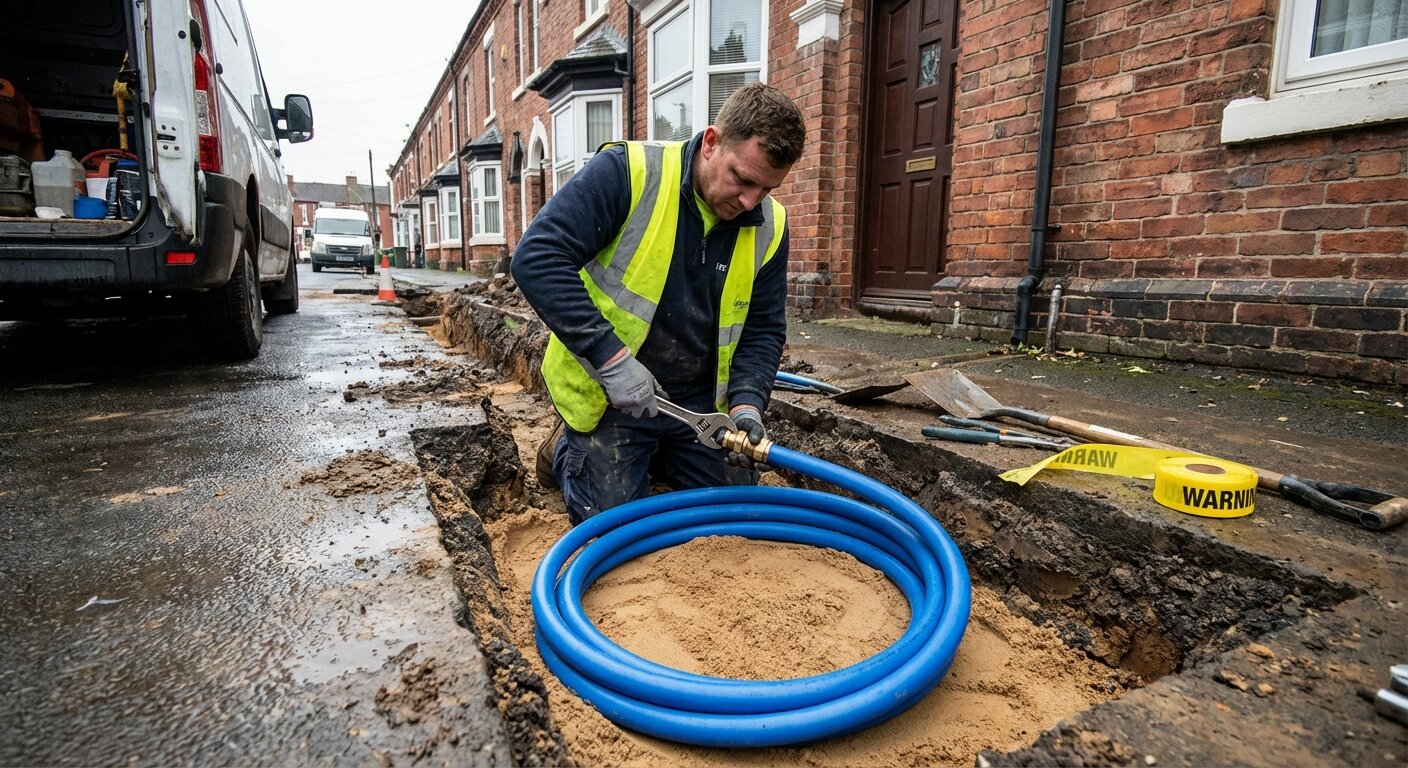
PVC-U pipe manufactured to BS EN 1452 (pressure systems for water supply) and carrying WRAS approval is safe and approved for potable water supply. The material does not leach harmful substances into drinking water at concentrations that present any health risk. However, most potable water supply pipes in the UK now use MDPE (polyethylene) rather than PVC-U for below-ground service connections, with PVC-U used primarily for above-ground distribution within buildings.
Can PVC-U be painted?
PVC-U can be painted using specially formulated paints designed for plastic surfaces (e.g., Zinsser or Dulux weathershield for plastics). However, one of the key advantages of PVC-U is that it does not require painting. Painting PVC-U adds a maintenance requirement that did not previously exist, as painted surfaces will eventually need recoating.
Is PVC-U environmentally friendly?
PVC-U has a complex environmental profile. On the positive side, it is durable (reducing replacement frequency), recyclable, and less petroleum-dependent than most plastics. On the negative side, its manufacture involves chlorine chemistry and energy-intensive processing. The industry has made significant progress in addressing environmental concerns — eliminating lead stabilisers, increasing recycled content, and establishing comprehensive recycling programmes. The overall lifecycle environmental impact of PVC-U building products compares favourably with timber, metal, and composite alternatives when maintenance, service life, and end-of-life recyclability are considered.
Related Kalsi Products
- Rainwater Systems — Full range of PVC-U gutter and downpipe systems
- Roofline Products — Fascia, soffit, bargeboard, and accessories
- Underground Drainage — 110mm and 160mm PVC-U drainage systems
- Soil and Waste — Solvent weld and push-fit waste systems
- Wall Panelling — Interior PVC-U panelling solutions
- External Cladding — Shiplap, weatherboard, and decorative profiles