How to Join MDPE Pipe: Compression Fittings Guide
How to Join MDPE Water Pipe?
MDPE water pipe is joined using mechanical compression fittings — brass or plastic fittings that grip the pipe using a compression ring (also called a grab ring or collet) and a rubber seal (O-ring) to create a watertight, pressure-rated connection. The pipe end is cut square, deburred, and pushed into the fitting body. When the cap nut is hand-tightened, the internal grab ring bites into the pipe surface to resist pull-out, while the O-ring provides the watertight seal. No heat, solvent cement, or specialist fusion equipment is required.
This makes compression fittings the standard jointing method for MDPE pipe on domestic and small commercial water supply installations throughout the UK. They are quick to assemble, require no specialist training, and can be disconnected and reused if necessary — making them ideal for both new installations and maintenance work.
Why Compression Fittings Are Used for MDPE
Unlike PVC-U pipe (which uses solvent weld or push-fit connections) or copper (which can be soldered), polyethylene pipe cannot be solvent welded or soldered. The two jointing methods approved for polyethylene pipe are:
- Compression fittings — Mechanical joints using grab rings and O-ring seals
- Electrofusion or butt fusion — Welding methods that require specialist equipment and training
For pipes up to 63mm diameter on domestic and small commercial installations, compression fittings are the standard choice. Electrofusion is typically reserved for larger-diameter mains (90mm and above) or situations where the joint will be inaccessible after installation.
Advantages of Compression Fittings
- No specialist tools required — Can be assembled with basic hand tools
- Demountable — Can be disconnected for maintenance or modification
- No fire risk — Unlike soldered copper joints, there is no naked flame
- Immediate pressure testing — Joints can be pressure tested straight away with no curing time
- Wide availability — Stocked by all builders’ merchants and plumbing suppliers
- WRAS approved — Suitable for potable water applications when manufactured to the correct standard
Types of Compression Fittings for MDPE
Compression fittings for MDPE pipe are available in a comprehensive range of configurations:
Straight Couplings
Join two lengths of MDPE pipe in a straight line. Available as same-size couplings (e.g., 25mm to 25mm) or reducing couplings (e.g., 32mm to 25mm).
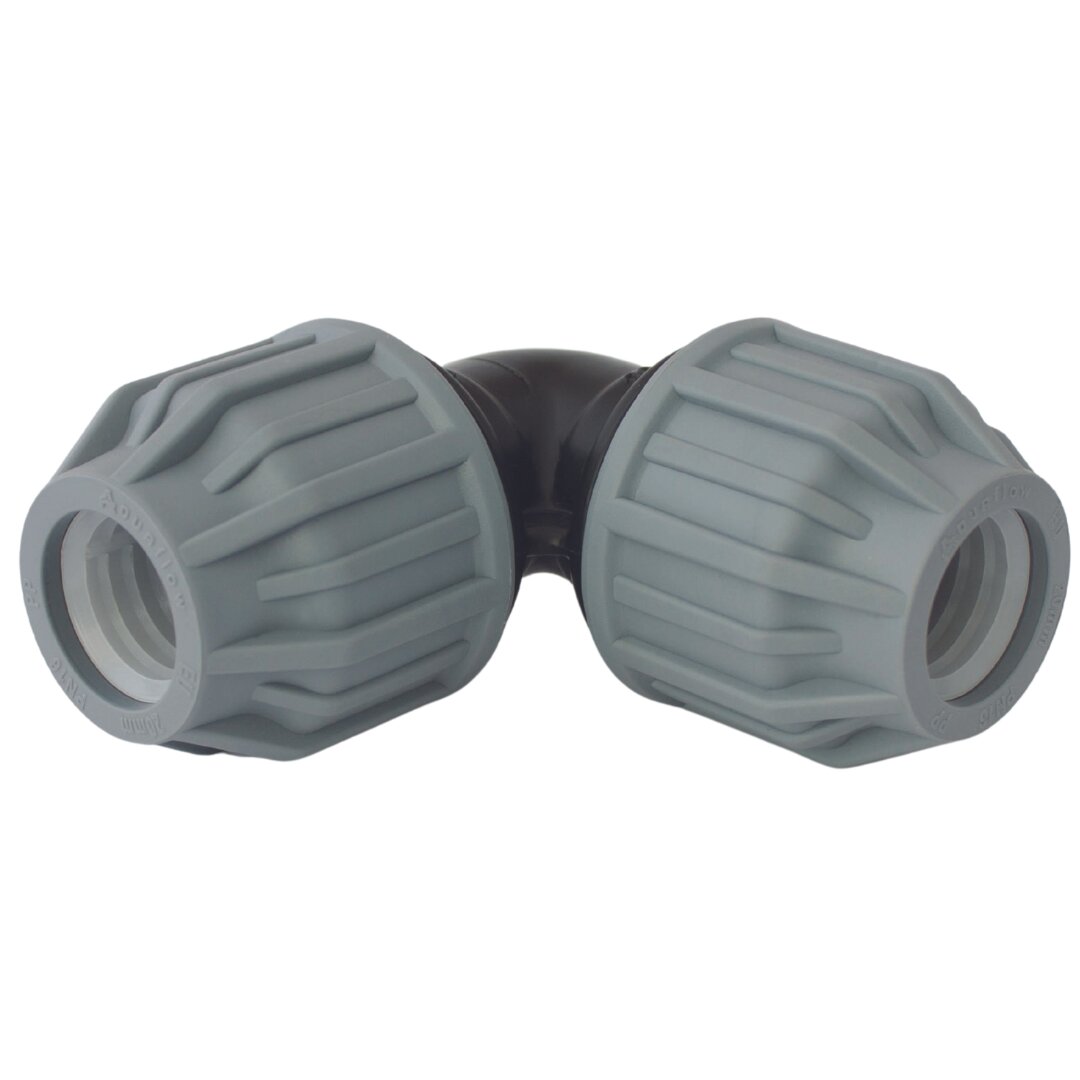
Elbows
Create a 90-degree change of direction. Available in all standard MDPE sizes.
Tees
Branch a supply line into two directions. Available as equal tees (all three outlets the same size) or reducing tees (one or more outlets a smaller diameter).
Stop Ends
Cap off the end of a pipe run. Used for pressure testing or permanently terminating a supply.
Wall Plates (Elbow with Back Plate)
An elbow fitting with a mounting plate, designed to be fixed to a wall. Used where the MDPE service pipe transitions to an internal copper or plastic connection — typically at the point of entry into a building.
Adaptor Fittings
Convert from MDPE compression to other connection types:
- MDPE to copper — Compression fitting with a copper olive connection on one end
- MDPE to BSP thread — Male or female threaded adaptors for connecting to valves, meters, or other threaded components
- MDPE to push-fit — For connecting to internal plastic plumbing systems
Tools and Materials Required
Before starting any MDPE jointing work, gather the following:
Essential tools:
- Pipe cutters designed for polyethylene pipe (ratchet-type or wheeled cutters work best)
- Adjustable spanner or open-ended spanner (sized to the fitting cap nut)
- Tape measure
- Marker pen
- Clean rag
Materials:
- MDPE compression fittings (appropriate size and type for your pipe)
- MDPE pipe inserts (pipe stiffeners) — essential for preventing the pipe from collapsing under compression
- PTFE tape (optional — not always required but provides additional assurance on threaded connections)
Important note on pipe inserts: Every compression joint on MDPE pipe requires a metal or plastic pipe insert (also called a pipe stiffener or liner). This insert sits inside the pipe bore and prevents the pipe wall from deforming when the compression ring grips the outside. Without an insert, the pipe can collapse, resulting in a reduced bore, restricted flow, and a joint that may leak under pressure. Most quality fittings include inserts in the packaging, but always check before starting work.
Step-by-Step: How to Make a Compression Joint on MDPE Pipe
Step 1: Cut the Pipe Square
Using a proper polyethylene pipe cutter, cut the pipe cleanly and square. A square cut is essential — an angled cut will result in uneven compression and a potential leak path. Avoid using hacksaws if possible, as they produce rough cuts with burrs that need extensive cleaning.
If you must use a hacksaw, use a fine-toothed blade and finish the cut with a deburring tool or sharp knife to remove all burrs and swarf from both the outside and inside of the pipe.
Step 2: Mark the Insertion Depth
Before disassembling the fitting, use a tape measure and marker pen to mark the pipe at the correct insertion depth. This is typically the distance from the face of the fitting body to the internal pipe stop — usually around 30–50mm depending on the fitting size and manufacturer. Check the manufacturer’s instructions for the exact dimension.
Marking the insertion depth allows you to visually confirm that the pipe has been fully pushed home into the fitting body after assembly.
Step 3: Disassemble the Fitting
Remove the cap nut from the fitting body. Slide the cap nut onto the pipe, followed by the compression ring (grab ring). Note the orientation of the compression ring — the teeth or gripping edge should face towards the fitting body (i.e., towards the end of the pipe).
Step 4: Insert the Pipe Stiffener
Push the metal or plastic pipe insert fully into the bore of the MDPE pipe. It should sit flush with or slightly recessed from the pipe end. If the insert is tight, warm the pipe end briefly in hot water to soften it slightly.
Step 5: Push the Pipe into the Fitting Body
Push the pipe firmly into the fitting body until it reaches the internal stop. Check that your insertion depth mark is now flush with or just touching the face of the cap nut — this confirms full insertion.
Step 6: Tighten the Cap Nut
Slide the compression ring up to the fitting body, then thread the cap nut onto the fitting body by hand. Tighten firmly by hand first, then use an adjustable spanner to tighten a further one to one-and-a-half turns beyond hand tight. This is sufficient to engage the grab ring teeth with the pipe surface and compress the O-ring seal.
Do not over-tighten. Excessive force can distort the fitting body, damage the O-ring, or crack the cap nut. The grab ring provides mechanical resistance to pull-out; it does not need brute force to function correctly.
Step 7: Check and Pressure Test
Visually inspect the completed joint. Ensure the pipe is fully inserted (check the depth mark) and the cap nut is evenly tightened. Before backfilling any trenches, pressure test the complete installation to verify all joints are watertight.
The standard pressure test for a domestic water supply installation is 1.5 times the maximum working pressure sustained for a minimum of one hour with no visible drop. At typical UK mains pressure, this means testing at approximately 15 bar.
Common Mistakes to Avoid
Not Using Pipe Inserts
This is the single most common cause of leaking MDPE compression joints. Without an insert, the pipe wall deforms under compression and the O-ring cannot maintain a proper seal. Always use inserts — no exceptions.
Cutting at an Angle
An angled cut creates an uneven surface that sits poorly against the fitting’s internal stop. The pipe may not insert fully, and the compression ring may grip unevenly. Always cut square using a proper pipe cutter.
Over-Tightening
Many installers assume that tighter means better. With compression fittings, this is not the case. Over-tightening can crack plastic cap nuts, distort brass fittings, and damage O-ring seals. One to one-and-a-half turns beyond hand tight is sufficient.
Failing to Deburr
Burrs on the inside of the pipe can restrict flow and trap debris. Burrs on the outside can prevent the pipe from seating properly in the fitting and may damage the O-ring during assembly. Always deburr both edges after cutting.
Reusing Damaged Fittings
If a fitting has been over-tightened, cross-threaded, or visibly damaged, do not attempt to reuse it. The grab ring teeth may have been distorted, and the O-ring may be compromised. Fittings are relatively inexpensive — replacing a suspect fitting is always cheaper than repairing a leak.
Not Checking Insertion Depth
If the pipe has not been pushed fully into the fitting body, the grab ring may not engage properly and the O-ring may not be in contact with the pipe surface. Always mark the insertion depth and verify it after tightening.
WRAS and Regulatory Requirements
All compression fittings used on potable water supply installations must be WRAS approved and comply with the Water Supply (Water Fittings) Regulations 1999. This applies to both the fittings themselves and the pipe inserts.
Fittings should also comply with BS EN ISO 14236 (Plastics pipes and fittings — Mechanical-joint compression fittings for use with polyethylene pressure pipes) or the equivalent product standard.
When purchasing compression fittings, look for:
- WRAS approval mark or listing number
- BS EN ISO 14236 compliance marking
- Manufacturer’s name and size marking on the fitting body
- Appropriate pressure rating (typically PN16 for fittings, meaning they are rated to 16 bar)
Brass vs Plastic Compression Fittings
Both brass and plastic (typically polypropylene or acetal) compression fittings are available for MDPE pipe. Each has advantages:
Brass fittings:
- Higher strength and durability
- More resistant to damage during installation
- Preferred for higher-pressure applications
- Heavier and more expensive
Plastic fittings:
- Lighter and easier to handle
- Lower cost
- No risk of dezincification (a corrosion issue that can affect some brass alloys in aggressive water conditions)
- Fully WRAS approved for potable water
For most domestic installations, either type is acceptable. Where ground conditions are known to be aggressive (high sulphate content, contaminated land), plastic fittings may be preferred to avoid any risk of brass corrosion.
Frequently Asked Questions
Can MDPE compression fittings be buried underground?
Yes. Compression fittings are designed for buried applications and are used routinely on below-ground service pipes. However, all buried joints should be fully pressure tested before backfilling. Some water companies prefer to minimise the number of underground joints and may require specific fitting types — check with your local water company before installation.
Do I need PTFE tape on MDPE compression fittings?
No. The seal on a compression fitting is made by the O-ring, not by the thread. PTFE tape is not necessary and should not be used on the cap nut thread, as it can mask cross-threading. However, if the fitting has a BSP threaded connection on one end (e.g., an adaptor to a stop tap), PTFE tape should be used on that threaded connection.
How do I know which size fitting to buy?
MDPE compression fittings are sized by the outside diameter of the pipe they connect to — 20mm, 25mm, 32mm, 50mm, or 63mm. The fitting size should always match the pipe size exactly. If you need to change pipe diameter, use a reducing coupling or reducing tee rather than trying to force a mismatched connection.
Can I reuse MDPE compression fittings?
In most cases, yes. If the fitting has been carefully disassembled and the grab ring, O-ring, and fitting body are all undamaged, compression fittings can be reused. However, it is good practice to replace the O-ring if the fitting has been in service for a prolonged period, as the rubber may have taken a compression set.
What is the maximum pressure rating for MDPE compression fittings?
Most brass and plastic compression fittings for MDPE pipe are rated to PN16 (16 bar). This exceeds the typical UK mains pressure of 1–4 bar by a significant margin, providing an appropriate safety factor for domestic and commercial installations.
Related Kalsi Products
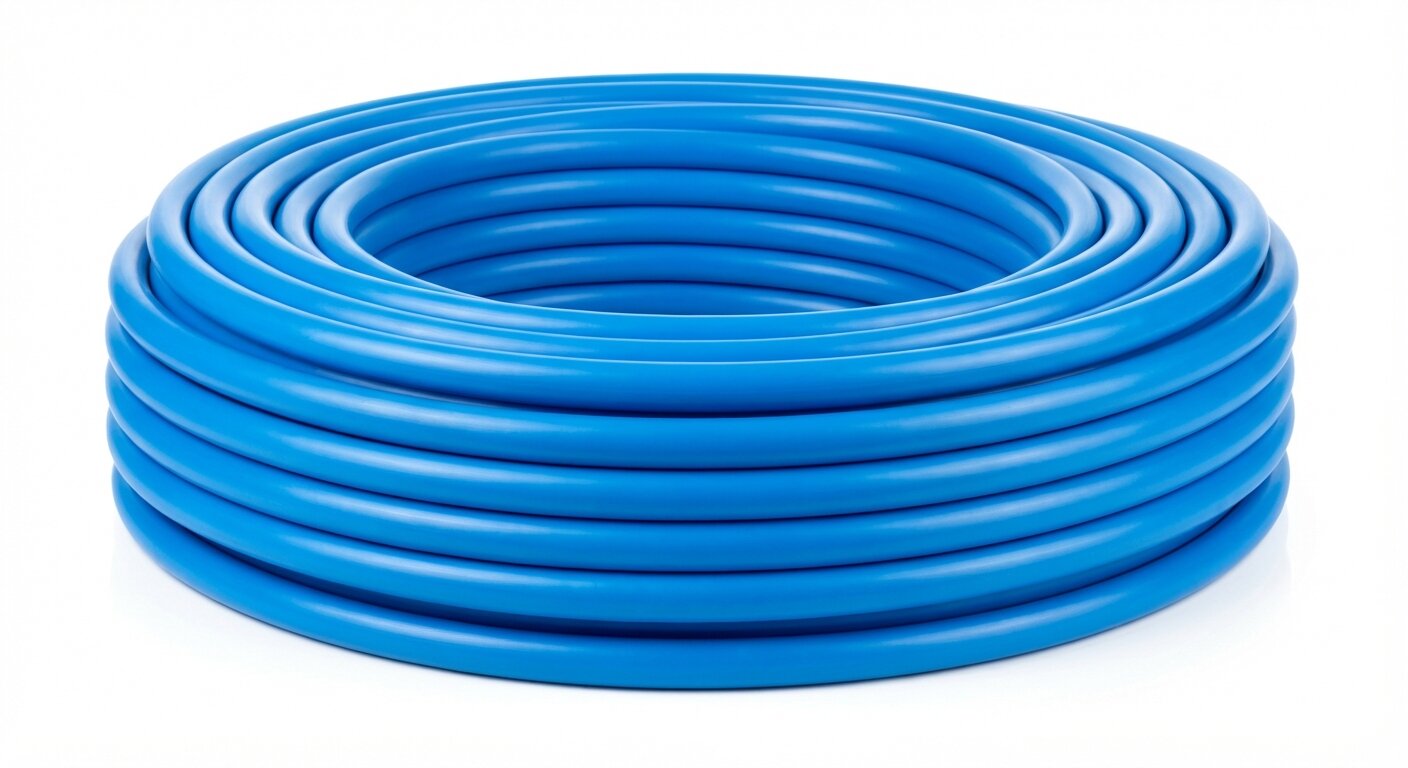
- MDPE Pipe Range — Blue MDPE pipe in all standard sizes from 20mm to 63mm
- MDPE Fittings — Full range of compression fittings, adaptors, and accessories
- Underground Drainage Systems — Below-ground drainage pipe and fittings
- Installation Guides — Detailed fitting instructions for all Kalsi product ranges
- Technical Downloads — Product datasheets and technical specifications