External Cladding for House Extensions: Matching Old and New
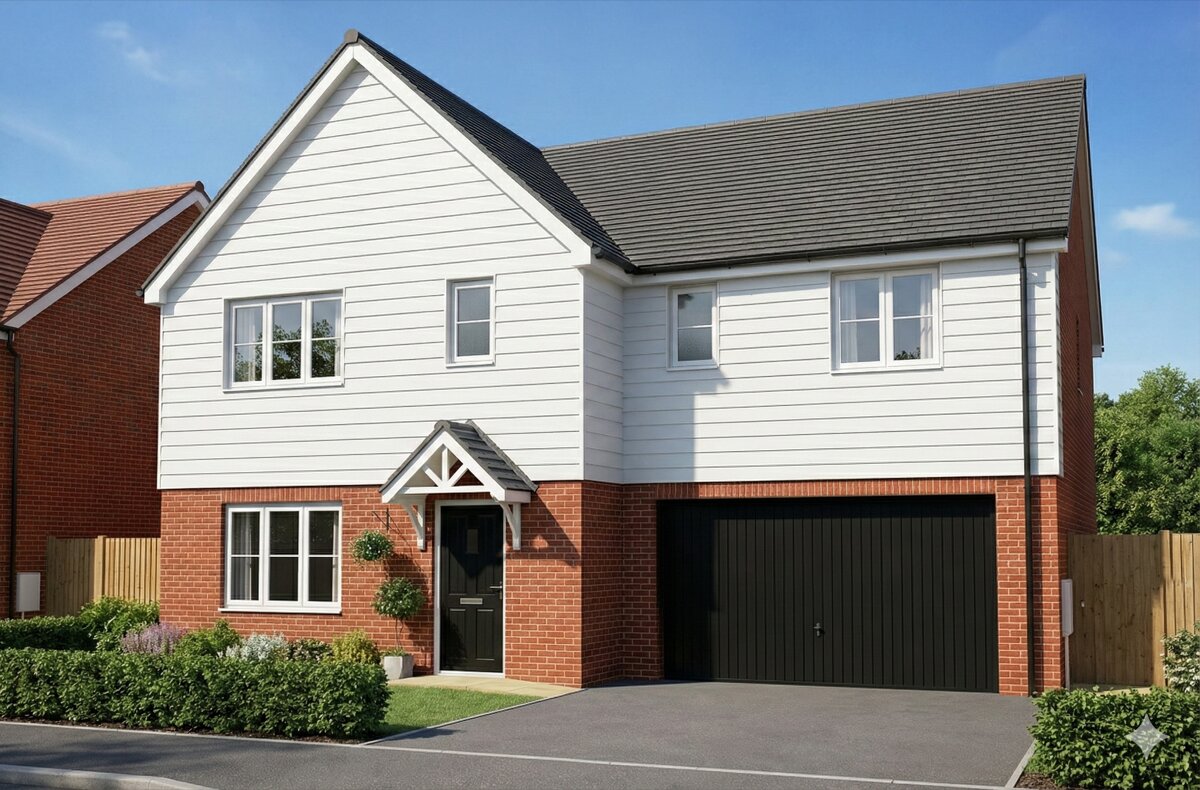
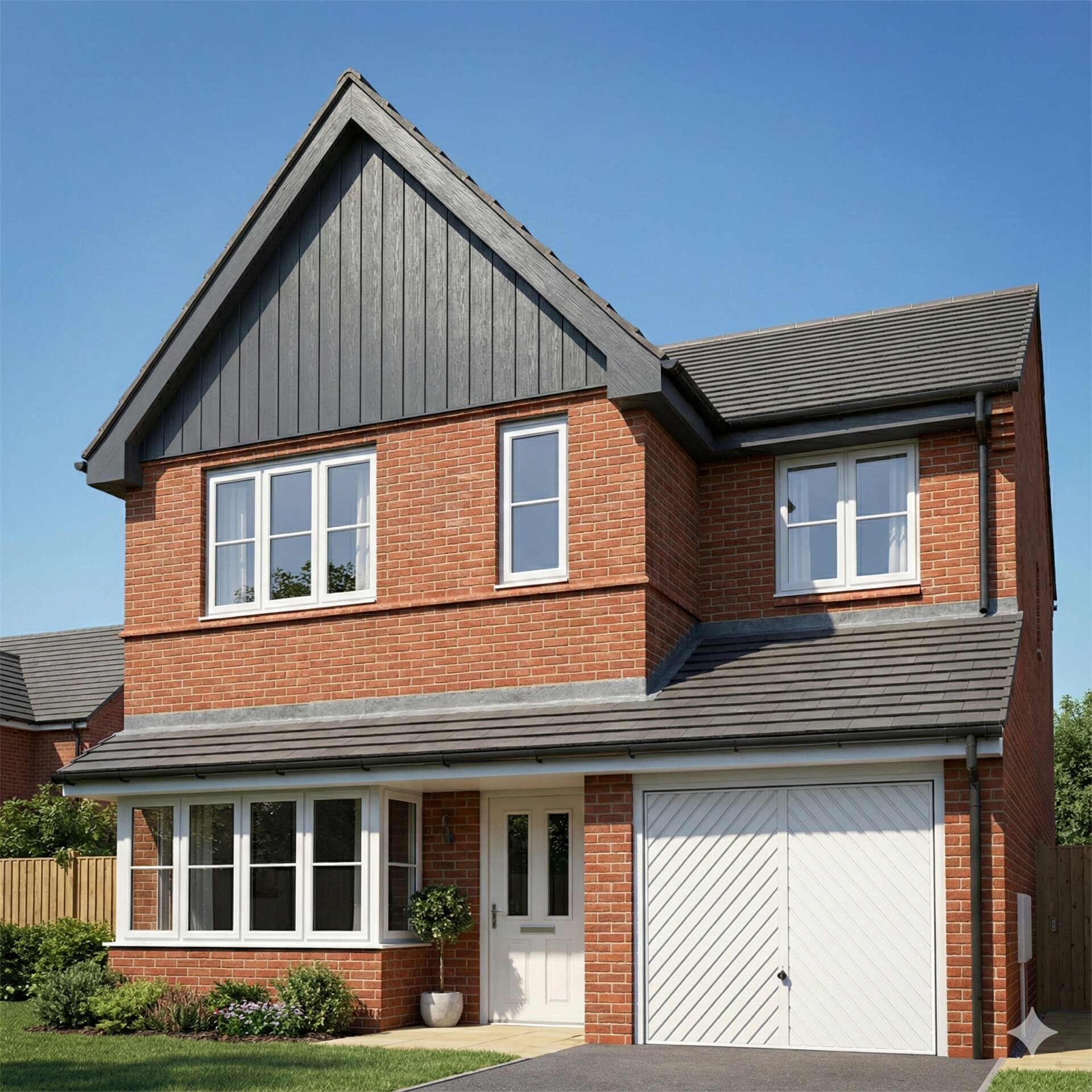
The cladding that best matches your existing house depends on whether you want the extension to blend seamlessly with the original building or contrast deliberately as a distinct architectural element. For a blending approach, match the colour, texture, and scale of the existing exterior as closely as possible — PVC-U cladding in a complementary shade, render in a matching colour, or facing brick from the same range. For a deliberate contrast, choose a different material entirely — such as anthracite grey cladding against red brick — to make the extension read as a contemporary addition rather than a replica of the original.
Both approaches work well when executed confidently. The worst outcome is an indecisive middle ground where the extension neither matches nor contrasts — it simply looks like a different building stuck onto the side of the house.
Why Cladding Works So Well on Extensions
External cladding has become the default finish for house extensions in the UK for several practical and design reasons:
It Differentiates New from Old
Using cladding on the extension while the original house remains in brick, render, or stone creates a clear visual distinction between the two structures. This is widely accepted as good architectural practice — planning officers, architects, and conservation bodies generally prefer extensions that are “of their time” rather than poor imitations of the original building.
It Is Lightweight
PVC-U and composite cladding systems are significantly lighter than brickwork, stonework, or tile hanging. This reduces the structural load on the extension’s foundations and supporting walls, which can simplify the structural design and reduce construction costs.
It Is Fast to Install
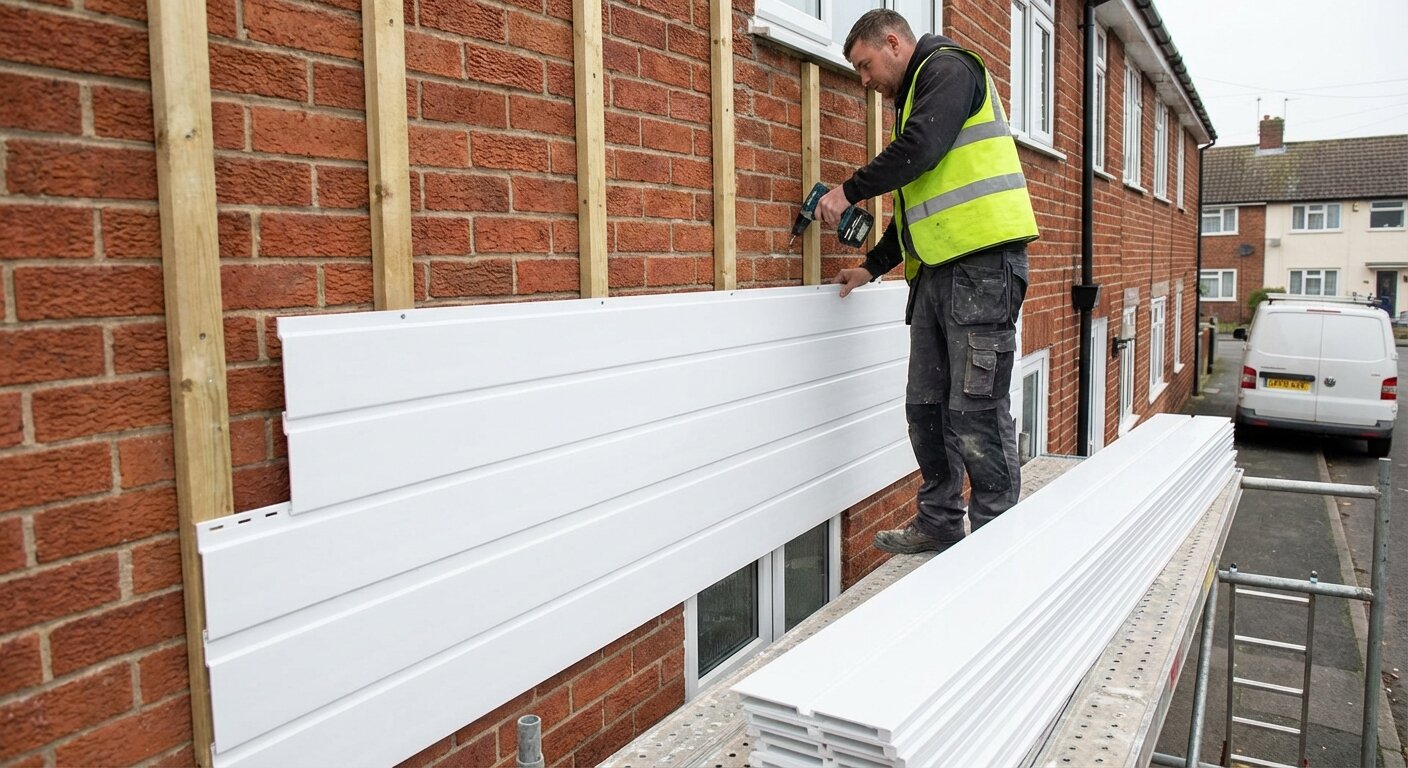
Cladding goes up quickly compared to brickwork. A competent installer can clad an average single-storey rear extension in one to two days. This speed reduces on-site labour costs and minimises the disruption period.
It Offers Design Flexibility
Cladding can be installed horizontally, vertically, or in mixed orientations. It is available in a wide range of colours and profiles, allowing the extension to be tailored precisely to the existing house’s character. If the design does not work as planned, boards can be removed and replaced more easily than bricks.
It Requires No Wet Trades
Unlike brickwork or render, cladding installation does not involve mortar, plaster, or render coats that need drying time. This makes it feasible to install cladding in cold or damp weather conditions when wet trades would need to stop.
Design Strategy 1: Blending
The blending approach aims to make the extension look like a natural continuation of the existing house. This works best when:
- The existing house has a strong, cohesive character that you want to extend
- Planning conditions require materials that “match” the original building
- The extension is small relative to the house and would look odd in a contrasting material
- The property is in a conservation area where harmonising materials are expected
How to Blend Successfully
Match the colour palette — choose a cladding colour that sits within the same tonal family as the existing exterior. For a cream-rendered house, heritage cream cladding. For a white-painted house, white smooth cladding. For a yellow brick house, a warm cream or buff-toned cladding.
Match the scale — choose a board width and profile that creates a visual rhythm similar to the existing materials. Narrow shiplap boards (150 mm) approximate the scale of brick courses. Wider panels may look out of proportion against fine-coursed brickwork.
Match the finish — if the existing house has a textured render, choose embossed or woodgrain-textured cladding rather than a smooth finish. If the existing house has a smooth, painted finish, smooth cladding is the better match.
Carry over key elements — use the same window frame colour, the same rainwater system colour, and the same fascia/soffit details on the extension as on the original house. These continuity elements tie the two parts together even if the wall finish differs slightly.
Design Strategy 2: Deliberate Contrast
The contrast approach makes a design statement — the extension is clearly new and intentionally different from the original house. This works best when:
- The house has a traditional character (brick, stone, render) and the extension is contemporary
- The extension is a significant addition — a large rear extension, a side return, or a loft dormer
- The architect or designer has specified a contrasting material as part of the design concept
- The homeowner wants a bold, modern aesthetic
How to Contrast Successfully
Choose a different material family — cladding against brick, or cladding against render. Avoid using the same material in a different colour, which can look like a mistake rather than a deliberate choice.
Use a confident colour — anthracite grey, black, or dark cedar-effect cladding against red or yellow brick creates a striking, deliberate contrast. Pale colours against pale brick can look washed out and undecided.
Maintain some connecting elements — even in a high-contrast scheme, some elements should connect the old and new. Matching window frame colours, matching rainwater goods, or a shared roofline detail prevents the extension from looking completely disconnected.
Create a clean junction — the point where the extension meets the original house is critical. Options include:
- A recessed glazed link — a narrow strip of glazing between old and new, creating a visual “breathing space”
- A change in wall plane — setting the extension wall forward or back from the original wall emphasises the distinction
- A vertical shadow gap — a narrow gap (20–30 mm) filled with a dark trim creates a clean visual break
- A material overlap — wrapping the cladding around the corner to a natural stopping point (a window reveal, a change in wall plane)
Common Extension Types and Cladding Solutions
Single-Storey Rear Extension
The most common extension type. Cladding options include:
- Full cladding — all external walls of the extension clad in the chosen material and colour
- Cladding above, brick below — match the ground-level brickwork to the existing house and clad the upper wall and parapet. This works well on flat-roofed extensions where the parapet wall is a prominent feature.
- Cladding on the side walls only — if the rear wall is mostly glazed (full-width sliding or bifold doors), the side walls are the main cladding surfaces
Side Return Extension
Common on Victorian and Edwardian terraced houses. The side return is typically narrow and visible mainly from the rear garden:
- Cladding the side return wall creates a contrast with the existing brick party wall
- Anthracite grey is the most popular colour for side return cladding, complementing the grey window and door frames that are standard on these projects
- Consider continuing the cladding onto the rear elevation for a cohesive contemporary finish
Two-Storey Extension
Two-storey extensions have more visible wall area and create a greater visual impact:
- Matching the existing house becomes more important at this scale — a large block of contrasting cladding can dominate the original building
- Consider a mixed approach — brick at ground floor to match the existing house, cladding at first floor to create a lighter, modern appearance
- Ensure the roofline works — the junction between the extension roof and the existing roof is highly visible and needs careful detailing with matching fascia, soffit, and bargeboards
Dormer Extensions
Loft conversions with dormer windows are a common application for cladding:
- The dormer cheeks (side walls) and front face are typically clad in PVC-U or metal
- Anthracite grey is the dominant colour for dormer cladding, matching grey roof tiles and grey window frames
- Flat-roofed dormers suit smooth cladding; pitched-roof dormers can work with either smooth or woodgrain
- Matching the dormer cladding to the fascia and soffit colour creates a unified roofline appearance
Garage Conversions
When a garage is converted to habitable space, the front elevation — where the garage door was — often needs to be rebuilt. Cladding provides a fast, attractive solution:
- Infill the garage door opening with a stud wall, insulation, and a window/door
- Clad the new infill panel in a colour that either matches or deliberately contrasts with the existing house
- Extend the cladding across the full garage frontage for a cohesive finish
Material Selection for Extensions
PVC-U Cladding
The most popular choice for extension cladding in the UK. Available in shiplap, weatherboard, and decorative profiles, and in a wide colour range including smooth and woodgrain finishes.
Why it suits extensions:
- Quick installation minimises build time
- Lightweight — no additional structural loading
- Wide colour range — easy to find a complementary shade
- Low maintenance — matches the “fit and forget” expectations of modern homeowners
- Matching trims available for clean window and door reveals
Timber Cladding
Suitable for extensions where a natural material is specified or where planning conditions require it.
Considerations:
- Requires ongoing maintenance (repainting/staining every 3–5 years)
- Planning officers in some conservation areas prefer natural timber
- Western red cedar provides a warm, rich appearance that contrasts beautifully with brick
Composite Cladding
A premium option that offers a more natural appearance than PVC-U with lower maintenance than timber.
Considerations:
- Heavier than PVC-U — may affect structural design of lightweight extension walls
- More expensive than PVC-U
- Limited colour range compared to PVC-U
Render
An alternative to cladding that provides a smooth, seamless finish. Modern through-coloured renders eliminate the need for repainting.
Considerations:
- Requires wet trades and drying time
- Can crack over time, particularly on timber-frame extensions
- Provides a different visual character from cladding — may be more appropriate for blending with rendered existing houses
Working with Planning and Building Control
Planning Permission
Most rear and side extensions under permitted development rights do not require planning permission, and the choice of cladding material is generally not restricted. However:
- Conservation areas — planning officers may have views on appropriate materials and colours. PVC-U cladding is accepted in most conservation areas, but the colour and profile should be sympathetic to the local character.
- Listed buildings — listed building consent is required for any external alteration, and the materials used on the extension will be scrutinised. Natural timber cladding is more likely to be approved than PVC-U in this context.
- Full planning applications — if the extension requires a full planning application, the submitted drawings should specify the cladding material and colour. Planning officers may request samples or condition specific colours.
Building Regulations
The extension’s external cladding must comply with:
- Approved Document B (Fire safety) — cladding fire performance requirements, particularly if the extension is near a boundary
- Approved Document C (Moisture resistance) — the cladding system must resist moisture ingress, with a ventilated cavity and appropriate membrane
- Approved Document L (Energy performance) — the wall build-up must achieve the required U-value (currently 0.26 W/m²K for new extension walls)
PVC-U cladding meets these requirements on standard domestic extensions when installed correctly with appropriate insulation, cavity, and membrane.
Colour Matching Tips
Use the Same Colour Family
If your house is built from red brick, choose cladding in a complementary neutral — grey, cream, or white. If your house is rendered in a warm cream, consider matching cream cladding or a subtle contrast in light grey.
Match the Window Frames
The simplest and most effective coordination strategy is to match the cladding colour to the window and door frame colour. If you are installing new anthracite grey windows and doors on the extension, anthracite grey cladding creates an immediate, intentional-looking colour scheme.
Order Physical Samples
Never rely on screen colours or catalogue images. Order physical samples of the cladding and view them against the existing house in different lighting conditions — morning, midday, evening, and overcast.
Consider the Whole Elevation
Stand across the street and look at the entire property. The extension cladding needs to work in the context of the whole building, not just in isolation. A colour that looks perfect in your hand may appear too light, too dark, or too different when seen from the street alongside the existing house.
Frequently Asked Questions
Should the extension cladding match the house exactly?
Not necessarily. Modern design practice favours either a close match (same material family, similar tones) or a deliberate contrast (different material, confident colour difference). The worst approach is an approximate match that looks unintentional.
Can I use vertical cladding on the extension if my house has horizontal features?
Yes — changing the board orientation is an effective way to distinguish the extension from the original house. Vertical cladding reads as contemporary and is often used on extensions to contrast with horizontal brick coursing.
Will PVC-U cladding look out of place on a Victorian house?
Not if the colour and profile are chosen carefully. Anthracite grey or dark-coloured shiplap on a rear or side extension is widely used on Victorian properties and is well-received by planning officers. The key is to avoid wrapping the cladding around to the front elevation where the original Victorian character should be preserved.
How do I detail the junction between cladding and brickwork?
Use a stop trim or J-channel at the cladding edge, butting up to the brickwork. Leave a small gap (5–10 mm) between the trim and the brick face, and seal it with an external-grade silicone sealant in a colour that matches the cladding or the mortar.
Can I extend existing cladding if my house is already clad?
Yes, and this is the simplest scenario — use the same product (or as close a match as possible) for the extension. Contact the original cladding supplier for batch matching if the existing cladding is relatively new. If the existing cladding has faded with age, a slight colour difference between old and new may be visible initially but tends to even out over a few years.