Decorative External Cladding: Profiles and Styles
There are several distinct styles of external cladding available in the UK, each defined by its cross-sectional profile and the visual effect it creates on a building’s façade. The most common profiles are shiplap (flat-faced boards with a rebated overlap), weatherboard (tapered boards with a lapped overlap), tongue-and-groove (interlocking boards creating a flush surface), slatted (individual battens with gaps between them), and embossed decorative panels (wider boards with textured surfaces). Each profile creates a different shadow pattern, visual rhythm, and architectural character — and all are available in PVC-U for low-maintenance, long-lasting performance.
This guide explores each profile style in detail, explains where each works best, and provides practical advice on combining profiles for maximum visual impact.
Understanding Cladding Profiles
A cladding “profile” is the cross-sectional shape of an individual board — the shape you would see if you cut through the board at right angles to its length. This profile determines:
- How boards join together — overlap, interlock, butt joint, or spaced
- The shadow pattern on the wall — subtle, dramatic, regular, or irregular
- The visual weight of the cladding — heavy and textured or light and smooth
- The weather performance — how effectively the profile sheds water and resists wind-driven rain
Choosing the right profile is as important as choosing the right colour. A contemporary building in anthracite grey shiplap will look completely different from the same building in anthracite grey weatherboard — even though the colour is identical.
Profile 1: Shiplap
What It Is
Shiplap is the most popular cladding profile in the UK. Each board has a rebated (stepped) edge at the top and bottom. When installed horizontally, the upper board’s rebate sits over the lower board’s top edge, creating a flat-faced wall surface with narrow, uniform shadow lines at each joint.
Visual Character
- Clean, modern, and minimal
- Uniform shadow lines at regular intervals
- Flat face reads as a single plane from a distance
- Suits contemporary and transitional architectural styles
Technical Details
- Typical board width: 150–170 mm (cover width)
- Joint type: Rebated overlap — provides mechanical interlock and weather resistance
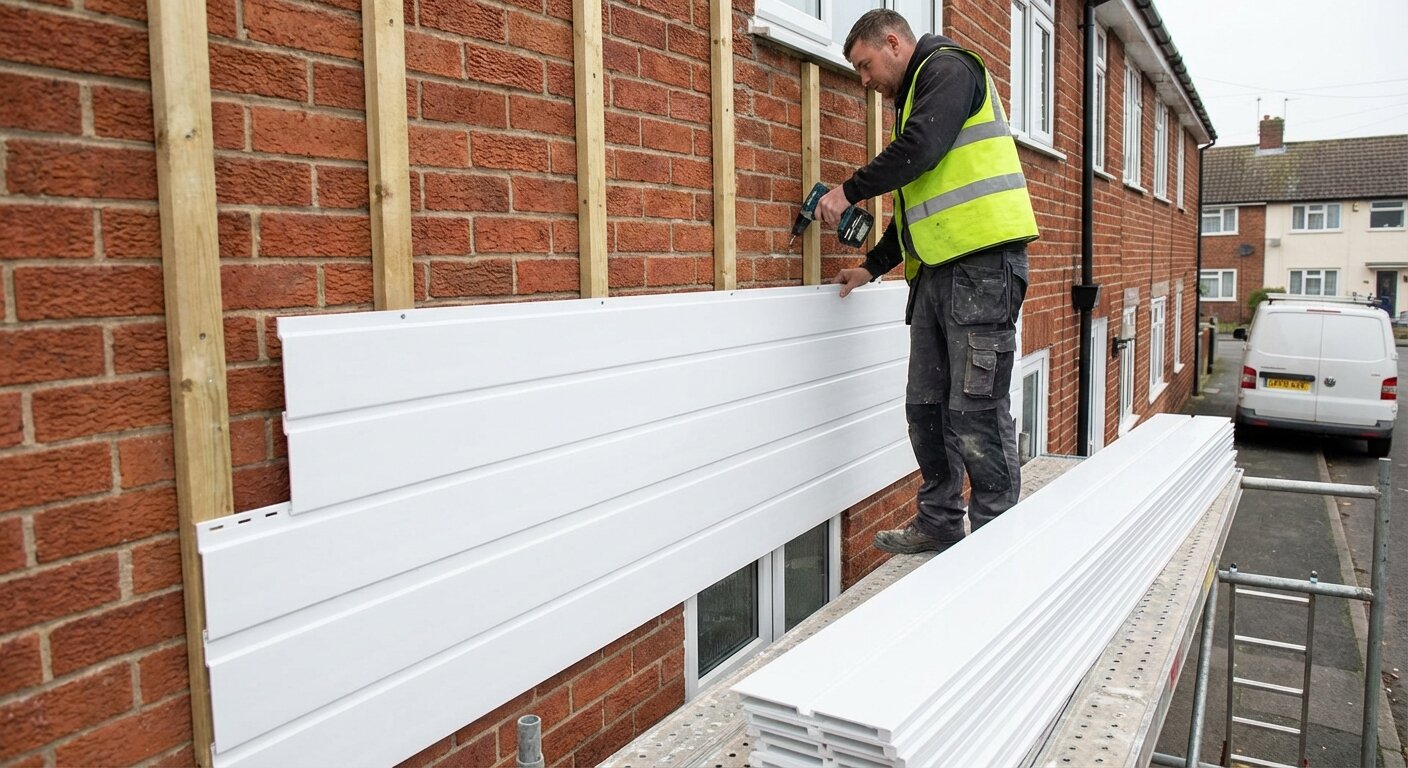
- Installation: Horizontal, bottom to top
- Fixing: Face-fix or secret-nail through the rebate
- Expansion: Allow 5–8 mm at abutments for thermal movement
Best Applications
- Contemporary new builds and extensions
- Garden rooms and home offices
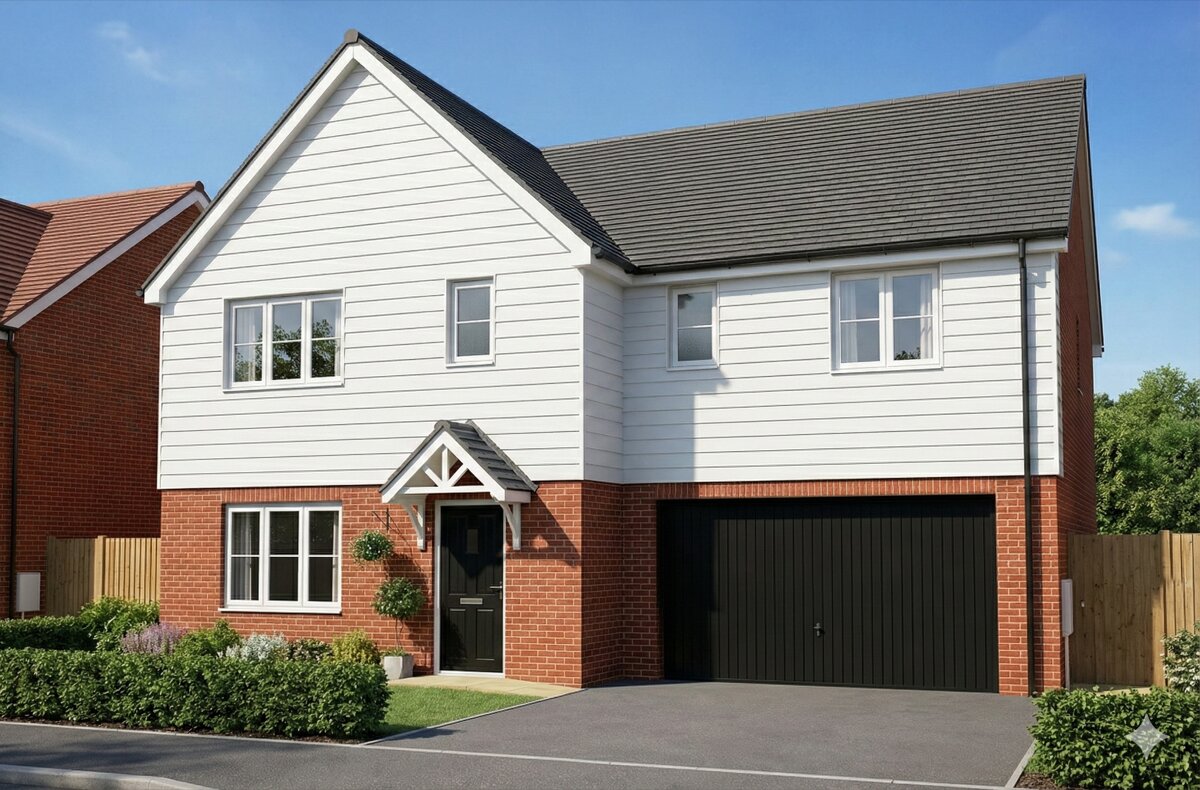
- Upper-storey cladding over brick ground floors
- Commercial frontages
- Any project where clean, straight lines are the priority
Material Options
Shiplap is available in PVC-U (widest colour range, lowest maintenance), timber (western red cedar and treated softwood), and composite. PVC-U shiplap with a woodgrain texture provides the warmth of timber’s appearance with none of its maintenance demands.
Profile 2: Weatherboard
What It Is
Weatherboard — also called featheredge, lap cladding, or clapboard — uses tapered boards that overlap from the bottom up. Each board is thicker at its lower edge (typically 15–18 mm) and tapers to a thinner top edge (typically 5–6 mm). The boards are fixed so that each one overlaps the one below by 30–40 mm.
Visual Character
- Traditional, characterful, and textured
- Deep shadow lines created by the overlapping, angled boards
- Strong horizontal emphasis
- Evokes coastal architecture, New England style, and British vernacular
Technical Details
- Typical board width: 150–200 mm (before overlap)
- Joint type: Lapped overlap — each board sits on the face of the one below
- Installation: Horizontal, bottom to top, with a tilting fillet at the base
- Fixing: Face-fix through the overlap zone (fixings concealed by the board above)
- Water shedding: Excellent — the angled face naturally directs water outward
Best Applications
- Coastal properties and seaside developments
- Period property renovations and extensions
- Barn conversions and rural buildings
- Heritage-sensitive projects
- Feature gable ends and accent walls
Material Options
Weatherboard is available in PVC-U and timber. PVC-U weatherboard replicates the tapered profile convincingly and is particularly popular in coastal locations where salt spray would rapidly deteriorate timber.
Profile 3: Tongue-and-Groove
What It Is
Tongue-and-groove (T&G) boards have a protruding tongue machined along one edge and a matching groove along the other. The tongue of one board slots into the groove of the adjacent board, creating a tight, flush-faced joint with no visible overlap or step.
Visual Character
- Smooth, continuous surface
- Very subtle joint lines — almost seamless from a distance
- Can be installed horizontally or vertically
- Creates a calm, understated appearance
Technical Details
- Typical board width: 100–150 mm
- Joint type: Interlocking tongue and groove — tight, flush fit
- Installation: Horizontal or vertical
- Fixing: Secret-nail through the tongue for a concealed fixing
- Weather performance: Good in sheltered locations; exposed positions may benefit from additional sealing
Best Applications
- Vertical cladding effects (contemporary Scandinavian style)
- Internal/external transition walls (e.g., covered porches where interior and exterior cladding are visible together)
- Garden room interiors extending to the exterior
- Projects requiring a flush, unpronounced finish
Considerations
T&G profiles are less commonly available in PVC-U for external use than shiplap or weatherboard. Timber T&G is the standard choice for this profile, though some PVC-U wall panelling systems designed for internal use can be adapted for sheltered external applications.
Profile 4: Slatted Cladding
What It Is
Slatted cladding consists of individual battens or slats fixed to the building with consistent gaps between them. The gaps may be 10–30 mm wide, depending on the desired aesthetic and the degree of screening required.
Visual Character
- Open, airy, and contemporary
- Creates a screen effect with partial views through the cladding
- Strong light-and-shadow play as sunlight passes through the gaps
- Dramatic visual depth — the wall behind is visible through the slats
Technical Details
- Typical slat width: 30–80 mm
- Gap width: 10–30 mm (wider gaps create a more open effect)
- Installation: Horizontal or vertical, fixed to battens or a sub-frame
- Fixing: Face-fix with stainless steel screws at each batten crossing
- Weather performance: Not a sealed system — used as a decorative screen rather than a primary weather barrier
Best Applications
- Feature walls and entrance canopies
- Garden room frontages
- Balcony screens and privacy panels
- Bin store and utility area enclosures
- Mixed with solid cladding for visual contrast
Important Note
Slatted cladding is an open system — rain passes through the gaps. It should not be used as the sole weather barrier on habitable buildings. Where slatted cladding is used decoratively on a habitable structure, the wall behind must have its own weatherproof construction (render, board, or solid cladding behind the slatted screen).
Profile 5: Embossed Decorative Panels
What It Is
Embossed panels are wider boards (typically 200–333 mm cover width) with textured surfaces that replicate patterns such as brick, stone, woodgrain, or geometric designs. These panels provide a bold, decorative finish that goes beyond the simple linear patterns of traditional cladding profiles.
Visual Character
- Varied textures and patterns
- Wider panels with fewer joint lines
- Can replicate traditional materials (stone, brick, timber planking)
- Bold, statement-making appearance
Technical Details
- Typical panel width: 200–333 mm
- Joint type: Interlocking edges (varies by manufacturer)
- Installation: Horizontal, bottom to top
- Fixing: Concealed or face-fix depending on the system
- Surface texture: Deep embossing — 1–3 mm relief
Best Applications
- Feature walls and accent panels
- Mixing with standard cladding to create visual interest
- Renovating properties where a dramatic transformation is desired
- Commercial frontages seeking a distinctive appearance
- Wall panelling that extends from interior to exterior
Material Options
Embossed decorative panels are primarily available in PVC-U. The embossing is formed during the extrusion process, creating patterns that are integral to the board rather than applied as a surface coating. This means the texture is permanent and does not wear off over time.
Combining Profiles for Visual Impact
One of the most effective design techniques in modern cladding is combining two or more profiles on the same building. This creates visual interest, defines different zones of the façade, and prevents large clad areas from looking monotonous.
Popular Combinations
| Combination | Effect | Example Application |
|---|---|---|
| Shiplap + weatherboard | Modern above, traditional below | Upper storey shiplap, ground floor weatherboard |
| Shiplap + slatted | Solid walls with feature screens | Main walls in shiplap, entrance canopy in slatted |
| Weatherboard + decorative panels | Traditional body with accent features | Weatherboard walls, embossed panels on front bay |
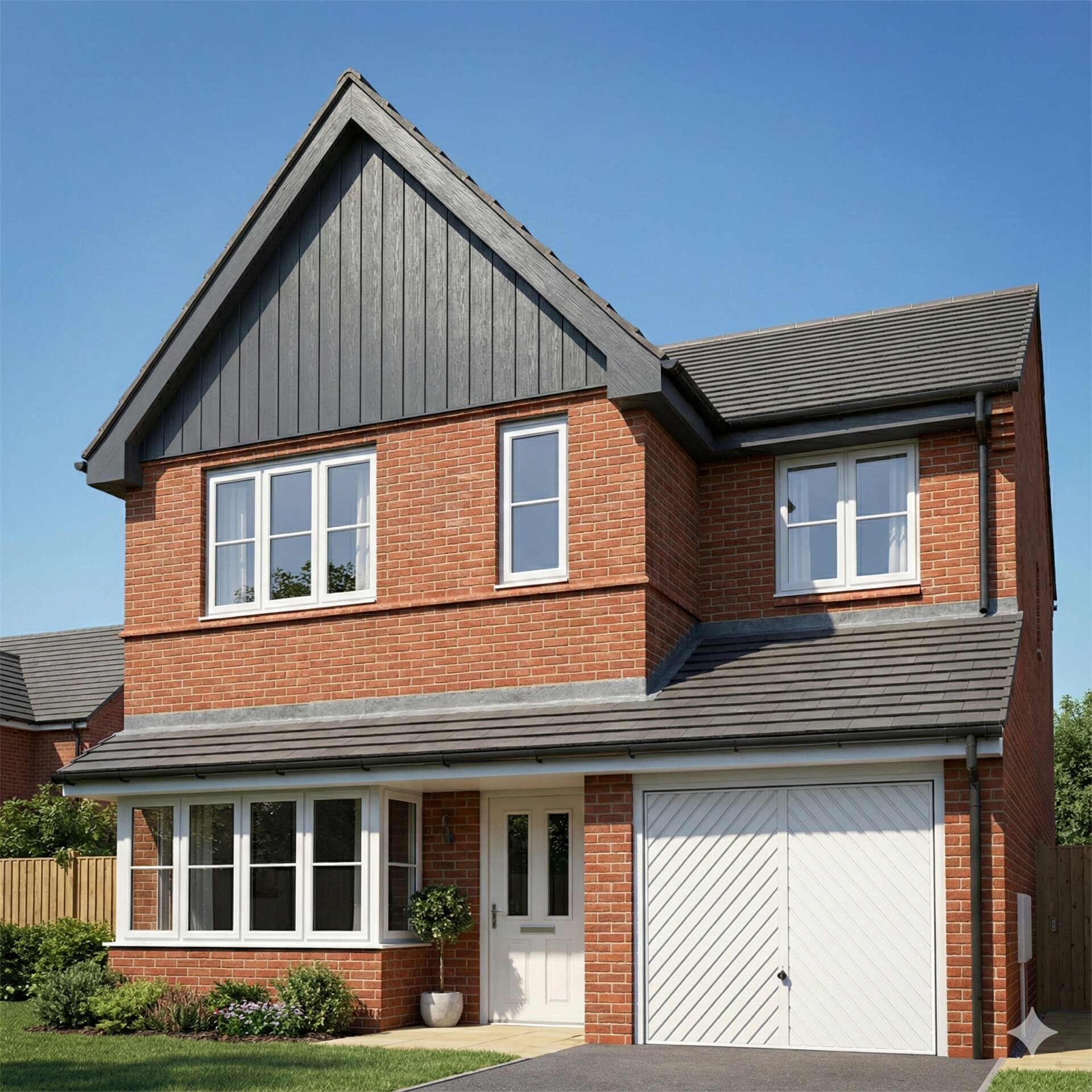
| Horizontal shiplap + vertical T&G | Directional contrast | Main walls horizontal, gable ends vertical |
| Solid cladding + slatted screen | Privacy with visual depth | Garden room rear wall solid, front partially slatted |
Tips for Combining Profiles
- Use the same colour for both profiles to create a textural contrast rather than a colour clash
- Change profile at a natural break point — a floor line, a change in wall plane, or a material junction
- Use a shadow gap or trim between profiles to create a clean transition
- Limit combinations to two profiles on most buildings — three or more can look chaotic unless carefully designed
Choosing the Right Profile for Your Project
Consider the Architecture
- Period properties: Weatherboard or embossed panels that reference traditional materials
- Contemporary buildings: Shiplap or slatted cladding for clean, modern lines
- Mixed-era extensions: Shiplap on the extension; match the existing house style on the original building
Consider the Setting
- Urban: Smooth shiplap for a crisp, professional appearance
- Rural: Weatherboard or woodgrain-textured shiplap for a natural, organic feel
- Coastal: Weatherboard (its heritage profile suits the setting) or shiplap (for a modern take)
Consider the Scale
- Large walls: Standard profiles (shiplap, weatherboard) with narrow boards create visual rhythm through repetition
- Small areas: Wider decorative panels or slatted effects make a bigger impact on limited wall space
- Feature elements: Use a contrasting profile to highlight entrance walls, gable ends, or projecting bays
Frequently Asked Questions
Can I mix PVC-U cladding profiles from different manufacturers?
Technically yes, but the trims and jointing details may not be compatible. For the cleanest result, use profiles from the same manufacturer and the same product range, where trims are designed to work together.
Which profile is cheapest?
Standard shiplap in white or cream PVC-U is typically the most affordable cladding profile per square metre. Woodgrain finishes, weatherboard profiles, and embossed panels command progressively higher prices.
Do all profiles need the same ventilation cavity?
Yes. Regardless of profile, all solid cladding boards require a minimum 25 mm ventilated cavity behind them. Slatted cladding, being an open system, does not require a sealed cavity — but the wall behind it does need its own weather protection.
Can I install cladding profiles vertically?
Tongue-and-groove and slatted profiles can be installed vertically. Shiplap and weatherboard are designed for horizontal installation — their water-shedding function relies on the overlap being horizontal so that water drips down the face rather than tracking along a joint.
How do I finish the junction between two different profiles?
Use a shadow gap (a recessed trim that creates a visible dark line between profiles), a flat trim strip, or an aluminium feature trim. The junction should be at a natural architectural break point — a floor line, a change in wall plane, or a projecting element.