Cladding Colour Range: Woodgrain, Smooth, and Embossed
PVC cladding comes in a wide range of colours spanning three main finish categories: smooth, woodgrain, and embossed. The standard colour palette for UK external cladding includes white, cream, sage green, anthracite grey, black, and a selection of woodgrain finishes such as golden oak, rosewood, and Irish oak. Some manufacturers offer additional colours including light grey, chartwell green, and slate grey. The specific range varies between manufacturers and profile types, but most installers and homeowners will find a colour and finish combination that suits their project from the stock options available.
This guide explains the differences between the three finish types, walks through the most popular colour choices, and provides practical advice on selecting and maintaining the right colour for your building.
The Three Finish Types Explained
Smooth Finish
Smooth PVC-U cladding has a flat, uniform surface with no texture or grain pattern. It delivers a clean, contemporary appearance that suits modern architectural styles.
Characteristics:
- Uniform, flat surface — no visible grain or texture
- Consistent colour across the entire panel
- Easy to clean — dirt has nowhere to sit
- Shows fingerprints and surface marks more readily during handling, though these wash off easily
- Most closely resembles painted render or metal panel finishes
Best suited to: Modern new builds, commercial frontages, minimalist garden rooms, and projects where a sleek, industrial aesthetic is desired.
Woodgrain Finish
Woodgrain cladding features a textured surface that replicates the grain pattern of natural timber. The grain is embossed into the board during manufacture, and the depth and detail of the pattern vary between manufacturers.
Characteristics:
- Realistic timber grain texture visible from normal viewing distances
- Available in natural wood tones (golden oak, rosewood, walnut, Irish oak) as well as painted colours (white woodgrain, grey woodgrain)
- The texture helps disguise minor surface marks and dirt
- Provides a warmer, more organic appearance than smooth cladding
- Co-extruded colour cap provides UV stability and colour retention
Best suited to: Residential projects, garden rooms, extensions, and any application where the look of natural timber is desired without the maintenance commitment.
Embossed Finish
Embossed cladding has a deeper, more pronounced surface texture than standard woodgrain. The embossing creates shadow and depth effects that enhance the three-dimensional appearance of the board.
Characteristics:
- Deeper texture than standard woodgrain — more visual impact
- Creates more pronounced shadow effects across the board surface
- Excellent at concealing minor surface soiling and weathering
- Can incorporate geometric, linear, or abstract patterns as well as woodgrain effects
- Typically available in the same colour range as woodgrain
Best suited to: Feature walls, accent panels, decorative applications, and projects where the cladding is a primary design element rather than a background material.
Popular Colour Options
Standard Colours
| Colour | Finish Options | Character | Common Applications |
|---|---|---|---|
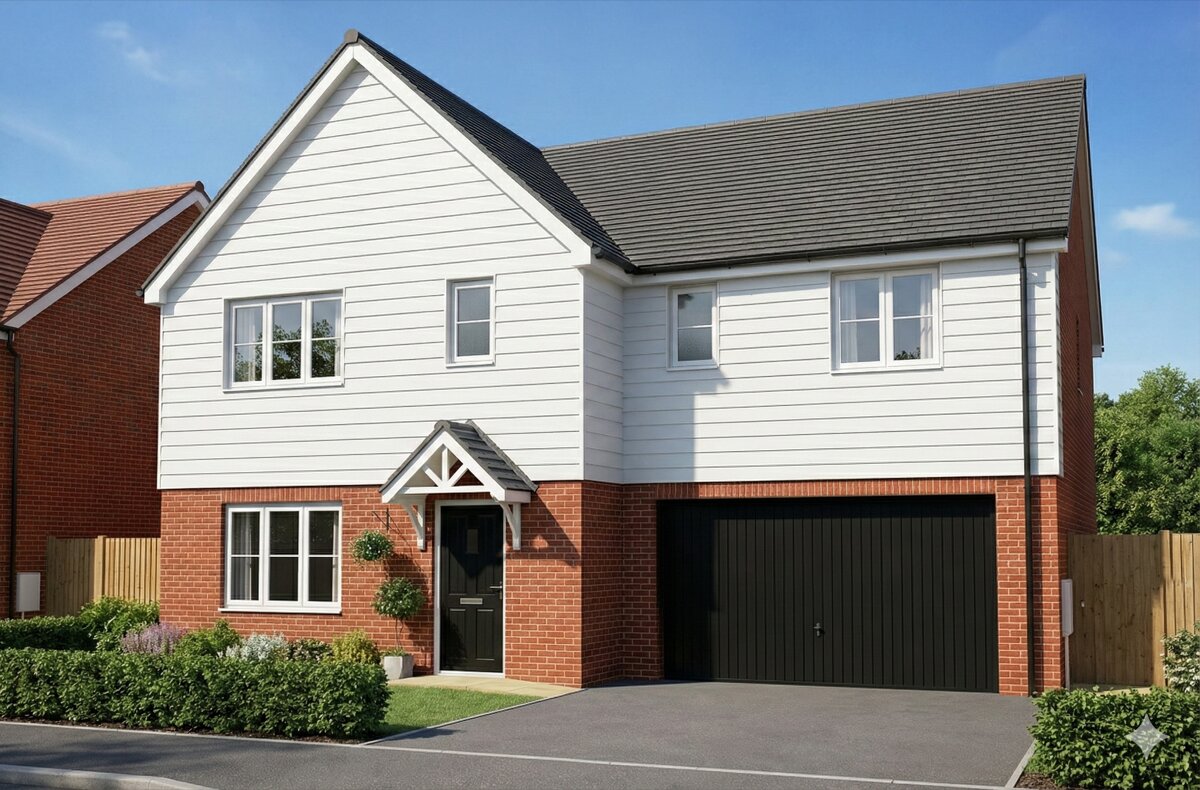
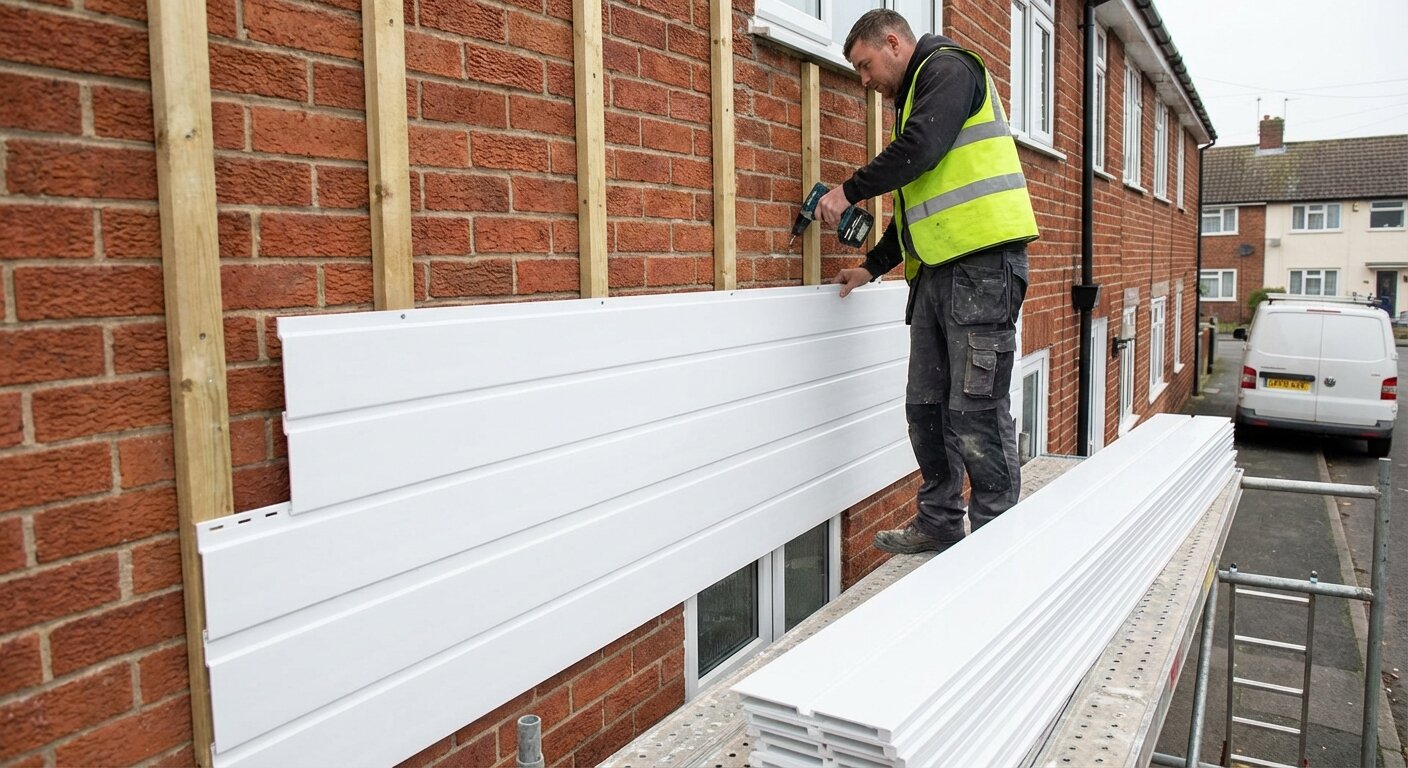
| White | Smooth, woodgrain | Clean, classic, versatile | Traditional properties, full-house cladding, soffit matching |
| Cream / Heritage cream | Smooth, woodgrain | Warm, traditional | Period properties, cottage-style buildings |
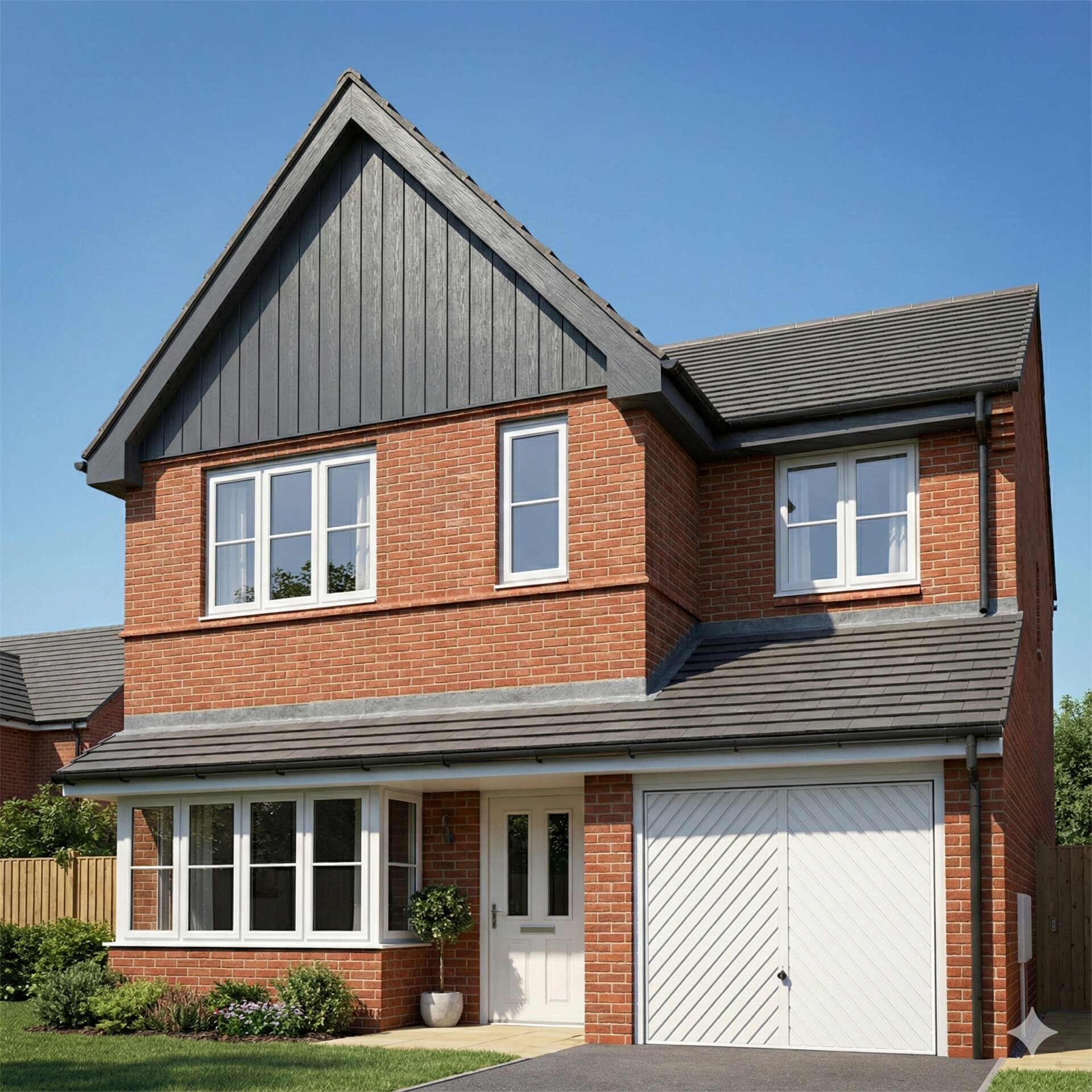
| Anthracite grey | Smooth, woodgrain, embossed | Contemporary, bold | Modern extensions, garden rooms, upper-storey cladding |
| Black | Smooth, woodgrain | Dramatic, architectural | Contemporary new builds, feature walls |
| Sage green | Smooth | Natural, understated | Rural settings, garden buildings |
| Light grey | Smooth, woodgrain | Modern, neutral | New developments, commercial |
| Chartwell green | Smooth | Heritage, distinctive | Period properties, conservation areas |
Woodgrain Colours
| Colour | Character | Common Applications |
|---|---|---|
| Golden oak | Warm honey tones, natural timber appearance | Garden rooms, front elevations, window surrounds |
| Rosewood | Rich, dark reddish-brown | Traditional properties, door and window matching |
| Irish oak | Deep brown with prominent grain | Premium residential, barn conversions |
| Walnut | Dark brown, sophisticated | Feature walls, decorative panels |
| Natural oak | Light, blonde timber tones | Scandinavian-style designs, modern rural |
How Colour Is Applied: Co-Extrusion vs Foil Wrapping
Not all coloured PVC-U cladding is produced the same way. The colour application method significantly affects performance, longevity, and cost.
Co-Extrusion
Co-extrusion bonds a colour-fast outer skin to the structural core during the manufacturing process. The two materials are fused together at the molecular level, creating an inseparable bond.
Advantages:
- Excellent colour stability — the pigmented cap is typically 0.3–0.5 mm thick, providing substantial UV protection
- Very high resistance to peeling, delamination, or separation
- Consistent colour throughout the cap thickness — minor scratches do not reveal a different colour beneath
- Widely used for solid colours (white, grey, black, cream)
Foil Wrapping (Lamination)
Foil wrapping applies a printed decorative film to the surface of the PVC-U board using heat and adhesive. The film carries the colour and texture (woodgrain pattern, for example).
Advantages:
- Enables highly detailed, realistic woodgrain effects that co-extrusion cannot replicate
- Wide range of decorative options — wood effects, metallic finishes, and custom prints
- Cost-effective for producing specialist colours in smaller batches
Considerations:
- The film is thinner than a co-extruded cap and may be more susceptible to edge peeling in extreme conditions if the board is poorly cut or damaged
- UV resistance depends on the quality of the film — premium foils include UV stabilisers that provide 10–15+ years of colour stability
- The film surface may be slightly more susceptible to heat damage if dark-coloured boards are installed in direct south-facing sunlight without adequate ventilation
Most woodgrain-effect cladding uses foil wrapping. Quality has improved enormously over the past decade, and modern foil-wrapped products from reputable manufacturers offer excellent long-term performance.
Colour Selection Considerations
Orientation and Sun Exposure
Dark colours absorb more solar radiation than light colours. On south-facing and west-facing elevations that receive the most direct sunlight:
- Dark colours will reach higher surface temperatures, causing greater thermal expansion
- Installers must allow larger expansion gaps for dark colours (follow manufacturer guidance)
- Dark colours may show fading slightly earlier on heavily sun-exposed elevations — though modern co-extruded products resist this well
Light colours reflect more heat and show less fading over time but may show dirt and algae more readily.
Matching Existing Elements
When choosing a cladding colour, consider what other elements it will sit alongside:
- Window frames — matching or complementing the frame colour creates a unified look. Anthracite grey cladding with anthracite grey windows is the most popular combination in current UK projects.
- Brickwork — choose a colour that contrasts with rather than competes with the brick tone. Grey cladding works with almost any brick colour because it sits outside the warm brick spectrum.
- Roof tiles — dark grey cladding pairs well with grey slate or grey concrete tiles; lighter cladding suits red or brown clay tiles.
- Front door — a contrasting door colour against cladding creates a focal point. Bright doors (red, yellow, teal) pop against grey or dark cladding.
- Rainwater goods — matching the gutter, downpipe, and fascia colour to the cladding (or to the window frames) pulls the scheme together.
Ordering Samples
Always order physical samples before committing to a colour. View them:
- Against the existing house exterior
- In morning light, midday light, and evening light — colours shift significantly through the day
- In both dry and wet conditions — some finishes darken noticeably when wet
- Alongside the window frame colour and any other materials being used
Photographs and screen displays cannot accurately represent cladding colours due to variations in monitor calibration and photography lighting.
Batch Consistency
Order all cladding boards for a project from the same production batch to ensure colour consistency. If this is not possible, distribute boards from different batches randomly across the wall rather than grouping them together, which could create visible colour banding.
Cleaning and Maintaining Colour
All PVC-U cladding colours benefit from periodic cleaning to maintain their appearance:
Routine Cleaning
- Wash once or twice a year with warm soapy water and a soft cloth, sponge, or soft-bristle brush
- Work from top to bottom to prevent dirty water running over clean areas
- Rinse thoroughly with clean water
- Avoid pressure washers set to high pressure — the jet can damage the surface finish, particularly on foil-wrapped products
Removing Stubborn Marks
- Algae and mould — use a dedicated PVC-U cleaner or a mild bleach solution (one part bleach to ten parts water). Apply, leave for a few minutes, then rinse thoroughly.
- Bird droppings — soak with warm water to soften, then wipe away. Dried droppings can stain if left for extended periods.
- Silicone sealant residue — use a PVC-U solvent cleaner applied with a soft cloth. Test on an inconspicuous area first.
- Scuff marks — a non-abrasive cream cleaner (such as Cif Original) usually removes surface scuffs without damaging the finish.
What to Avoid
- Abrasive pads and scourers — these scratch the surface, dulling the finish and removing the co-extruded cap
- Solvent-based cleaners — acetone, white spirit, and similar solvents can attack the PVC-U surface, causing discolouration and surface damage
- Pressure washers at close range — high-pressure jets can strip foil wrapping and damage board edges
Colour Trends in UK External Cladding
The UK cladding colour market has evolved significantly over the past decade:
- 2010–2015: White and cream dominated, with golden oak woodgrain as the main alternative
- 2015–2020: Anthracite grey emerged as the fastest-growing colour, driven by the grey windows trend
- 2020–2025: Grey solidified its position as the UK’s most popular cladding colour; black gained traction on contemporary projects; sage and chartwell green grew in popularity for garden rooms and rural buildings
- 2025 onwards: Demand for natural-toned woodgrains (light oak, ash grey) is growing as the market seeks warmer alternatives to solid grey without returning to high-maintenance timber
The underlying trend is toward colours and finishes that create a high-quality, low-maintenance exterior with a natural or architectural character — moving away from the “plasticky” white PVC-U aesthetic that dominated the 1990s and 2000s.
Frequently Asked Questions
Can I change the colour of existing PVC-U cladding?
PVC-U cladding is not designed to be painted, and standard exterior paints do not adhere well to its smooth surface. Specialist PVC-U paints and coatings exist (such as Kolorbond) but require careful surface preparation and are not guaranteed by the original cladding manufacturer. Replacing the boards in the new colour is the more reliable approach.
Do woodgrain colours cost more than solid colours?
Yes, typically. Woodgrain finishes require a foil-wrapping process that adds to the manufacturing cost. The premium varies by manufacturer but is usually 15–30% above the equivalent solid-colour product.
Will different sides of my house fade at different rates?
Yes. South-facing and west-facing elevations receive the most UV exposure and may show slightly more colour change over time than north-facing and east-facing walls. This is gradual and usually not objectionable, but it can become noticeable if you replace boards on one elevation after 10+ years — the new boards may appear darker than the weathered originals.
How do I match cladding colour to my fascia and soffit?
Ordering cladding, fascia, and soffit from the same manufacturer in the same colour ensures the best possible match. Even within the same RAL reference, products from different manufacturers may show slight colour variations due to different base materials and processing conditions.
Is white PVC-U cladding more durable than coloured options?
White PVC-U reflects more UV radiation and runs cooler than dark colours, which theoretically reduces thermal stress. However, modern co-extruded coloured products are formulated to handle the additional heat absorption, and the lifespan difference in practice is minimal. Choose the colour you prefer — the engineering has caught up.