Anthracite Grey Cladding: The UK’s Favourite Exterior Finish
Grey cladding looks exceptionally good on the vast majority of UK homes, and anthracite grey (RAL 7016) has become the single most popular cladding colour in the country. Its deep, charcoal-toned finish is dark enough to make a bold architectural statement yet neutral enough to complement brick, render, stone, and timber. It works on everything from contemporary new builds and flat-roofed extensions to garden rooms, garage conversions, and even traditional properties seeking a modern refresh.
The colour’s dominance is not accidental. Anthracite grey sits at the intersection of several powerful trends — the popularity of grey interiors extending outdoors, the rise of aluminium-framed windows and doors in matching dark frames, and homeowners’ growing confidence in using colour on their exteriors. This guide explains why anthracite grey works so well, how to use it effectively, and what practical considerations you need to know.
What Exactly Is Anthracite Grey?
Anthracite grey is a specific shade within the RAL colour system — RAL 7016. It is a deep, dark grey with very subtle warm undertones, sitting between a true charcoal and a mid-grey. The name comes from anthracite coal, which has a similar deep, near-black appearance.
In PVC-U cladding, the colour is typically achieved through co-extrusion — a colour-fast outer skin containing anthracite grey pigment is bonded to a lighter structural core during the manufacturing process. This co-extruded cap provides excellent UV resistance and colour stability, which is particularly important for dark colours that absorb more solar heat than lighter shades.
RAL 7016 vs Other Greys
Anthracite grey is not the only grey option, but it is by far the most requested. Here is how it compares to other popular greys:
| RAL Code | Name | Character |
|---|---|---|
| RAL 7016 | Anthracite grey | Deep charcoal — the UK’s most popular cladding colour |
| RAL 7015 | Slate grey | Slightly lighter with blue-grey undertones |
| RAL 7012 | Basalt grey | Mid-tone grey with a neutral base |
| RAL 7035 | Light grey | Pale grey — clean and modern but less dramatic |
| RAL 7021 | Black grey | Very dark, almost black — more dramatic than anthracite |
| RAL 9005 | Jet black | True black — bold but shows dust and marks more readily |
Anthracite grey’s popularity comes from its balance — dark enough to create visual impact, but not so dark that it looks oppressive or shows every speck of dirt.
Why Anthracite Grey Dominates UK Exteriors
It Matches Modern Window Frames
The single biggest driver of anthracite grey’s popularity is the explosive growth of grey aluminium and PVC-U windows and doors. Anthracite grey frames from manufacturers like Schüco, Origin, and AluK have become the default specification on contemporary extensions, new builds, and replacement window projects. When the frames are anthracite grey, the natural cladding choice is to match.
It Works With Almost Any Brick
The UK has an enormous variety of brick colours — from London yellow stocks through red Midlands commons to dark engineering bricks. Anthracite grey cladding works alongside virtually all of them because it sits outside the red-yellow-brown brick spectrum entirely. This neutrality means it complements rather than clashes.
It Suits Both Contemporary and Traditional Architecture
While anthracite grey reads as modern, it is not alien to traditional British architecture. Slate roofs, lead flashings, and cast-iron rainwater goods have always brought dark grey tones into the British streetscape. Adding anthracite grey cladding to a period property — perhaps on a rear extension or dormer — can feel entirely appropriate when the colour echoes existing roof and ironwork tones.
It Hides Dirt and Weathering
Unlike white or cream cladding, which shows algae and dirt relatively quickly, anthracite grey conceals light soiling and remains presentable for longer between washes. In urban and roadside locations, where traffic film and airborne pollutants settle on surfaces, this is a significant practical advantage.
It Adds Perceived Value
Estate agents consistently report that properties with updated grey exteriors — including grey windows, grey composite doors, and grey cladding — sell faster and at higher prices than equivalents with dated brown or white PVC-U. Anthracite grey has become shorthand for “recently updated” in the property market.
Design Combinations That Work
Anthracite grey cladding is versatile, but it looks best when paired thoughtfully with other materials and colours.
Anthracite Grey + Brick
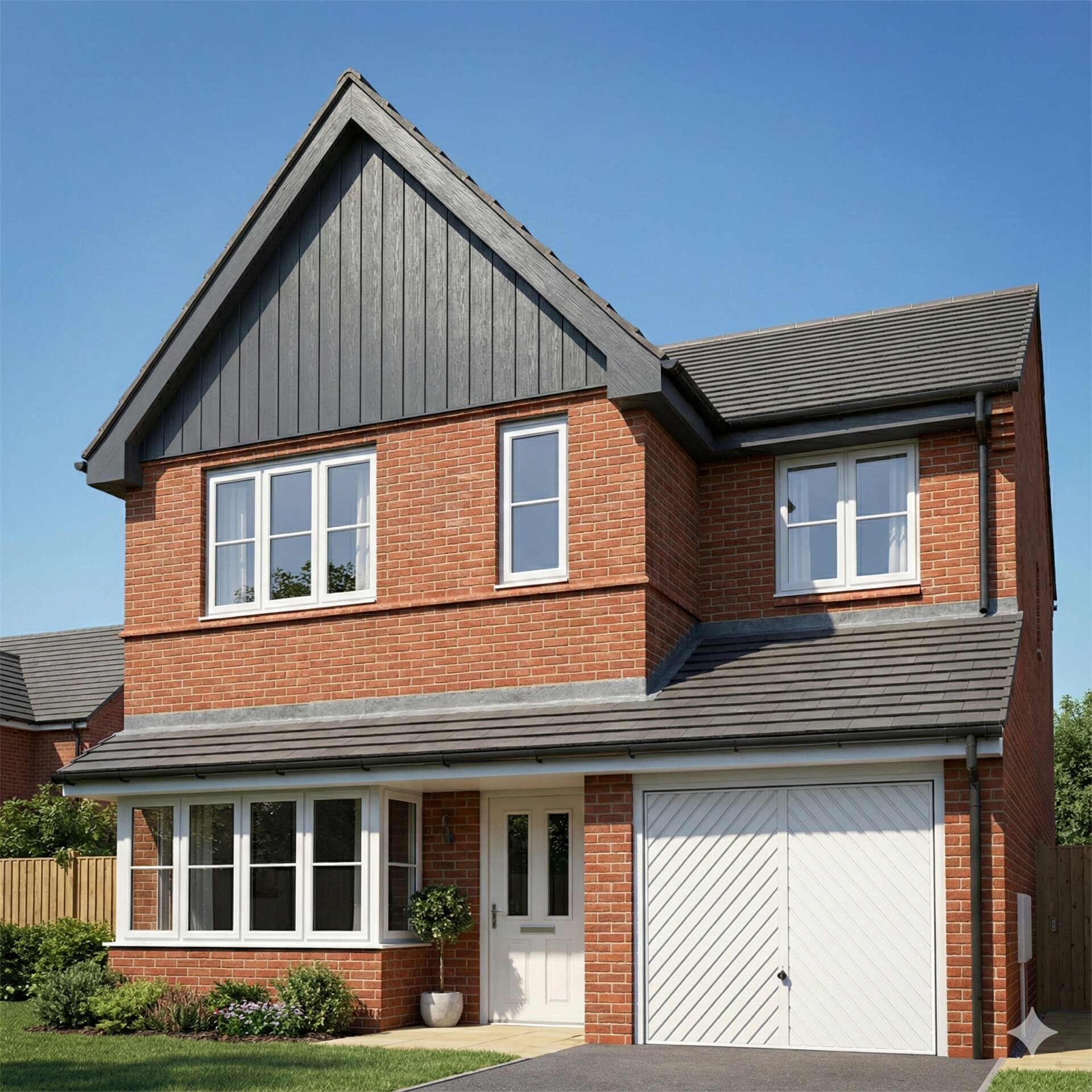
This is the most common combination in UK residential architecture. The cladding typically features on the upper storey, a projecting bay, or a rear extension, while the ground floor or main body remains in brick. The contrast between the warm tones of brick and the cool depth of anthracite grey creates visual drama without being overwhelming.
Anthracite Grey + White Render
Dark cladding against bright white render is a classic contemporary pairing. The high contrast makes both materials look crisp and intentional. This combination is particularly popular on new-build developments and self-build projects.
Anthracite Grey + Timber Accents
Adding natural timber elements — a slatted screen, a front door surround, or a pergola structure — softens the industrial feel of dark grey cladding. Cedar, larch, or iroko provide warm tones that contrast beautifully with the cool grey.
Anthracite Grey + Matching Rainwater Goods
For a fully coordinated exterior, match the cladding colour to the guttering, downpipes, and fascia boards. Kalsi Plastics offers anthracite grey rainwater systems and roofline products that provide a seamless, unified aesthetic from ridge to ground.
Anthracite Grey + Contrasting Doors
A bright-coloured front door — yellow, teal, or red — set against an anthracite grey clad wall creates a striking focal point. The neutral backdrop allows the door colour to pop without the overall scheme feeling cluttered.
Profile Options in Anthracite Grey
Anthracite grey PVC-U cladding is available in the three main external cladding profiles:
Shiplap
Flat-faced boards with a rebated overlap creating subtle shadow lines. This is the most popular profile in anthracite grey because its clean lines complement the colour’s modern character.
Weatherboard
Tapered boards with a more pronounced stepped profile. Anthracite grey weatherboard is less common but works well on coastal properties and barn-conversion-style buildings where the traditional profile balances the contemporary colour.
Decorative Panels
Wider panels with embossed or textured surfaces, including woodgrain effects. Anthracite grey with a woodgrain texture provides the warmth of timber’s visual detail with the depth of a dark grey finish — a particularly sophisticated combination.
Practical Considerations for Dark Cladding
Dark colours behave differently from light colours on a building’s exterior. Understanding these differences helps you specify and install anthracite grey cladding correctly.
Solar Heat Absorption
Dark colours absorb more solar radiation than light colours. An anthracite grey PVC-U board can reach surface temperatures of 60–70°C on a south-facing wall in direct summer sunlight, compared to 35–45°C for a white board in the same conditions.
This increased heat absorption means:
- Greater thermal expansion — boards expand more and contract more across the daily temperature cycle. Expansion gaps at abutments are critical and should follow the manufacturer’s guidance precisely (typically 5–8 mm per run, sometimes more for very dark colours).
- Fixings must not over-constrain the boards — leave a slight clearance under screw heads so boards can slide.
- The ventilation cavity is even more important — it helps dissipate heat from the back of the boards, reducing the temperature differential across the board’s thickness.
Colour Consistency
When ordering anthracite grey cladding, ensure all boards come from the same production batch to avoid subtle colour variations between panels. If batch-matching is not possible, distribute boards from different batches randomly across the wall rather than concentrating them in blocks.
Fade Resistance
Modern co-extruded anthracite grey PVC-U cladding is formulated to resist UV fading, but some degree of lightening over 15–20 years is normal, particularly on south-facing elevations. This fading is gradual and even, so it is not usually objectionable. However, if you need to replace individual boards after several years, the new boards may appear noticeably darker than the weathered originals. Keeping a few spare boards from the original batch is good practice.
Cleaning
Anthracite grey hides light dirt well but can show water spotting, bird droppings, and hard water marks more visibly than mid-tone or textured finishes. An annual wash with warm soapy water and a soft cloth keeps the surface looking fresh.
Matching Your Roofline and Rainwater System
For a fully co-ordinated exterior, consider specifying anthracite grey across all visible PVC-U elements:
- Fascia boards — available in anthracite grey to match the cladding colour at the roofline
- Soffit boards — can be anthracite grey for a bold, unified look, or white for contrast
- Guttering and downpipes — anthracite grey rainwater systems complete the colour scheme from eaves to ground
- Window trims — matching cladding trims around windows and doors tie the scheme together
Kalsi Plastics manufactures all of these elements in co-ordinating colours, ensuring colour consistency across different product categories.
Anthracite Grey in Practice: Common Applications
Whole-House Cladding
Cladding an entire house in anthracite grey creates a bold, contemporary statement. This works best on simple, clean-lined buildings with large glazed areas. It can feel overwhelming on complex, fussy elevations with lots of projections and recesses.
Upper-Storey Cladding
Cladding the upper storey while leaving the ground floor in brick or render is the most common application. This two-tone effect adds visual interest and can make a property look larger and more modern.
Extension Cladding
Anthracite grey cladding on a new extension helps differentiate the new from the old while maintaining a cohesive colour palette — especially when the extension windows are already anthracite grey.
Garden Rooms
Garden rooms clad in anthracite grey look sleek and architectural, particularly when combined with large glazed panels and a flat or low-pitched roof.
Dormer Windows
Cladding dormer cheeks in anthracite grey gives a loft conversion a contemporary finish that sits well against most roof tile colours.
Frequently Asked Questions
Will anthracite grey cladding make my house look dark and gloomy?
No. Anthracite grey is a deep charcoal, not black. In daylight, it reads as a sophisticated, neutral tone that enhances the building’s form. The key is to balance it with lighter elements — white or cream render, natural brick, glazing, and a contrasting front door. Very few people who install anthracite grey wish they had chosen something lighter.
Does anthracite grey cladding get too hot in summer?
Dark cladding absorbs more solar heat than light colours, but the ventilated cavity behind the boards dissipates this heat before it reaches the building fabric. Inside the house, you will not notice a significant temperature difference compared to lighter cladding, provided the ventilation cavity and insulation are properly detailed.
Can I get a perfect RAL 7016 match across cladding, windows, and doors?
While all manufacturers reference RAL 7016, slight colour variations between product types (PVC-U cladding, powder-coated aluminium windows, composite doors) are normal due to different base materials and finishing processes. These variations are typically subtle and not noticeable from normal viewing distances.
Is anthracite grey cladding a fad that will date?
Grey as an exterior colour has been popular for over a decade and shows no signs of declining. More importantly, anthracite grey is a neutral — it does not carry the same dating risk as trend-driven colours like teal, coral, or copper. Even if fashion moves on, anthracite grey will remain a classic, understated choice.
How does anthracite grey cladding look after 10–15 years?
Well-maintained co-extruded PVC-U cladding retains its colour well. After 10–15 years, some lightening on south-facing elevations is normal but gradual. The overall appearance remains attractive and consistent.