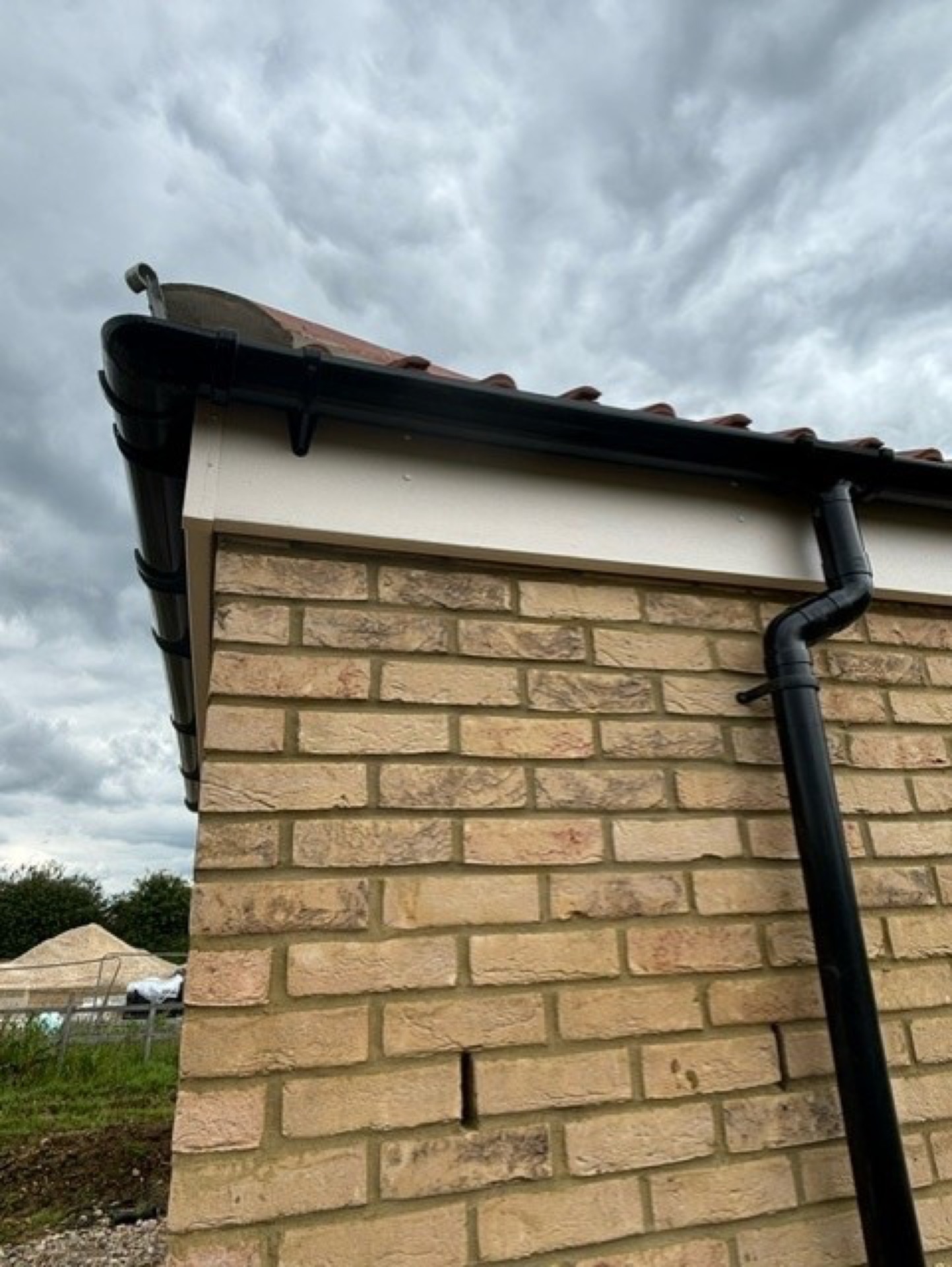
How to Size Guttering for Your Roof
Meta description: Learn how to correctly size guttering for your roof with our complete guide covering effective roof area, rainfall intensity, and system selection.
Suggested URL: /blog/how-to-size-guttering-for-your-roof
Introduction
Getting your guttering size wrong is a costly mistake. Undersized gutters overflow during heavy rain, causing water damage to fascias, soffits, and even foundations. Oversized systems waste money and can look disproportionate on the property.
Whether you’re a roofer quoting a job or a builder specifying materials, understanding how to calculate the correct gutter size is essential. This guide walks you through the process step by step, from measuring your roof to selecting the right system for the job.
Understanding Gutter Flow Capacity
Every gutter profile has a maximum flow capacity, measured in litres per second. This tells you how much water the gutter can handle before it overflows. Common capacities include:
- Mini/76mm Half Round: 0.5 litres/second
- 112mm Half Round: 0.9 litres/second
- 114mm Square Line: 1.1 litres/second
- 125mm High Capacity: 1.5 litres/second
- 150mm High Capacity/Industrial: 2.2 litres/second
- Deepflow: 1.7-2.5 litres/second depending on profile
These figures assume the gutter is installed level with adequate outlets. The capacity drops if the gutter is too long between outlets or if there’s insufficient fall.
Step 1: Calculate Effective Roof Area
The effective roof area isn’t simply length times width. You need to account for the roof pitch, which increases the catchment area for wind-driven rain.
The Formula
Effective Roof Area = (W + H/2) × L
Where:
- W = Width of the roof (horizontal span, in metres)
- H = Height from gutter to ridge (in metres)
- L = Length of the roof section draining to the gutter (in metres)
Worked Example
A typical semi-detached house with:
- Roof span: 5m
- Height to ridge: 3m
- Front elevation length: 8m
Effective Roof Area = (5 + 3/2) × 8 = (5 + 1.5) × 8 = 52m²
For properties with multiple roof sections draining to one gutter, calculate each section separately and add them together.
Step 2: Determine Rainfall Intensity
The UK uses standard rainfall intensities for gutter calculations:
- Standard (most of UK): 75mm/hour
- High exposure (Scotland, Wales, western regions): 100-150mm/hour
Building Regulations Approved Document H recommends designing for 75mm/hour as a minimum. However, with climate change increasing extreme rainfall events, many specifiers now use 100mm/hour as standard practice.
Calculating Water Flow Rate
Flow Rate (litres/second) = Effective Roof Area × Rainfall Intensity / 3600
Using our example (52m² at 75mm/hour): 52 × 0.075 / 3.6 = 1.08 litres/second
At 100mm/hour rainfall: 52 × 0.100 / 3.6 = 1.44 litres/second
Step 3: Match Gutter to Flow Rate
Compare your calculated flow rate to gutter capacities:
| Roof Area (75mm/hr) | Roof Area (100mm/hr) | Minimum Gutter Size |
|---|---|---|
| Up to 18m² | Up to 13m² | 76mm Mini |
| Up to 37m² | Up to 27m² | 112mm Half Round |
| Up to 45m² | Up to 33m² | 114mm Square Line |
| Up to 60m² | Up to 45m² | 125mm High Capacity |
| Up to 90m² | Up to 65m² | 150mm Industrial |
For our example property (52m² effective area), you’d need:
- At 75mm/hour: 114mm Square Line would cope, but 125mm provides safety margin
- At 100mm/hour: 125mm High Capacity minimum, consider Deepflow for extra security
Outlet Positioning and Quantity
Gutter capacity assumes adequate outlets. The rules of thumb are:
- Maximum run to outlet: 50 times the gutter depth
- 112mm gutters: Maximum 6m run to each outlet
- 125mm gutters: Maximum 8m run to each outlet
For a 10m gutter run, you have options:
- Central outlet: Water travels maximum 5m from each end
- Two end outlets: Requires fall from centre towards both ends
- One end outlet: Requires fall along entire length (not ideal for long runs)
Downpipe size also matters. A 68mm round downpipe handles approximately 1.3 litres/second. Match or exceed your gutter’s flow capacity.
Factors That Reduce Capacity
Real-world installations rarely achieve the laboratory-tested capacities. Account for:
Angles and Bends
Each angle in the gutter run reduces capacity by approximately 10-15%. A system with two angles should be upsized accordingly.
Leaf Guards and Gratings
Gutter guards restrict water entry. Allow 20-30% extra capacity if installing guards, especially in areas with overhanging trees.
Gutter Fall
While level gutters can work, a slight fall (1:350 to 1:600) improves flow and reduces standing water. However, excessive fall looks unsightly and doesn’t significantly improve capacity.
Age and Condition
On replacement jobs, always size for the worst case. Slight sags or joint issues will develop over time.
Special Situations
Valley Gutters
Valley gutters collect water from two roof slopes. Calculate both effective areas and add together. Valley systems typically need high-capacity profiles.
Extensions and Conservatories
When extending a property, the existing guttering may become undersized. Always recalculate for the combined roof area.
Industrial and Commercial
Large buildings use box gutters or industrial profiles calculated to BS EN 12056-3. These jobs often require engineer specifications.
Practical Tips for Installers
- Always round up – if you’re between sizes, choose the larger option
- Consider aesthetics – a 150mm gutter looks wrong on a small bungalow
- Check existing downpipes – they may need upgrading too
- Account for extensions – clients often add conservatories later
- Document your calculations – useful for warranty queries
Conclusion
Correctly sizing guttering protects your client’s property and your reputation. The calculation itself is straightforward: measure the effective roof area, apply the rainfall intensity, and select a gutter with adequate flow capacity.
When in doubt, size up. The cost difference between a 112mm and 125mm system is minimal compared to a callback for overflowing gutters. With quality PVC guttering systems, you’ll achieve a durable installation that performs for decades.
Need to spec guttering for your next project? Browse our complete range of rainwater systems, available in multiple profiles and colours for immediate dispatch.
Internal links:
- Half Round Guttering range
- Square Line Guttering range
- High Capacity/Deepflow Guttering
- Downpipes and fittings
- Gutter brackets and accessories
Word count: 1,058 words