External Cladding Options: Choosing the Right Profile
Meta description: Guide to external cladding profiles including weatherboard, shiplap, and featheredge - compare aesthetics, applications, and installation for your project.
Suggested URL: /blog/external-cladding-profiles-guide
Introduction
External cladding transforms buildings. Whether upgrading a tired façade, adding weather protection, or creating a distinctive architectural feature, the profile you choose defines the finished appearance.
PVC external cladding offers the aesthetics of traditional timber with modern performance – no painting, no rot, and decades of service life. But with multiple profiles available, selecting the right one can be confusing.
This guide compares the main cladding profiles, explains their characteristics and typical applications, and helps you specify confidently for any project.
The Main Cladding Profiles
Shiplap (Rebated Profile)
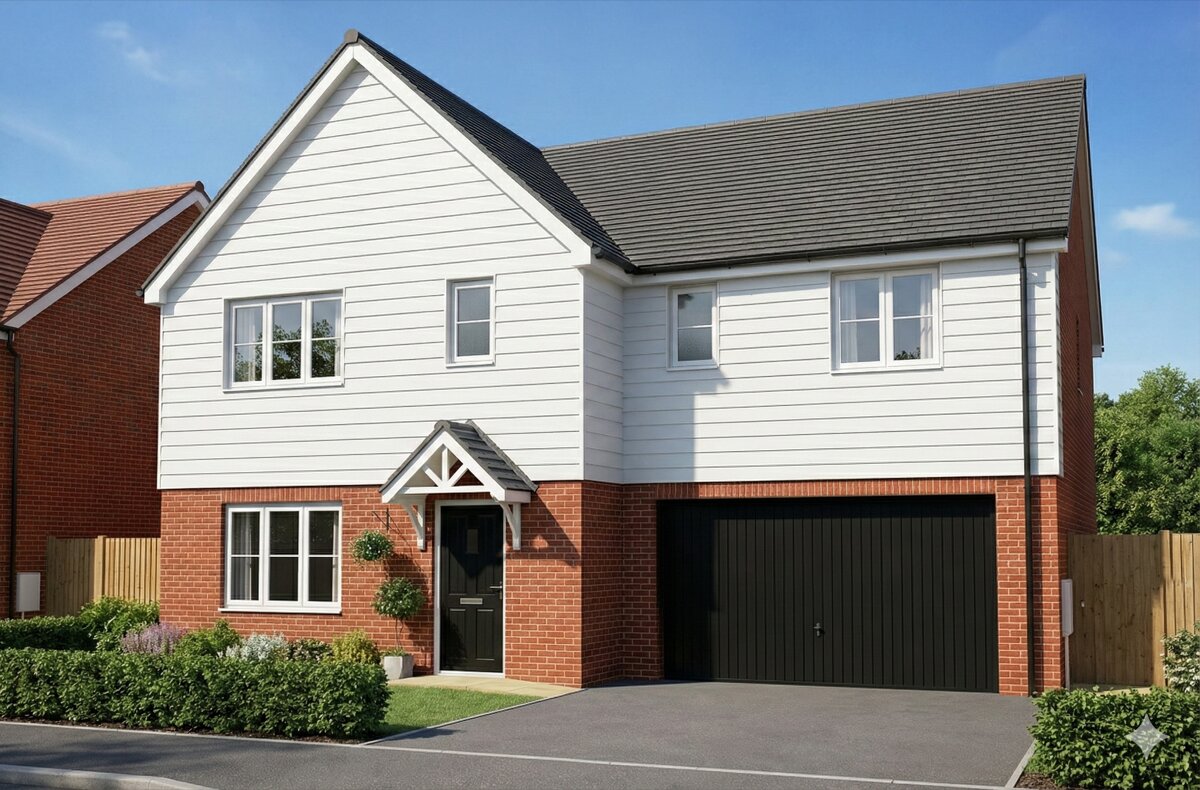
Appearance: Horizontal boards with a subtle shadow gap between each course. Clean, contemporary look.
How it works: Each board has a rebate at top and bottom that overlaps with adjacent boards. The overlap creates a weathered joint while maintaining a relatively flat face.
Characteristics:
- Uniform face appearance
- Minimal projecting edges
- Modern aesthetic
- Typically 150mm or 170mm coverage width
- 10-16mm thickness
Best for:
- Modern new builds
- Contemporary extensions
- Commercial buildings
- Garden buildings (offices, studios)
- Where clean lines are wanted
Featheredge (Traditional Cladding)
Appearance: Boards taper from thick at bottom to thin at top, overlapping to create pronounced shadow lines.
How it works: Each board is thicker at the base (12-16mm) and tapers to a thin edge (5-6mm). Installed from bottom up with each board overlapping the one below.
Characteristics:
- Strong horizontal shadow lines
- Traditional/rustic appearance
- Deeper overall profile
- Typically 150mm boards with 125mm exposure
- Requires support battens
Best for:
- Traditional properties
- Rural settings
- Agricultural buildings
- Where classic weatherboard appearance desired
- Heritage-style renovations
Weatherboard (Open Vee)
Appearance: Boards with V-groove detail creating distinct shadow lines. Often called open V-joint or channel weatherboard.
How it works: Tongue-and-groove profile with a V-shaped channel at the joint. The V-groove creates the visual break between boards.
Characteristics:
- Pronounced joint lines
- Textured, characterful appearance
- Good water shedding
- Typically 100-150mm coverage
- Works well vertically or horizontally
Best for:
- Coastal properties
- Extensions matching existing cladding
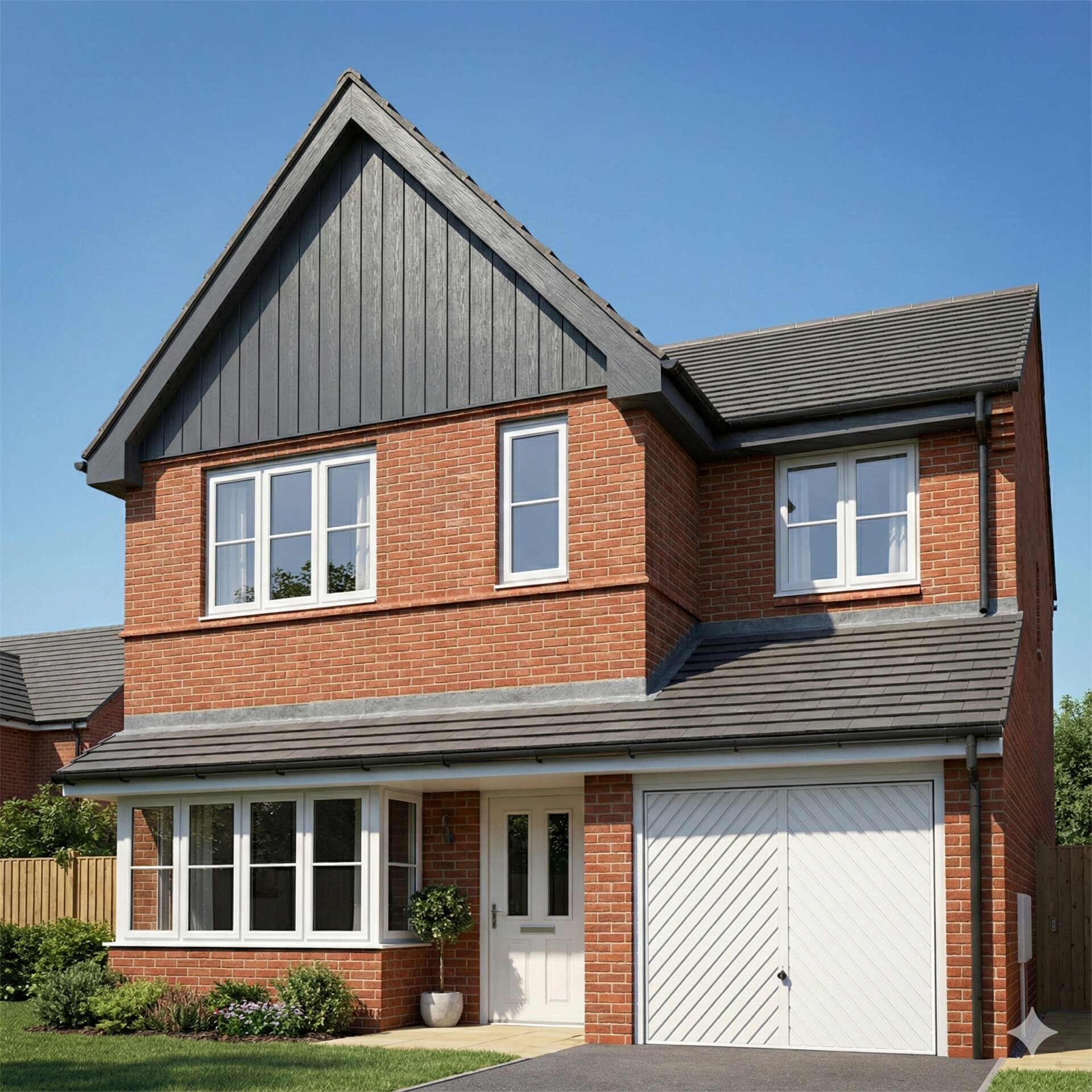
- Feature walls and gables
- Where bold aesthetic wanted
Shiplap (Rounded/Loglap)
Appearance: Boards with a curved face mimicking log cabin construction.
How it works: Similar tongue-and-groove fixing to standard shiplap but with convex face profile.
Characteristics:
- Distinctive curved appearance
- Strong shadow effects
- Rustic/cabin aesthetic
- Typically 140-150mm coverage
- Popular for outbuildings
Best for:
- Garden rooms and sheds
- Log cabin aesthetic
- Chalets and holiday homes
- Feature cladding where character matters
Plank/Board and Batten Effect
Appearance: Wide boards with cover strips (battens) over joints. Strong vertical emphasis.
How it works: Wide flat boards installed with vertical cover strips concealing joints. Can be achieved with wide shiplap and separate battens.
Characteristics:
- Bold vertical lines
- Contemporary barn aesthetic
- Makes buildings appear taller
- Battens can be contrasting colour
- Requires careful planning at openings
Best for:
- Modern agricultural style
- Barn conversions
- Tall structures
- Where vertical emphasis wanted
Colour and Finish Considerations
Standard Colours
Most PVC cladding is available in:
- White
- Cream
- Grey (multiple shades)
- Black
- Brown
- Anthracite
- Green (sage, forest)
- Blue (slate, heritage)
Woodgrain Finishes
Premium ranges offer woodgrain embossing:
- Oak effect
- Cedar effect
- Walnut effect
- Driftwood/weathered effects
Woodgrain adds realism and hides surface marks better than smooth finishes.
Colour Selection Tips
Consider location: Coastal areas suit pale colours; woodgrain suits rural settings.
Match existing: Extensions should complement the main building unless deliberate contrast is wanted.
Planning restrictions: Conservation areas may limit colour choices. Check before specifying.
Orientation: Dark colours absorb more heat – may affect expansion and warranties on south-facing elevations.
Installation Differences by Profile
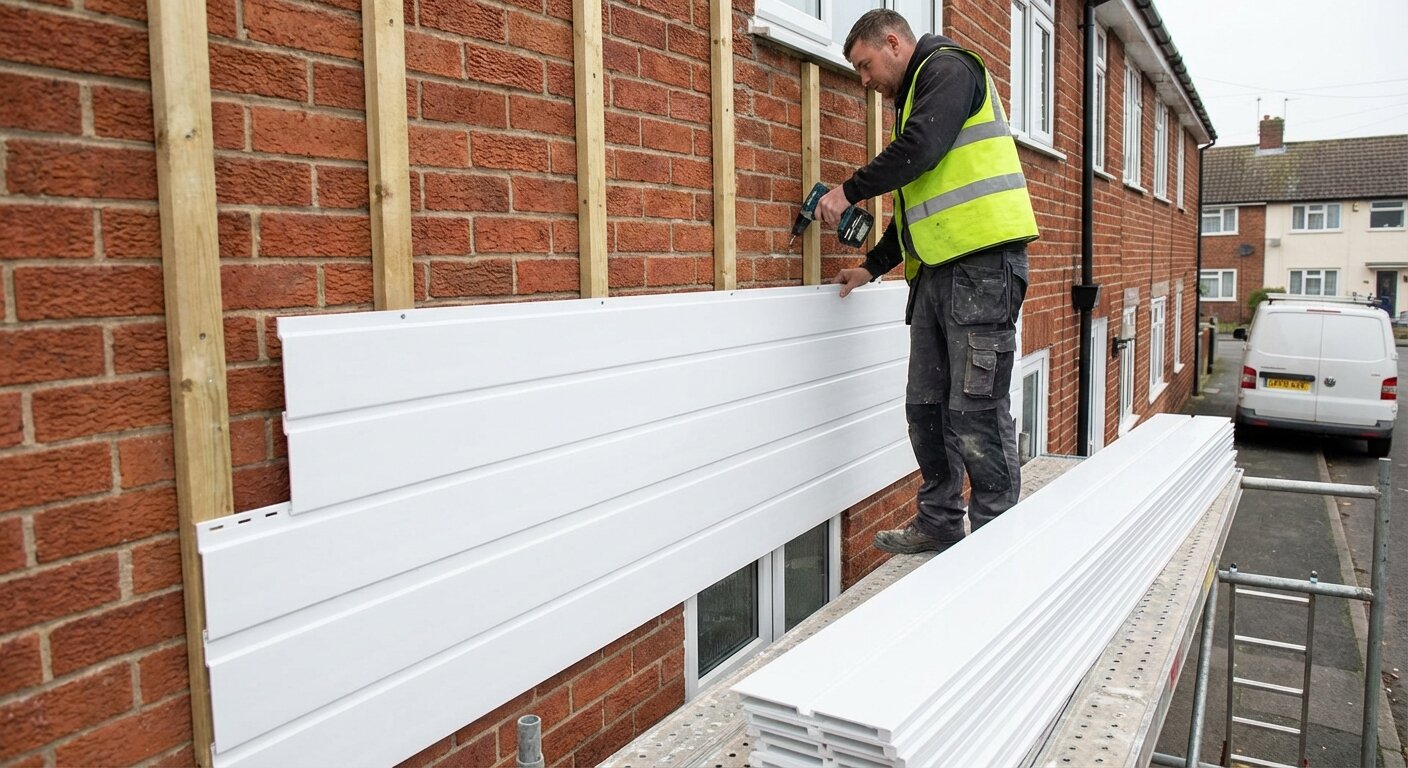
Shiplap Installation
Framework: Horizontal battens at 400mm centres maximum
Fixing: Secret fix through tongue with stainless steel screws/nails
- Face fix at top and bottom of wall visible areas
Joints: Butt joints with 3mm expansion gap
- Use H-section jointing strips for clean appearance
Corners: External corner trims or mitred boards with corner trim backup
Expansion: Allow 2-3mm per metre length
Featheredge Installation
Framework: Horizontal battens at 600mm centres
Fixing: Face nail through thick edge only
- Use stainless ring-shank nails
- Two nails per batten crossing
Overlap: Minimum 25mm overlap between boards
Corners: Purpose-made corner trims
- External corners need support battening
Starter: Begin with starter strip to set correct angle for first board
Weatherboard Installation
Framework: Horizontal battens at 400mm centres
Fixing: Secret fix through tongue
- Ensure tongue fully engages before nailing
Joints: H-section jointing where lengths meet
- Stagger joints between courses
Corners: External corner trims
- Fit trims before boards
Application Considerations
New Build vs Renovation
New builds: Design framework and cladding together. Allow for insulation thickness.
Renovation: Assess existing surfaces. May need:
- Stripping old cladding
- Framework over existing render
- Breather membrane installation
- Window/door adjustments for increased wall thickness
Building Regulations
Check requirements for:
- Fire spread: Most cladding needs 1m clearance from boundaries or non-combustible backing
- Ventilation: Maintain air gap behind cladding (25mm minimum)
- Weather resistance: Breather membrane required behind most installations
Note: Post-Grenfell regulations affect cladding on buildings over 18m – specialist guidance needed.
Thermal Performance
Cladding contributes to thermal performance through:
- Additional air gap (static air insulates)
- Protection for external insulation
- Reduced thermal bridging with correct detailing
External wall insulation plus cladding is increasingly popular for energy upgrades.
Profile Comparison at a Glance
| Profile | Aesthetic | Installation Complexity | Best Applications |
|---|---|---|---|
| Shiplap | Modern, clean | Medium | Extensions, commercial, new builds |
| Featheredge | Traditional, rustic | Higher | Rural, heritage, agricultural |
| Weatherboard | Bold, textured | Medium | Coastal, feature walls, character |
| Loglap | Cabin, informal | Medium | Garden buildings, chalets |
| Board & Batten | Contemporary barn | Higher | Modern agricultural, tall structures |
Specifying for Projects
Information Needed
To specify cladding accurately, establish:
- Area to clad: Square metres for quantity calculation
- Profile preference: Based on aesthetics and application
- Colour: Check availability in chosen profile
- Trims required: Corners, window reveals, base, top edge
- Accessories: Breather membrane, battens, fixings
Calculating Quantities
Coverage per board: Check manufacturer specifications (coverage width × length)
Boards needed: Area ÷ coverage per board + 10% waste
Starter/end trims: Linear metres of wall base and top
Corner trims: Linear metres of external and internal corners
Window/door surrounds: Perimeter of each opening
Sample Request
For larger projects, request samples to:
- Confirm colour match expectations
- Check profile depth and appearance
- Verify woodgrain quality if specified
- Assess material quality
Conclusion
The right cladding profile balances aesthetic preference, building type, and practical considerations. Shiplap suits modern applications; featheredge creates traditional character; weatherboard adds texture and interest; and speciality profiles like loglap serve specific styles.
Consider the building’s context, existing materials, and client preferences. Account for installation requirements and expansion characteristics. And always check fire regulations, particularly for larger buildings.
Whatever profile you choose, quality PVC cladding delivers lasting performance without the maintenance burden of timber – a compelling proposition for any project.
Browse our complete external cladding range, available in multiple profiles, colours, and finishes with matching trims and accessories.
Internal links:
- Shiplap cladding range
- Featheredge cladding
- Weatherboard/V-groove cladding
- Cladding corner trims
- Cladding accessories and fixings
- Breather membranes
Word count: 1,247 words