A Complete Guide to Building Regulations Part H: Drainage
Meta description: Understanding Building Regulations Part H for drainage - covers foul drainage, rainwater disposal, wastewater treatment and compliance requirements.
Suggested URL: /blog/building-regulations-part-h-drainage-guide
Introduction
Building Regulations Part H governs how buildings dispose of foul water, rainwater, and wastewater. For plumbers, builders, and drainage contractors, understanding Part H isn’t optional – it’s fundamental to every compliant installation.
This guide breaks down Part H’s requirements in practical terms, covering what you need to know for domestic and small commercial projects. We’ll explain the key provisions, minimum standards, and common compliance issues to help you get jobs signed off first time.
What Part H Covers
Part H of the Building Regulations (England) addresses four main areas:
- H1: Foul water drainage
- H2: Wastewater treatment systems and cesspools
- H3: Rainwater drainage
- H4: Building over or near sewers
The regulations apply to new buildings, extensions, and alterations that affect drainage systems. Similar provisions exist in Scotland (Section 3) and Wales (Part H, with some variations).
H1: Foul Water Drainage
Foul water includes waste from toilets, basins, baths, showers, sinks, and appliances like washing machines and dishwashers.
Key Requirements
Connection to Sewer Where reasonably practicable, foul drainage must connect to a public sewer. Building Control can require connection even if a private system exists, provided a public sewer is nearby.
Pipe Sizing Minimum internal diameters:
- Single WC branch: 75mm (100mm preferred)
- Multiple WCs or main discharge stack: 100mm minimum
- Wash basins: 32mm
- Baths, showers, sinks: 40mm
- Washing machines, dishwashers: 40mm
Gradients Pipes must have adequate fall to achieve self-cleansing velocity:
- 100mm pipes: 1:40 minimum (1:80 acceptable in some conditions)
- 150mm pipes: 1:150 minimum
Access Points Drainage must be accessible for clearing blockages:
- Rodding eyes or access fittings at key points
- Inspection chambers at junctions and direction changes
- Maximum spacing of access points: 45m on straight runs
Ventilation Discharge stacks must ventilate to outside air, terminating at least 900mm above any opening window within 3m. Air admittance valves (AAVs) can supplement but not replace open vents.
Discharge Stack Design
The main discharge stack (soil pipe) must be:
- 100mm minimum diameter if serving WCs
- Installed vertically or with minimal offsets
- Vented at the top
- Connected to the drain with a minimum 450mm radius bend
Branch connections should enter at appropriate angles and heights to prevent cross-flow and blockages.
H2: Wastewater Treatment Systems
Where public sewer connection isn’t practicable, Part H permits private treatment:
Septic Tanks
- Must discharge to a drainage field or drainage mound
- Direct discharge to watercourses is no longer permitted
- Sizing based on occupancy (minimum 2,700 litres)
- Require Environment Agency permit or exemption registration
Packaged Treatment Plants
- Treated effluent can discharge to watercourse with permit
- Must meet British Water or equivalent standards
- Desludging typically required annually
- More expensive but necessary where drainage fields aren’t viable
Cesspools
- Only permitted where other options are impractical
- Minimum 18,000 litres capacity
- Require frequent emptying (costly)
- Generally a last resort
H3: Rainwater Drainage
Rainwater must drain away from buildings without causing damage or nuisance.
Hierarchy of Disposal
Part H establishes a drainage hierarchy (most to least preferred):
- Soakaway or infiltration system – where ground conditions permit
- Watercourse – ditch, stream, or river
- Surface water sewer – where available
- Combined sewer – only where no alternatives exist
Building Control will expect you to demonstrate why higher options weren’t viable before accepting lower ones.
Soakaway Requirements
- Must be at least 5m from any building
- Located in suitable permeable ground
- Sized for roof area and soil infiltration rate
- Porosity testing may be required
Gutter and Downpipe Sizing
Rainwater goods must handle design rainfall (75mm/hour minimum):
- Size gutters to calculated roof areas
- Downpipes must match or exceed gutter capacity
- Consider local rainfall intensity in exposed areas
Sustainable Drainage Systems (SuDS)
For larger developments, SuDS features like permeable paving, rain gardens, and attenuation tanks are increasingly required. Check local planning conditions.
H4: Building Over Sewers
Special requirements apply when building near existing sewers:
Sewerage Company Consultation
- You must contact the sewerage undertaker before building within 3m of a public sewer
- They may require build-over agreements or sewer protection measures
- In some cases, sewer diversion may be necessary
Protection Measures
- Concrete encasement of sewers under buildings
- Bridging arrangements to avoid loading pipes
- Access points maintained within or adjacent to buildings
Deep Basements and Foundations
Building near deep sewers requires structural assessment to ensure foundations don’t:
- Damage the sewer
- Affect ground support around the pipe
- Create access problems for future maintenance
Common Compliance Issues
Issue 1: Insufficient Gradient
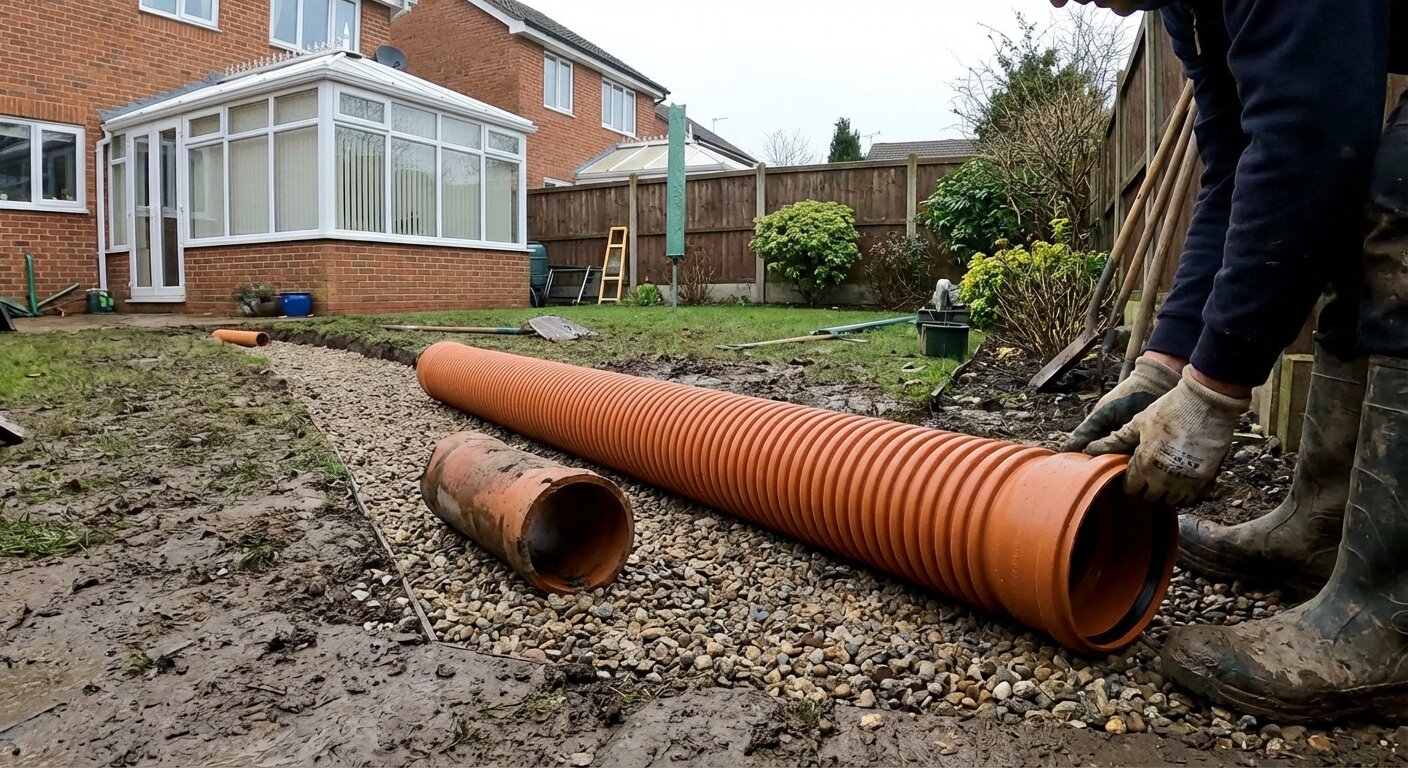
Many installations fail because drainage isn’t laid to adequate falls. On tight sites, this means careful level planning before excavation starts.
Solution: Survey levels accurately and design the system on paper first. Consider pumped systems where gravity falls aren’t achievable.
Issue 2: Missing Access Points
Inspectors frequently find inadequate access for maintenance.
Solution: Install inspection chambers at all junctions and direction changes. Use rodding eyes on long straight runs.
Issue 3: Inadequate Ventilation
Smells and air lock problems often trace to poor ventilation design.
Solution: Ensure main stacks vent to atmosphere. Use AAVs appropriately as supplements, not replacements.
Issue 4: Rainwater to Foul Sewer
Connecting rainwater to foul sewers is prohibited in most areas and overloads treatment works.
Solution: Verify connection type before work starts. Separate rainwater and install appropriate disposal.
Issue 5: Insufficient Cover
Underground pipes need adequate cover to protect from loads and frost.
Solution: Minimum 300mm cover under gardens, 600mm under driveways. Use concrete surround where cover is insufficient.
Inspection and Testing
Building Control will typically inspect drainage at:
- Excavation stage – before backfilling
- Connection points – to existing drains/sewers
- Final completion – with all connections made
Testing Requirements
- Air test: 100mm head maintained for 5 minutes (new drains)
- Water test: Alternative where air test not practical
- CCTV survey: May be required for building-over situations
Document all tests with photographs and certificates for Building Control files.
Approved Document H: Key Reference
Approved Document H provides detailed guidance on meeting Part H requirements. It includes:
- Diagrams for trap depths and branch connections
- Tables for pipe sizing
- Specifications for inspection chambers
- Soakaway design guidance
While not legally mandated methods, following Approved Document H guidance is the surest route to compliance. Alternative approaches require justification.
Conclusion
Building Regulations Part H ensures drainage systems protect public health and the environment. For installers, the key principles are straightforward: connect to public sewers where possible, size systems adequately, provide access for maintenance, and ventilate to prevent problems.
Before starting any drainage project, check existing connections, survey levels, and plan the system carefully. A well-designed installation that meets Part H requirements will pass inspection smoothly and serve the property for decades.
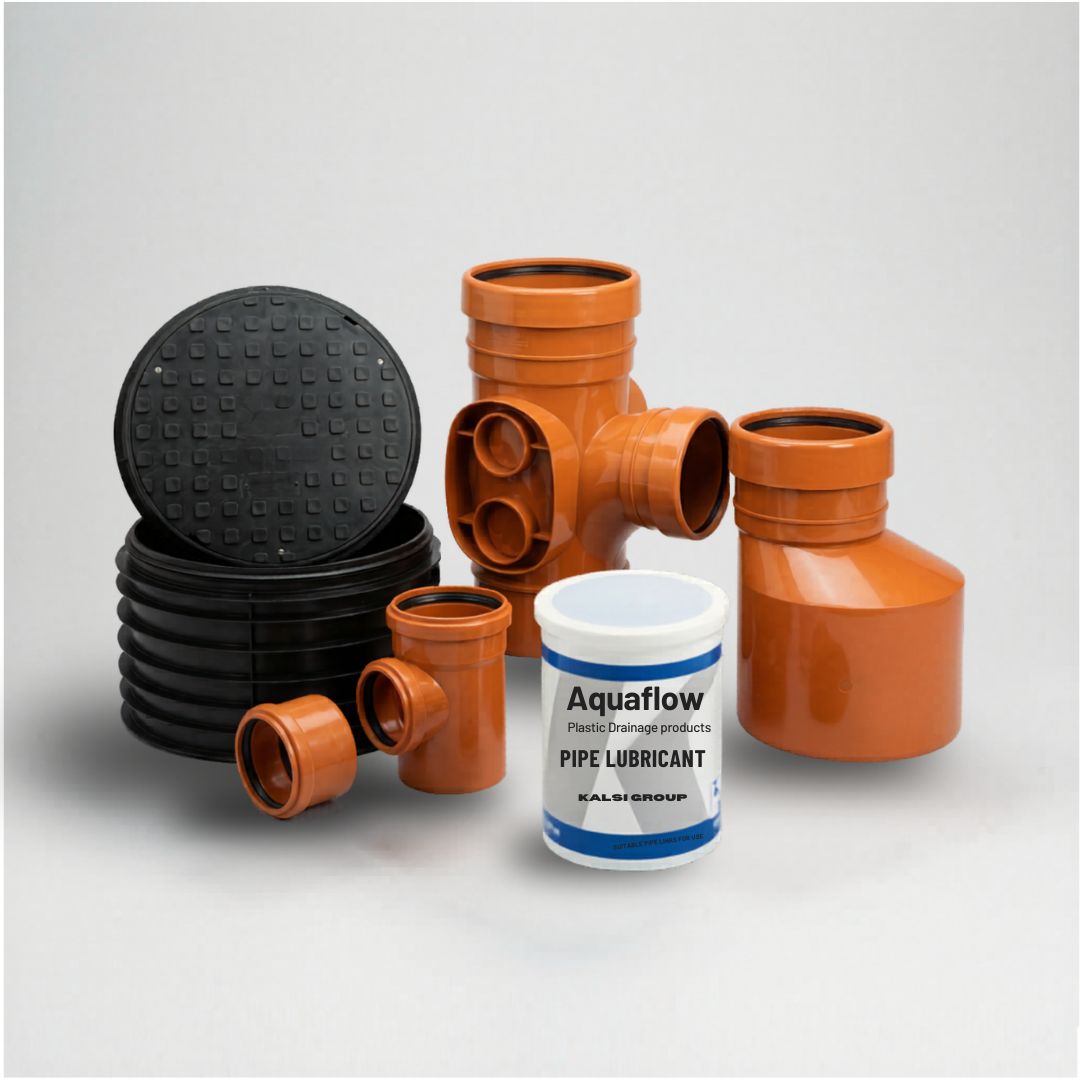
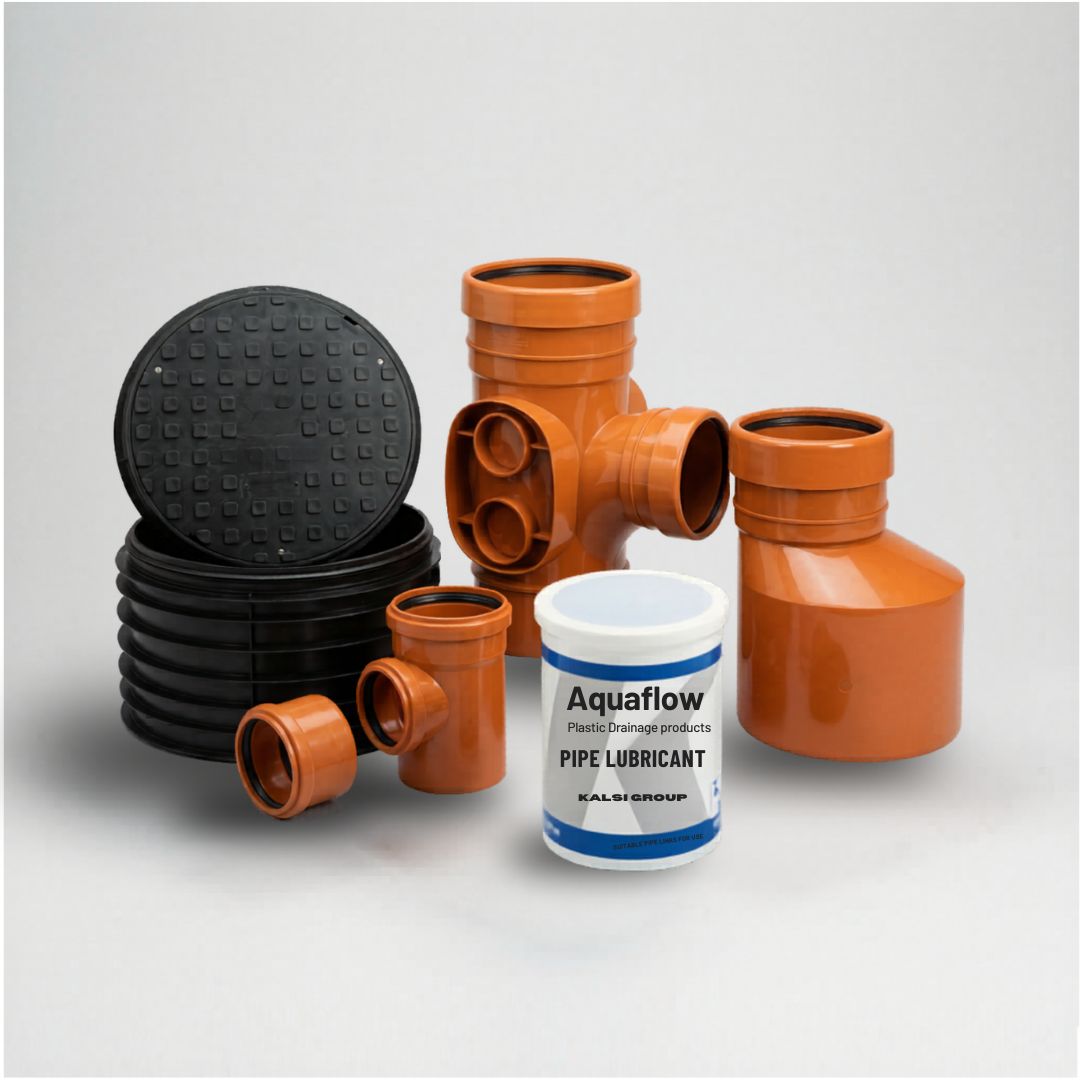
For quality drainage materials that help you achieve compliant installations, explore our range of underground drainage, soil and waste systems, and inspection chambers.
Internal links:
- Underground drainage pipes and fittings
- Soil and waste systems (110mm)
- Inspection chambers and access points
- Air admittance valves
- Rainwater systems
Word count: 1,198 words